
.jpg)
PROTECT YOUR DNA WITH QUANTUM TECHNOLOGY
Orgo-Life the new way to the future Advertising by Adpathway
Backpacking stoves fall into four popular categories: canister stoves, alcohol stoves, liquid fuel stoves, and wood stoves. Unfortunately, most stoves with open flames have been banned due to fire restrictions, so most backpackers now use only isobutane canister stoves for camp cooking because they can be turned off immediately. These are best for solo cooking, although multi-person systems do exist. Below are our picks for the best backpacking canister stoves and stove systems
Note: When comparing the weights of these products, it’s important to distinguish between stoves and backpacking stove systems. The latter includes integrated cook pots, windscreens, and stove stands, in addition to the stove burner unit.
1. MSR Pocket Rocket 2 Stove

The MSR Pocket Rocket 2 is compatible with all screw-type isobutane canisters. Compact and lightweight, it weighs 2.6 ounces and includes a built-in pot stand that’s compatible with a wide range of pots. When not in use, the arms of the pot stand fold down and fit into a small protective plastic case (which people often discard.) The adjustable flame control is easy to use while wearing gloves and provides fine-grained control from a rolling boil to a slow simmer. The nice thing about buying a standalone stove like the Pocket Rocket 2 is that you can use it with several different best-of-breed pots and pans, instead of being locked into a single all-in-one stove and pot combination. Read the SectionHiker Pocket Rocket 2 Review. The Pocket Rocket Deluxe Stove is also an excellent stove worth considering with a push-start igniter and a broader burner head for better heat distribution and simmering. While it’s only 0.3 oz heavier, it is significantly more expensive.
2. Jetboil Flash 1.0L

The 1L Jetboil Flash (newly updated in 2025) is a fully integrated personal cook system that includes a stove with a piezo lighter, an insulated pot w/lid, a stove stand, and a plastic measuring cup/bowl. The biggest change in the 2025 model is the outer housing of the burner, which acts as a wind screen and improves safety. The Flash is designed to do one thing incredibly well: rapidly boil water for drinks and rehydrate backpacking/camping meals. Weighing 13.1 ounces, the Flash can boil 1 liter of water in 4 minutes and 30 seconds (although it can only boil a half liter at a time). A push-button ignition system eliminates the need to light the stove, while a color change indicator on the outside of the pot insulation cover lets you know when your water is boiling hot. When not in use, the stove, stand and a 100 g gas canister fit inside the cookpot, making it easy to pack.
3. MSR WindBurner
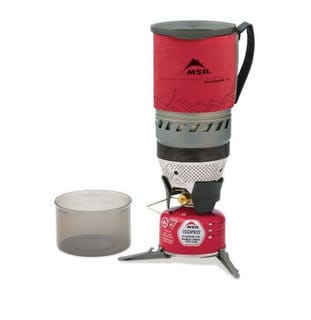
The MSR Windburner is another complete canister stove system that includes an insulated cook pot, stove, stabilizer, and plastic mug/bowl. The thing that sets it apart from the Jetboil Flash is its flame-less stove, wind resistance, and fuel efficiency. Called a radiant burner, it uses a completely enclosed heating element with an internal pressure regulator that makes the stove virtually impervious to outside conditions. Weighing 15.5 ounces, the Windburner can boil a liter of water in 4 minutes and 30 second minutes and is nearly twice as efficient as a Jetboil, so you get twice as many boils per gas canister. When it’s time to go, the Windburner stove system packs up into its cook pot, with space for a 110 g gas canister. Read the SectionHiker Windburner Stove Review.
4. BRS3000T Isobutane Stove

The BRS 3000T is a very small, compact, and inexpensive folding canister stove that weighs less than an 1 oz and is compatible with all standard screw-top isobutane gas canisters. It has a very small burner head with folding arms that form a pot stand. It does not have an ignition source, so you have to use your own, like matches or a minibic lighter. It’s flame height is controlled by twisting a thin metal wire, shown above. Though small, it is surprisingly powerful, outputing 9200 btus on max power. It is best used with a cook pot having a smaller diameter, like the Toaks 750 titanium pot.
5. Soto Windmaster Stove
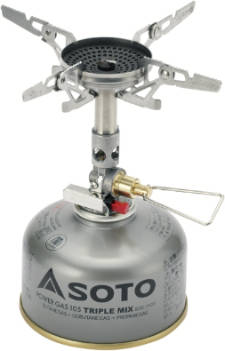
Soto is a stove company known for making finely engineered stoves. The Soto Windmaster is specially designed to provide superior wind performance with a recessed burner head that acts like a built-in windscreen. This also lets pots sit closer to the burner head, improving fuel efficiency. The Windmaster comes with a clip-on 4-arm clip-on pot support that can support larger cook pots. Weighing 3.0 ounces, the Windmaster is a very powerful 11,000+BTU stove, that can simmer or boil wicked fast. Read the SectionHiker Windmaster Stove Review. We’re also fans of the Soto Amicus Stove, which has an attached pot stand that’s impossible to lose and is available with an integrated cookset.
6. Jetboil Stash Stove System
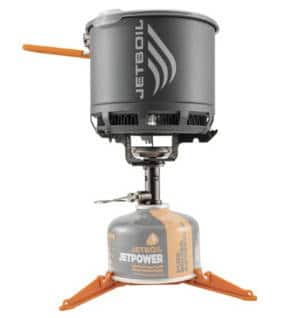
The Jetboil Stash is a 7.1 oz fully integrated personal cook system that includes a titanium stove, an anodized cook pot w/lid, and a stand. It’s much less powerful than the Jetboil Flash listed above but also much smaller, lighter weight, and packable which is the reason it’s such an attractive option. When not in use, the stove, stand, and a 100g oz gas canister fit inside the cookpot, making the Stash remarkably easy to pack. The Stash can boil a half-liter of water in 2 minutes 30 seconds and boil up to 12L on one small fuel canister. Read the SectionHiker Jetboil Stash Review.
7. MSR Whisperlite Universal
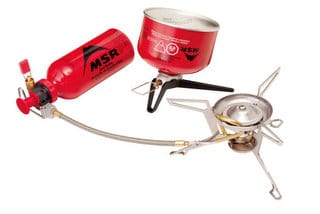
The MSR Whisperlite Universal burns a variety of fuels, including white gas, kerosene, unleaded gasoline, and isobutane-propane canisters, giving you lots of flexibility no matter where you find yourself. Just switch the fuel line and select one of the 3 self-cleaning Shaker jets, depending on the required fuel type. When burning white gas, the Universal can boil a liter of water in 3 minutes 30 seconds, while it takes 3 minutes 45 seconds with an isobutane canister. Simmering is possible with all fuel types as well as a roiling boil, while the remote burner makes it possible to use a windscreen, no matter what type of fuel is used. In addition to the stove, the 13.7 oz Whisperlite Universal includes a fuel pump, a windscreen, a heat reflector, and a small parts kit. Read the SectionHiker Whisperlite Stove Review.
8. Snow Peak GigaPower 2.0
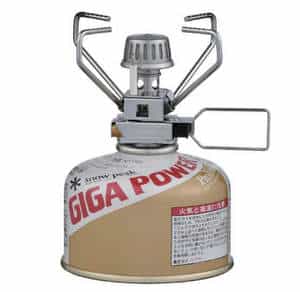
The Snow Peak GigaPower 2.0 is a standalone isobutane canister stove that can simmer or boil water. It has four pot supports that are compatible with a wide variety of cook pots, as well as a built-in piezo ignition system for matchless ignition. A solid and reliable performer, this 10,000 BTU stove weighs 3.2 ounces and takes an average of 4 minutes 45 seconds to boil a liter of water. While it comes with a protective plastic case, it can also be stored in a variety of cookpots with a gas canister.
9. MSR Reactor Stove System

The MSR Reactor is a high-performance, compact liquid-fuel backpacking stove system designed for fast boiling and dependable performance in cold, windy, or high-altitude conditions. Its integrated heat-exchange burner and pressure-regulated fuel system deliver extremely efficient, consistent simmer-to-boil output; typical boil times for 1 liter of water are under 3 minutes. Built as a single self-contained unit, the Reactor packs small, connects to a screw-in fuel canister, and includes a windproof burner that keeps flame power steady in harsh conditions. Durable materials and a simple two-piece design make it easy to set up, clean, and maintain. Ideal for solo or small-group backcountry trips where speed, reliability, and fuel efficiency matter. Read the SectionHiker Reactor Stove Review.
10. Jetboil Sumo Stove System

The Jetboil Sumo is a compact, fast-boil stove system built for groups and basecamp cooking. Its large-capacity FluxRing cooking cup (about 1.8–2.0 liters depending on model) and high-output burner deliver rapid boil times for multiple servings, while the insulated cozy and zippered lid help retain heat and reduce fuel use. The integrated burner/cup design stows as a single unit for easy transport and sets up quickly with a simple screw-in fuel canister attachment. Stable tripod-style pot support and a wide base improve pot stability for larger pans and heavier loads. Ideal for car camping, group backcountry meals, or situations where quick, efficient boiling for several people is needed. Read the SectionHiker Sumo Stove Review.
How to Select a Backpacking Stove
When choosing a backpacking stove it’s best to consider:
- the stove’s weight
- the availability and cost of the fuel required to run it
- whether it’s best for individual or group use
- the operating temperatures in which it must perform
Stove and Cooking Fuel Types
There are five main types of backpacking stoves:
- White gas (liquid fuel, Coleman fuel) stoves
- Canister stoves that burn an isobutane/propane mix
- Alcohol stoves that burn denatured alcohol
- Wood stoves that burn twigs and small sticks
- Solid fuel stoves
White gas stoves burn a refined form of unleaded gas. They’re good for group cooking and winter cooking because they generate a large amount of heat. They can be bulky, however, which is why most solo hikers don’t use them. Canister stoves are best used for individual use or couples. Some can simmer, but most are specialized for boiling water. Alcohol stoves are very simple and preferred by thru-hikers and ultralight backpackers, in part because it is so easy to resupply denatured alcohol on a long distance hike (sold in supermarkets, drug stores, and hardware stores.) Unfortunately, they are increasingly banned due to fire regulations. Wood stoves can be convenient if natural fuel is easily available, but fire bans in dry states also prohibit their use. Solid fuel stoves burn prepackaged fuel cubes and are also very lightweight, but the fuel can be hard to resupply on a long trip, and again, they’re often subject to fire bans because they burn with an open flame.
Backpacking Stove Systems
A stove system includes everything you need to boil water or cook food including a stove, a cookpot, windscreen, and a stove stand, making it a very convenient and economical way to acquire the stove components you need for backpacking or camping. While group stove systems are available, most of them are designed for single users and solo backpacking. Most stove systems are based around canister stoves and are quite windproof, which increases their fuel efficiency. They are limited in their capabilities, however, and more geared toward boiling water quickly, rather than simmering meals.
Winter Backpacking Stoves
Winter stoves are designed to burn fuel at lower temperatures, usually in a liquid form. White gas stoves can burn down to external temperatures of 40 below zero, Fahrenheit, while canister stoves that can burn a liquid feed (called inverted canister stoves) can burn down to about 10 degrees, Fahrenheit. Winter stoves are designed to melt snow to create drinking water and usually lack the ability to simmer meals since they’re glorified flame throwers.
Backpacking Stove Power
Stove power is measured in BTUs. The higher the number of BTUs, the more heat the stove will put out and the faster it will boil water.
Backpacking Stove Ignition
Many canister stoves are available with integrated sparking units called piezo igniters, so you don’t need to carry matches or a lighter to ignite your stove. While they are incredibly convenient, they have a tendency to wear out if you use your stove frequently. They are usually replaceable, but many people buy stoves without this feature to save money if they plan on using their stove heavily.
Disclosure: The author has received sample products mentioned in this article over the span of many years from MSR, Soto, and Trail Designs. The rest he’s purchased with his own funds.
SectionHiker never accepts payment for gear reviews or editorial coverage. When you buy through affiliate links on our site, we may earn a small commission at no extra cost to you. Help us continue to test and write unsponsored and independent gear reviews, hiking and backpacking FAQs, and free hiking guides.








 English (US) ·