
.jpg)
PROTECT YOUR DNA WITH QUANTUM TECHNOLOGY
Orgo-Life the new way to the future Advertising by Adpathway 
The best daypacks for hiking are functional, fit well, and are durable. They have to be because they’re your home away from home, carrying all of your essentials, including clothing, food, water, and first-aid gear. Many daypacks are also good for multiple sports, including mountain biking, climbing, skiing, or snowboarding. You can also use them for commuting or travel.
But with hundreds of daypacks on the market, it can be hard to determine which are best for hiking, overnight backpacking, or other activities. That’s why we created this list of day packs that we recommend to hikers, backpackers, and other outdoor enthusiasts. No matter your goals or passions, there’s a backpack on this list that will fit your needs and should be on your shortlist.
1. Osprey Talon 22 Daypack

The Osprey Talon 22 is by far the most popular daypack sold today. It has an adjustable-length torso so you can dial in a great fit, with a wrap-around mesh hip belt that hugs your hips and provides ventilation for your back. There’s an external hydration sleeve that makes refilling a hydration bladder super easy, plus a front stretch-mesh pocket and side mesh pockets for extra layers and drinks. The Talon also makes a great cycling pack with a helmet holder and blinking light attachment, doubling its utility. The large main compartment is amply sized to hold stuff sacks and bulkier items like sweaters or insulated jackets. The women’s version is named the Tempest 20.
2. REI Flash 18 Daypack

Small but mighty, the REI Flash 18 Day Pack is a highly portable and ultralight backpack (9.5 oz) that has plenty of room to carry all your necessities for summit attempts from base camp or for everyday use. A single-handed, quick-pull drawcord with a small weather flap seals the top, an external zippered pocket holds valuables, and an internal reservoir sleeve and hose port make the pack hydration-ready. The back panel is lightly padded with a removable sitpad while breathable, stretch-mesh shoulder straps have fold-over padding that softens contact with your neck and shoulders. Frameless, the Flash 18 folds down small making it easy to pack, and can even be turned inside out to serve as a stuff sack.
3. Cotopaxi Batac 24 Del Dia Daypack

The Cotopaxi Batac 24 Del Dia Pack is a lightweight, sustainable daypack ideal for hiking, commuting, and travel. Crafted from repurposed ripstop fabric, each pack features a unique, vibrant color pattern. It offers a spacious 24-liter main compartment with an internal padded laptop sleeve, mesh water bottle pockets, and a zippered phone or camera pocket. The frameless design and ultralight mesh straps provide comfort and easy access for day hikes or daily use.
4. The North Face Borealis 28

The North Face Borealis is a 28-liter daypack that can span both urban and backcountry pursuits. Its standup design makes it easy to load with a top handle for easy grabbing when commuting or on the move. It has a large main compartment and three large zippered pockets, including a padded laptop sleeve, an organizational pocket with numerous tabs and holders, and a fleece-lined pocket for your sunglasses. The exterior features two stretch water bottle pockets and a bungee system great for strapping a jacket to the pack for compressing internal storage. The suspension has articulated shoulder straps, a removable waist belt, a sternum strap, and 360-degree reflective details for safety. The women’s model features a women’s specific suspension.
5. Osprey Stratos 24 Backpack

The Osprey Stratos 24 is an adjustable-length backpack with a ventilated mesh back panel that helps keep your shirt dry in hot or humid conditions. It has 7 pockets, including two closed pockets in the top lid, one front pocket with a center zip instead of an open stretch pocket, and two large zippered pockets on the hip belt. A rain cover, ice ax loop, shaft holder, and trekking pole holder are included. The women’s model is called the Osprey Sirrus 24.
6. REI Trail 25 Daypack
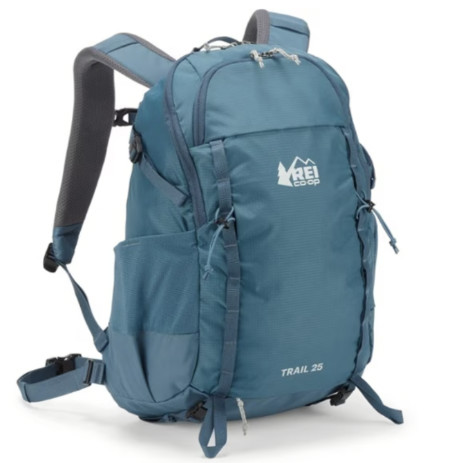
The REI Trail 25 is a multi-sport backpack that’s ideal for day hikes, commuting, and travel. The Trail 25 is a panel loader with a large U-shaped zipper that opens the front of the pack, making it easy to pack or find gear at the bottom. Two external daisy chains, ice-ax loops, and shaft holders make it easy to strap trekking poles or ice tools to the pack’s exterior. The pack is hydration system compatible and comes with a rain cover. Read the SectionHiker REI Trail 25 Review.
7. Deuter Speed Lite 21 Daypack
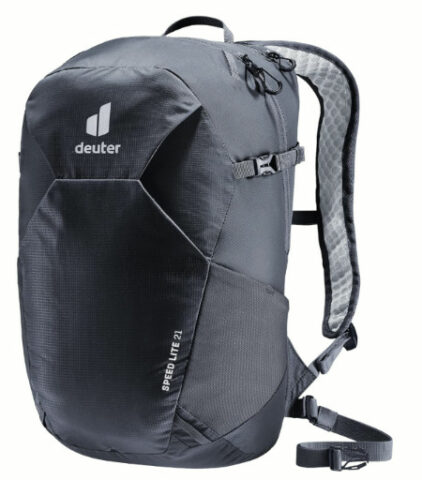
The Deuter Speed Lite 21 is a unisex daypack that features the lightest, most minimalist back system available from Deuter, with an athletic V-shaped pack body that allows for extensive freedom of movement. Its hydration-compatible design includes a zippered top valuables pocket, large front stretch pocket, and elastic mesh side pockets that can expand to fit bulkier items. Ergonomically shaped shoulder straps with full ventilation, a removable hip belt, supple hip fins & a precision-adjustable sternum strap create a snug fit with zero load wobble and distribute the weight evenly between the hips and shoulders. If you want more volume, we also recommend the Deuter Trail 30.
8. Gregory Zulu 30 Backpack
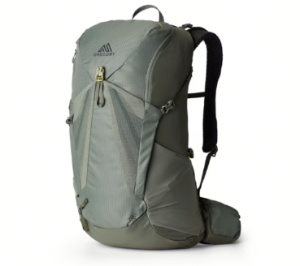
The Gregory Zulu 30 is an adjustable-length pack with a ventilated back panel and wrap-around hip belt that provides comfort and a dynamic carry that won’t weigh you down. It has two side mesh water bottle pockets, a front stretch pocket, two internal pockets (one includes an optional rain cover), an interior zippered pocket for valuables, and two hip belt pockets. A U-shaped zipper provides clamshell access to the main compartment, which has an internal hydration sleeve. The women’s model is called the Gregory Jade 28. Read our Jade 33 review.
9. Mountainsmith Zerk 25

The Mountainsmith Zerk 25 is a top-loading daypack/fastpack with vest-style shoulder straps, numerous external and closed pockets, and an optional hipbelt. Each shoulder strap has two stacked mesh pockets on the front with tensioners and gear loops along the side so you can secure items. The pockets are large enough to easily store a smartphone or a 500 ml soft bottle, making the pack convenient to use. The top lid has two zippered pockets: a large pocket on top with a key fob and a mesh pocket underneath the lid. There’s a front stretch mesh pocket, which is good for holding loose layers like rain gear, and two stacked pockets on each side, which are good for storing snacks or wrappers. The sizing is unisex. Read the SectionHiker Zerk 25 Review.
10. Osprey Daylite Plus 20L

The Osprey Daylite Plus is a lightweight, 20-liter daypack ideal for daily use, travel, and light hikes. It features a ventilated AirScape backpanel, padded shoulder straps, and a removable hip belt for comfort. The main compartment includes a padded sleeve for laptops or hydration bladders, alongside multiple organizer pockets and side mesh bottle holders. Made from durable, recycled materials with water-repellent treatment, it offers practicality and sustainability in a compact design.
Hiking Daypack Buying Guide
Consider these variables when buying a backpack for day packing:
Daypack Volume
How big should a daypack be? Most daypacks range in volume from 20L to 35L. The size you need depends on the length of your hikes and how much clothing and gear you need to carry to protect yourself against wind, rain, or snow. While a lower-capacity backpack is sufficient for 1/2-day hikes, we recommend sizing up to the 30L to 35L range for all-day hikes, peak bagging, or hut-to-hut trips where you need to carry extra food, clothing layers, water, and the 10 Essentials. See our article, How to Size a Backpack: Daypack and Backpack Volume Guide, for a more in-depth discussion.
Price
Daypacks are a lot less expensive than multi-day backpacks, but you can expect to pay anywhere between $50 to $200, at the high end. You can usually find a good daypack in the $100 range, but expect to pay more for greater volume or an adjustable-length frame. Many backpack manufacturers update their backpacks once a year, so we recommend checking in the outlet section of your favorite retailer for last year’s model. Previous year daypacks are usually just as good and considerably less expensive. Check out the REI Outlet to find the best selection.
Activities
Most daypacks can be used for multisport activities, including hiking, mountain biking, climbing, skiing, or snowboarding. For example, if you intend to use your pack for hiking and mountain biking, look for one with a helmet holder, a blinky light attachment, and reflective accents. For hiking and climbing, look for daypacks that can carry extra climbing gear, including ropes, can be worn with a climbing harness, and have a place to hold your helmet. For hiking and skiing or snowboarding, look for daypacks with an insulated hydration pocket, straps to hold skis or a snowboard, and a place to stash a shovel, avalanche beacon, and probe.
Adjustable Length
Backpack sizing, like clothing size, is usually the most important factor in how comfortable a daypack feels to wear. Backpacks are sized by a measurement called torso length, which is the distance between your hips and the tops of your shoulders. An adjustable-length backpack lets you resize a daypack so it fits you exactly, like a custom-tailored suit. It’s a premium feature and very desirable. Fixed-length backpacks are sized to fit a range of torso lengths, typically 16″-19″, which can result in a poor fit if your torso length is at the end of that range. We recommend that beginner day hikers buy an adjustable-length backpack so they can experiment with different torso lengths and dial in a proper fit.
Ventilation
If you hike in hot or humid weather or sweat a lot, consider getting a ventilated backpack that increases airflow behind your back. It can make a real difference in your comfort level by keeping your back cool and your shirt dry. Backpack ventilation varies widely, though. Some packs have a mesh-covered cavity that provides extra airflow. These work best. Still others have air channels running between the back padding or foam cutouts in the pack frame to encourage airflow.
Rain Cover
Many daypacks include a rain cover, which can save you the hassle and expense of buying one separately. While you can line your daypack with a plastic garbage bag, they don’t protect the smaller pockets at the top of your pack, where you probably store your most valuable items.
Pockets and Organization
The biggest difference between backpacks lies in the way their pockets and storage are organized. Most backpacks have open pockets exposed to the elements and closed pockets to keep items clean and dry. Open pockets are good for frequently accessed items like a jacket, sweater, snacks, water bottles, or a water filter. You don’t want to stop and dig around your backpack every time you need one of these items. Open pockets are also good for storing damp items, so they dry and don’t make the gear inside your backpack damp too. Closed pockets, including the main compartment, are good for storing items you need less frequently and want to keep dry and safe, such as your keys, cell phone, first-aid kit, an insulated jacket, or a laptop. Most backpacks will have a combination of these.
Here are a few things we look for when choosing between daypacks:
- If you carry water bottles instead of a hydration system, make sure you can reach bottles stored in the side pockets without taking off your backpack.
- If you plan to store electronics or valuables in a hip-belt pocket, look for daypacks with solid hip-belt pockets, not mesh-covered ones, because they’re more durable and water-resistant.
- Backpacks with top lids usually have excellent pockets for the smaller items that you want frequent access to.
- A front stretch mesh pocket is good for stuffing layers in for three-season hiking, but a front pocket made with solid material is better for winter hiking because it’s more durable and water-resistant.
Hydration Compatibility
All daypacks and backpacks are hydration system compatible, so that shouldn’t be a concern. Most require you to purchase a hydration system; however, this can be expensive. To save money, look for backpacks with mesh side pockets that can carry water bottles instead.
Weight
The weight of a daypack is less important than the weight of a multi-day backpack because you can’t carry as much gear, food, or water. While it’s always good to carry less weight, don’t compromise your personal safety to do so. We recommend that you get a daypack that won’t collapse on itself when packed and that rides on your hips, not your shoulders. Look for packs that weigh 40 ounces or less. That’s a good weight limit that should still give you plenty of options.
Hip Belts
Daypack hip belts vary in the amount of padding they provide. Some daypacks don’t come with hip belts, some come with a thin webbing strap, and others come with lots of padding and pockets. Simple, unpadded hip belts are used to keep a daypack from bouncing against your hips and back when you walk, while hip belts with more padding are designed to take the weight off of your shoulders and shift it to your hips. Proper fit is very important when fitting a padded hip belt. See our article How Should a Backpack Hip Belt Fit? for an in-depth explanation.
Shoulder Straps
Shoulder strap thickness also varies with daypack volume, with larger-volume packs having more padding. Here are a few things we look for:
- The sternum strap should be easily adjustable. Sternum straps connected to a rail are the easiest to adjust.
- If you plan to attach accessory pockets to your shoulder straps, look for ones with webbing loops you can thread a clip through.
- High-volume daypacks should have load lifter straps. These can help shift more weight from your shoulders to your hips. They’re particularly good for carrying heavier loads, for winter hiking, climbing, or skiing & snowboarding.
Women’s Daypacks
We believe that women should have the option to use a female-specific backpack rather than one designed for men (what passes for unisex). Women’s backpacks are available in smaller sizes, they have shoulder straps that wrap around breasts instead of smashing them flat, and hip belts that wrap around curvy female hips instead of the square boxy ones needed by men.
More Frequently Asked Questions
- What size backpack do I need for a day hike?
Most day hikes require a backpack between 15 and 30 liters, depending on how much gear, food, and water you plan to carry. - How many liters should a day hiking backpack be?
For most people, 20–25 liters is ideal for a standard day hike. - What features should I look for in a day hiking backpack?
Look for padded shoulder straps, a hip belt, a ventilated back panel, a hydration reservoir sleeve, multiple pockets, and durable material. - Are daypacks waterproof?
Most are water-resistant but not fully waterproof. Use a rain cover or pack contents in dry bags if you expect wet conditions. - How much should a day hiking backpack weigh when empty?
Under 2 pounds (about 1 kg) is typical for a lightweight daypack. - What is the difference between a daypack and a regular backpack?
A daypack is smaller, lighter, and designed for hiking comfort with features like hydration sleeves and better weight distribution. - How do I choose the right fit for a day hiking backpack?
Check the torso length and adjust the shoulder straps and hip belt so that most of the weight sits on your hips. - Can I use a school backpack for day hiking?
You can, but dedicated hiking packs are more comfortable and have features better suited for trails. - How do I pack a day hiking backpack efficiently?
Pack heavier items close to your back, lighter items at the top, and keep essentials easily accessible in outer pockets. - What are the best brands for day hiking backpacks?
Popular brands include Osprey, Deuter, Gregory, REI Co-op, The North Face, and CamelBak. - Should I get a hydration reservoir or use water bottles?
Hydration reservoirs are convenient for sipping on the go; bottles are easier to fill and clean. Many packs accommodate both. - What is the best way to clean a day hiking backpack?
Hand wash with mild soap and air dry. Remove the frame and wash hydration reservoirs separately. - How do I prevent back pain with a loaded daypack?
Adjust the fit so that most of the weight is on your hips, not your shoulders; pack evenly; don’t overload. - Are there women ’s-specific day hiking backpacks?
Yes, women’s packs have shorter torso lengths, shaped shoulder straps, and contoured hip belts for a better fit. - What’s the most comfortable daypack for long hikes?
Look for adjustable suspension, padded straps, ventilated back panels, and a good hip belt. - Do I need a frame in my day hiking backpack?
For light loads, no frame is fine; for heavier loads or all-day comfort, a light internal frame can help. - How much weight can a day hiking backpack carry?
Typically up to 15–20 pounds (7–9 kg), depending on the design. - What’s the difference between men’s and women’s daypacks?
Women’s packs are tailored to female body shapes—shorter backs and different strap positions. - Can I bring my laptop in a day hiking backpack?
Some packs have laptop sleeves, but carrying electronics on rugged trails isn’t recommended unless needed. - Are there eco-friendly options for day hiking backpacks?
Yes, some brands use recycled materials or environmentally friendly manufacturing processes. - Is ventilation important in a daypack?
Yes—ventilated back panels help reduce sweating and keep you cooler. - Can I take a day hiking backpack as carry-on luggage on planes?
Yes, most are small enough to qualify as carry-on bags. - How many compartments should a good daypack have?
At least one main compartment plus several smaller pockets for organization. - Are there ultralight day hiking backpacks?
Yes—some models weigh less than 1 pound but may have fewer features and less padding. - What size backpack do kids need for day hikes?
Usually 10–20 liters, depending on age and how much they carry on their own. - Can you attach trekking poles to all daypacks?
Many have loops or bungee cords for poles; check specific models if this is important to you. - How do I adjust the straps on my backpack for comfort?
Tighten the hip belt first, then the shoulder straps; adjust the load-lifter straps as needed. - What is a sternum strap, and why is it important?
It connects the shoulder straps across your chest to stabilize the pack and distribute weight more evenly. - How do I prevent blisters from my backpack straps?
Make sure the fit is correct, wear moisture-wicking clothing, and add padding if needed. - Are there anti-theft features in hiking daypacks?
Some packs have lockable zippers or hidden pockets, but anti-theft features are more common in travel bags. - Can I use a hydration bladder in any backpack?
Many regular backpacks can fit one, but hiking packs usually have dedicated sleeves and hose ports. - What’s the best way to store snacks and food in my pack?
Use external pockets or top compartments for easy access; pack messy items in resealable bags. - How do I keep my gear dry in the rain?
Use a rain cover or waterproof stuff sacks inside your pack. - Are there insulated compartments for cold drinks in daypacks?
Some packs have insulated pockets or bottle sleeves, but it’s not standard on all models. - What’s the best way to carry a camera in a day hiking backpack?
Use a padded case inside or consider camera-specific inserts; keep it near the top for quick access. - Can children use adult-sized daypacks?
Not comfortably—kids should use youth-sized packs designed for their torso length. - Do I need hip belts for a small day-hiking backpack?
For very light loads (under 10 pounds), hip belts aren’t essential but still add stability and comfort. - What materials are best for durability in daypacks?
Nylon and polyester are common—look for ripstop fabrics for added strength. - How do I wash and dry my backpack without damaging it?
Hand wash gently with mild soap; avoid machines; air dry completely before storing. - Can I attach extra gear to the outside of my pack?
Yes—use loops or bungee cords for items like jackets or trekking poles. - How do I stop my water bottle from falling out of the side pockets?
Choose packs with deep or elasticized pockets; secure bottles with cords if necessary. - Are there backpacks designed for specific activities (like climbing or trail running)?
Yes—some are specialized, with features like ice-axe loops or bounce-free designs for running. - How long should a good-quality day-hiking backpack last?
With normal use, at least 5–10 years; durability depends on the material and care. - What repair kits or spare parts should I bring for my pack?
Duct tape, safety pins, spare buckles, and zipper pulls can fix common issues on the trail. - Are reflective details important on a hiking backpack?
They’re useful if you hike near roads or in low light but aren’t essential for most trails. - Is it worth spending more on an expensive daypack?
Often yes—higher-end packs offer better comfort, durability, and features that can make hiking more enjoyable. - What color should I choose for visibility and style?
Bright colors increase visibility; darker colors hide dirt but may attract more heat from sunlight. - Can you use a hydration pack as your only bag for short hikes?
Yes—many hydration packs have enough room for essentials on short outings. - Should I get a pack with a rain cover included or buy one separately?
Either works—if your pack doesn’t include one, buy an appropriately sized rain cover separately. - How do I avoid sweaty back syndrome while hiking?
Ventilated mesh back panels help airflow; wearing moisture-wicking shirts can also reduce discomfort.
SectionHiker never accepts payment for gear reviews or editorial coverage. When you buy through affiliate links on our site, we may earn a small commission at no extra cost to you. Help us continue to test and write unsponsored and independent gear reviews, hiking and backpacking FAQs, and free hiking guides.







 English (US) ·