
.jpg)
PROTECT YOUR DNA WITH QUANTUM TECHNOLOGY
Orgo-Life the new way to the future Advertising by Adpathway 
One person, solo backpacking tents are ideal if you’re thru-hiking, fast-packing, or backpacking big miles and want to trim your gear weight as low as possible. More livable than bivy sacks, one-person tents are designed for sleeping and bad weather protection. While some solo tents are more plush and spacious than others, you almost always have to choose between competing priorities, including weight, ease of use, durability, and cost, when selecting one. This can make it tough to choose between tents, especially since few stores have display models anymore.
Taking these different priorities into consideration, here are our picks for the best one-person backpacking tents.
1. Zpacks Pivot Solo Tent

The Zpacks Pivot Solo 1P is a single-person, ultralight backpacking tent made with Dyneema DCF that weighs 13.5 oz. It has a spacious interior compared to Zpack’s other pyramid-style single-person tents, with plenty of room above your head because its peak is at the end and not in the middle. It requires two trekking poles for setup and is surprisingly wind-resistant when staked out. Read the SectionHiker Zpacks Povot Solo Review.
2. Durston X-Mid Pro 1
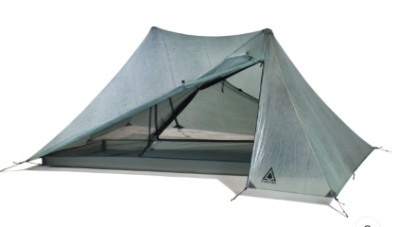
The Durston X-Mid Pro 1 is a single-wall trekking pole tent made with ultralight Dyneema DCF. It is extremely easy to set up and requires 2 trekking poles. It has a very spacious interior with a 32″ wide bathtub floor and is long enough to accommodate hikers up to 6’8″ in height. Numerous refinements make it quite livable, including dual doors and vestibules, peak vents, and magnetic door toggles. The X-Mid Pro 1 is quite storm-worthy and includes extra guy-out points for extreme conditions. Read the SectionHiker X-Mid Pro 1 Review.
3. Hyperlite Mountain Gear X-Mid 1

The Hyperlite Mountain Gear Mid-1 Tent is an ultralight single-wall Dyneema DCF tent that weighs 16 oz. It has a pyramid shape with steep walls and a very long bathtub floor, making it ideal for tall backpackers or those seeking more interior space. The floor is floating and attached to the tent walls with no-see-um mesh to enhance airflow. The tent requires 1 trekking pole to pitch. Read the SectionHiker Hyperlite Mid-1 Tent Review.
4. Big Agnes Copper Spur UL1

The Big Agnes Copper Spur UL1 is a spacious, freestanding double-wall tent that’s easy to set up and has a trail weight of just 32 oz. With a “porchable” side door, a high vent, and two-way door zips, the Copper Spur offers plenty of options to vent excess moisture, increase airflow, and reduce internal condensation. The side door makes getting in and out easy, and the large front vestibule lets you store gear without blocking access. A ceiling pocket, media pockets, and internal hang points help keep your gear organized and tucked out of the way. A longtime backpacker favorite, the well-appointed Copper Spur strikes an excellent balance between luxury and low weight.
5. NEMO Hornet OSMO Ultralight 1P

The NEMO Hornet OSMO Ultralight 1P is a 29 oz ultralight semi-free-standing double-wall tent made with a nylon/polyester rain fly that won’t sag in the rain. It has a single-side door with lots of mesh for ventilation and to help prevent the transfer of internal condensation. The side vestibule over the door provides ample gear storage without obstructing entry or exit. But the thing that sets his tent apart from others is the poles, which, when collapsed, are only 12.5″ long, making it possible to pack horizontally in almost any backpack! An even lighter-weight but more expensive version is available: the NEMO Hornet Elite OSMO 1P, which weighs only 23 oz.
6. Six Moon Designs Lunar Solo

The Six Moon Designs Lunar Solo is an ultralight style, single-wall tent that’s pitched with a single trekking pole. Weighing 26 ounces, the Lunar Solo has a bathtub style floor to prevent flooding in the rain and a side door, making entry easy. The interior is quite roomy, with a hexagon-shaped floor, providing room to store your gear in the tent, and plenty of headroom to sit up inside. A large vestibule also provides gear storage. The Lunar Solo upper is made with a 20d silicone-coated polyester, reducing fabric stretch and packed volume, while the floor utilizes a durable 40D fabric. Read the SectionHiker Lunar Solo Review.
7. MSR Hubba Hubba LT 1 Tent

The MSR Hubba Hubba LT 1 is easy to set up and well-ventilated. Freestanding, the pole configuration creates an interior space with near-vertical walls and a rectangular floor plan, enabling the use of a wide 25″ sleeping pad. In addition to the front vestibule, there is an interior gear loft and clothesline for drying your wet socks. With a trail weight of 2 pounds and 6 ounces, the Hubba Hubba LT 1 is a bombproof shelter that’s still lightweight enough for one person. Read the SectionHiker Hubba Hubba LT 1 Review.
8. Tarptent Rainbow

The Tarptent Rainbow is one of the few ultralight tents available today that does not require trekking poles to pitch. Instead, it comes with two poles, a long central one and a short brow pole that create a large internal living space that can fit a 25″ sleeping pad with ease and create two full-size vestibules that provide ample gear storage space. The Rainbow is easy to set up because the fly and floor are fully integrated, and the interior will stay dry even if you need to pitch it in the rain. It is made with 20D silicone-coated polyester with a 30D silnylon 66 floor for excellent strength and durability, even in very heavy rain. Read the SectionHiker Double Rainbow and Rainbow Li Reviews.
9. Durston X-Dome 1+

The Durston X-Dome 1+ is a spacious double-wall freestanding tent. At just 35 oz (985 g), the X-Dome 1+ sets up fly first and has a diagonal floor plan, providing more covered vestibule space and a longer interior than comparable dome-style tents. The tent is made with 15d high tenacity polyester, so the fly does not stretch when wet. The fly can also be pitched on its own, reducing the carry weight to 24 oz. Read the SectionHiker X-Dome 1+ Review.
10. Tarptent Notch Li
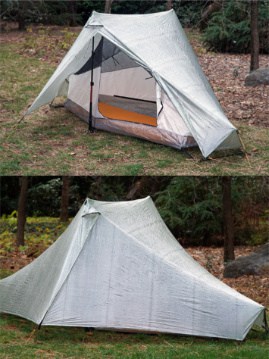
The Tarptent Notch Li is a one-person, double-wall tent with two vestibules and two doors that weighs 21.4 oz. It’s a wind and weather-worthy shelter made with Dyneema DCF. Internal livability is excellent, with plenty of headroom, space for a wide 25″ sleeping pad, and large vestibule spaces for gear storage, cooking in the rain, or a canine companion. Peak and end vents help maintain ventilation even in crappy weather. The inner tent can be set up by itself with trekking poles in dry weather, and a solid inner tent is also available to extend the tent’s range in colder winter weather. Read the SectionHiker Notch Li Review.
Tent Selection Criteria
Here are the most important variables to consider when buying a backpacking or camping tent.
WEIGHT/TRAIL WEIGHT – The total weight of a tent usually measures the tent and all of its packaging, while the trail weight is the weight of its poles, inner tent, outer rain fly, minus any tent stakes. Why the difference? Most people replace the tent stakes that come with a tent with lighter-weight or stronger ones and leave all the extra stuff sacks and packaging at home rather than carry it.
TYPE – Trekking pole tents require trekking poles for setup. Freestanding and semi-freestanding tents come with shelter-specific tent poles. Freestanding tents can be set up without being staked out and are desirable because you can pitch them anywhere, including on rock ledges, sand, or snow. In contrast, semi-freestanding tents must be staked down, which limits the places you can use them.
DIMENSIONS – When selecting a tent, consider how much width, length, and height (headroom) you desire. Do you use a wide sleeping pad? How tall are you? Do you want to bring your gear inside the tent at night, or are you ok with storing it under a vestibule? Do you want to be able to sit up in the tent or change your clothing? These are all factors to consider. When evaluating tent dimensions, particularly if it is a double-wall tent, make sure you understand whether the stated dimensions measure the width and length of the interior, not the width and length of the rain fly, which is often much larger and can give the illusion of spaciousness.
TENT POLES – Tent poles are made using fiberglass, aluminum, or carbon fiber. Aluminum is the most durable of the three, while carbon fiber is typically used only in very high-end tents where the focus is on low weight. Fiberglass poles are the least durable tent poles and break frequently. So much so, that we recommend avoiding any tent with fiberglass poles. All the ones above have aluminum poles or use trekking poles. Most manufacturers who sell trekking pole tents offer regular tent poles as an add-on purchase.
DURABILITY – The floor of a tent is the part of a tent most likely to be punctured or torn as a result of ground abrasion. While using a footprint on floors that are 20 denier thick or less is always recommended, it’s far less necessary on 30 denier or higher floors, except on highly abrasive or rough terrain.
DOORS – Tents with two side doors are often preferable when purchasing a tent for two because each occupant can get in and out without disturbing the other.
INTERIOR STORAGE – Interior pockets and storage organization is a plus in a multi-person tent. Look for internal pockets and gear loops to hang gear from the ceiling. A gear loft is an added bonus. Vestibule space is always a plus, especially if there are multiple doors, so that gear storage does not block entry and exit.
VENTILATION – All tents experience tent condensation, but good tent site selection and ventilation are the best ways to avoid it. Look for tents with lots of mesh netting to improve airflow, top vents to release moist air, and door tie-backs to roll up tent doors and keep them open at night.
SectionHiker never accepts payment for gear reviews or editorial coverage. When you buy through affiliate links on our site, we may earn a small commission at no extra cost to you. Help us continue to test and write unsponsored and independent gear reviews, hiking and backpacking FAQs, and free hiking guides.







 English (US) ·