
.jpg)
PROTECT YOUR DNA WITH QUANTUM TECHNOLOGY
Orgo-Life the new way to the future Advertising by Adpathway 
Trail runners and hiking shoes have become increasingly popular with hikers and backpackers because they’re lighter weight than hiking boots and dry faster. The biggest difference between trail runners and hiking shoes is that (low) hiking shoes, which tend to be heavier and more durable, can only be used for walking, while trail runners can be used for walking and running. Given their popularity among hikers, it makes sense to list them together so you can weigh their pros and cons.
Preferences vary widely, however, and some hikers prefer waterproof footwear, thick cushioning, more durable hiking shoes, or ultralight mesh trail runners that dry quickly when they get wet. Regardless of your preferences, it’s important to choose footwear that fits well and is appropriate for the conditions you plan to hike in, especially regarding temperature, terrain difficulty, and the weight of the loads you expect to carry.
Here are the 10 best trail runners and hiking shoes that we recommend.
1. Altra Lone Peak 9+ Trail Runners

- Type: Trail Runner
- Cushion: Medium
- Drop: 0 mm
- Wide Sizes: Yes
- Durability: Average
The Altra Lone Peak 9+ is the most popular trail running shoe used by hikers, backpackers, and thru-hikers by a wide margin. Noted for its roomy toe box, splayed forefoot, and integrated tongue, the moderately cushioned Lone Peak has mesh uppers for enhanced breathability and drainage. This zero-drop shoe has a toothy lugged sole that provides good traction, with an integrated rock guard that offers enhanced forefoot protection. An innovative gaiter trap on the rear of the shoe holds your gaiters in place. This newest model features a Vibram Megagrip sole for increased traction. Read the SectionHiker Altra Lone Peak 9+ Review.
2. Hoka Speedgoat 7 Trail Runner

- Type: Trail Runner
- Cushion: Maximum
- Drop: 5 mm
- Wide Sizes: Available
- Durability: Average
The Hoka Speedgoat 7 is a well-cushioned, mesh trail running shoe that provides sure-footed traction in rough terrain. A Vibram Megagrip rubber outsole provides grip in wet and dry conditions, while the 5 mm drop lets you enjoy the benefits of a lower-drop shoe without a long adaptation period. The Speedgoat also has an extended heel geometry and enhanced front rocker, allowing for smoother heel-to-toe transitions and easier push-off. Whether you’re running or hiking, this helps preserve your pace. However, the Speedgoat 7 has a pronounced stack height that reduces trail feel in situations like rock scrambling, where a lower-profile shoe might provide greater sensitivity.
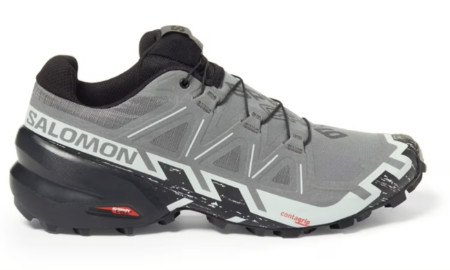
3. Salomon Speedcross 6 Trail Runner
- Type: Trail Runner
- Cushion: Medium
- Drop: 11 mm
- Wide Sizes: Available
- Durability: Excellent
The Salomon Speedcross 6 is a tough trail runner designed for hiking and running in challenging terrain. Designed for mud, soft soil, and running in shoulder season conditions (think snow, slush, puddles), it has long 5 mm lugs that provide superb traction. That, along with a high stack height (32 mm heel/22 mm forefoot), ensures plenty of underfoot protection. Tightly woven mesh panels with overlaps for abrasion resistance provide good drainage and prevent sand and grit from entering the shoe, but can limit ventilation in hot weather. The toe box width in this latest generation is wider and more comfortable than in previous models. The Speedcross 6 uses Salomon’s proprietary quicklace system, which eliminates the need to tie your shoes but is replaceable if you prefer a more conventional lacing system.
4. Topo Ultraventure 4 Trail Runner

- Type: Trail Runner
- Cushion: Maximum
- Drop: 5 mm
- Wide Sizes: Available
- Durability: Average
The Topo Ultraventure 4 is a lightweight trail shoe engineered for long-distance comfort and rugged performance. Featuring a Vibram sole for industry-leading grip, responsive cushioning, and a breathable mesh upper, the Ultraventure 4 delivers all-day comfort on technical singletrack and rocky climbs. The Vibram outsole’s multi-directional lugs ensure confident traction on wet roots, loose scree, and steep descents, while a durable toe cap protects against trail debris. A stable midsole platform, secure lace system, and heel-lock fit reduce fatigue and blisters for hikers covering long miles. Ideal for hikers and ultra runners seeking reliable durability, superior traction, and breathable comfort on varied off-road terrain.
5. La Sportiva Wildcat Trail Runner

- Type: Trail Runner
- Cushion: Medium
- Drop: 12 mm
- Wide Sizes: No
- Durability: Above Average
While the La Sportiva Wildcat is classified as a trail runner, it provides the support of a hiking shoe, making it a good choice if you want a little bit of both. It has well-draining mesh uppers, a wide toe box, and a sticky rubber sole that provides excellent traction on dry or wet rock. The midsoles have nylon shanks and EVA lasting boards that provide the same cushioning and rigidity you find in a hiking shoe, with extra heel stabilizers. With a 12 mm drop, the Wildcat doesn’t require the same acclimatization time as a zero or low-drop trail runner, making it wearable out of the box. Read the SectionHiker Wildcat Shoe Review.
6. Brooks Cascadia 19 Trail Runners

- Type: Hiking Shoe
- Cushion: Maximum
- Drop: 6 mm
- Wide Sizes: Available
- Durability: Above average
The Brooks Cascadia 19 is a rugged, stable trail shoe designed for long-distance hikes and technical trail runs. It features a breathable engineered mesh upper with reinforced toe protection to keep feet cool and shielded on rocky terrain. Its outsole delivers superior traction and multi-directional lugs for confident grip on mud, wet roots, and loose scree. Responsive cushioning and a supportive midsole rock plate absorb impact and smooth transitions over roots and rocks. A secure gusseted tongue, adaptive fit, and durable overlays reduce slippage and hotspots. Ideal for hikers and trail runners seeking stability, dependable traction, and lasting comfort on varied off-road terrain.
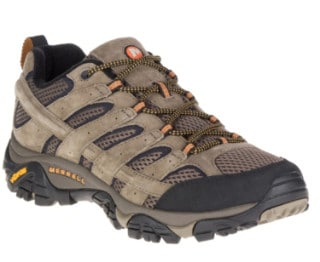
7. Merrell Moab 3 Hiking Shoes
- Type: Hiking Shoe
- Cushion: Medium
- Drop: 11 mm
- Wide Sizes: Available
- Durability: Excellent
The Merrell Moab 3 is a combination mesh and leather trail shoe that features excellent breathability, durability, and the added protection of leather uppers. A reinforced toe cap provides great foot protection for rocky scrambles, while a rockered sole helps sustain forward momentum. The Vibram sole has large 5 mm lugs that provide added traction in sand and mud, while a hard nylon shank provides arch support and protection. The Moab 3 is a very stable shoe that resists rolling, with air cushioning in the heels, midsole, and tongue for enhanced shock absorption while still providing the shoes with an excellent level of “trail feel”, which is a little surprising to find in an otherwise burly trail shoe. Wide-width sizes and waterproof versions are also available. Read the SectionHiker Moab 3 review.
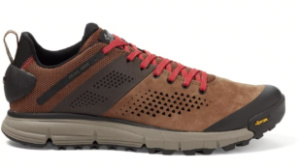
8. Danner Trail 2650 GTX Hiking Shoe
- Type: Hiking Shoe
- Cushion: Medium
- Drop: 8 mm
- Wide Sizes: Yes
- Durability: Excellent
The Danner Trail 2650 GTX is a stable, lightweight leather hiking shoe that’s good for hiking and backpacking in moderately challenging and rugged terrain (non-waterproof and mesh versions are also available). It’s substantially more durable than a mesh trail runner but is still quite agile. Reinforced heel counters and an ultralight TPU shank provide lightweight support and protection, while Vibram Megagrip outsoles provide exceptional traction on rocky or wet terrain. The toe box is large enough to let your toes splay out, and wide sizes are also available. In addition to trail use, the Trail 2650 is stylish enough that you can wear it out or to work and no one will know you’re wearing your hiking shoes. But their biggest win in our minds is durability compared to most mesh trail runners. Read our Danner Trail 2650 GTX Review.
9. KEEN Targhee IV Waterproof Low Hiking Shoes

- Type: Hiking Shoes
- Cushion: Medium
- Drop: 12 mm
- Wide Sizes: Yes
- Durability: Excellent
KEEN’s Targhee IV Waterproof Hiking Shoes are bomber-durable hiking shoes made with soft and pliable nubuck leather with a KEEN.dry waterproof liner. They have a wide toe box so your feet can splay out and relax with 4mm multidirectional rubber lugs that offer a high-traction grip. Despite being leather, the shoes don’t require much, if any, break-in time. They have an internal shank that provides support and protection against pebbles and sharp rocks, but the level of cushioning provided is just average and nothing exceptional. The fit of these shoes runs wide, but wide sizes are also available.
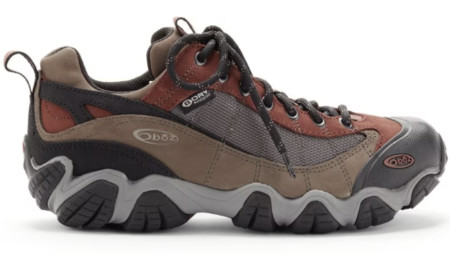
10. Oboz Firebrand II Low Hiking Shoes
- Type: Hiking Shoe
- Cushion: Medium
- Drop: 15 mm
- Wide Sizes: Yes
- Durability: Excellent
The Oboz Firebrand II Low WP is a rugged waterproof hiking shoe with nubuck leather uppers and abrasion-resistant nylon mesh panels for breathability. A burly front toe kick and EVA midsole provide ample protection in front and from below, while nylon shanks offer torsional stability increasing surefootedness on varied terrain. The toe box is well protected by front and side impacts while the interior provides ample room for your toes to splay out. The burly sole provides excellent traction across a variety of surfaces (think 4-heel drive) although the sole is not as sticky on wet rock as a trail runner. Oboz, unlike other trail runners or hiking shoe manufacturers, includes a high-quality insole in all of its shoes and boots comparable to Superfeet’s insoles in terms of comfort, durability, and support. Their insoles are so good you can purchase them separately and use them in any footwear.
How To Choose Hiking Shoes and Trail Runners
There’s a lot of variety available when it comes to hiking footwear and ad people have a wide range of personal preferences. This is why we highly recommend that you try lots of different options if you’re making a new selection, so you can discover what your preferences are. Here are some guidelines about things you should consider when choosing between different hiking boots, trail shoes, and trail runners. For example, some thru-hikers can get an entire hike out of a pair of hiking shoes but will go through three or more pairs of trail runners to travel the same distance. That can get kind of expensive, as you can imagine.
Hiking Shoes vs Trail Runners: What’s the Difference?
Hiking shoes are really just meant for walking, while trail runners can be used for walking or running. That’s probably the simplest definition. The truth is there is a lot of overlap between the categories. In general however, you’ll find that hiking shoes are heavier and more durable, while trail runners wear out much more quickly because they’re lighter weight and made with less durable materials.
Sweat can lead to blisters
The buildup of sweat inside of hiking footwear and your socks can lead to blisters. When your socks stick to your skin, they can cause friction, and a friction burn, which is how blisters form. Breathability is key to preventing sweat build-up, which is why so many hikers prefer mesh hiking footwear since it dries while you wear it.
Black toenails indicate a poor fit
If your toenails turn black when you hike, it’s because your toes do not have enough room in the front of your footwear. Size up or select footwear that has a larger toe box by design. Altra and KEEN shoes and boots have an exaggerated-size toe box, which is why they’re so popular with hikers and backpackers.
After-Market Insoles
One-third of hikers and backpackers buy after-market insoles, such as Superfeet, to replace the insoles that come with their hiking boots, mids, trail shoes, and trail runners. These provide more protection, more arch support, and cup your heel to help prevent the lateral movement that can cause plantar fasciitis. They also last longer than factory insoles.
Waterproof/breathable footwear dries slowly
Waterproof/breathable footwear tends to dry much more slowly than non-waterproof footwear. While waterproof hiking boots and shoes are good for hiking in cold weather, it’s often more desirable to have a well-vented mesh shoe that dries quickly than one that stays wet for days and can lead to blisters and other discomforts.
Ankle Rolling
Many hikers opt for boots/mids because think they’re necessary for carrying heavier-weight backpacks and provide more ankle support than low hiking shoes or trail runners. While that was probably true when all hiking boots were made with heavy leather, modern hiking boots and mids are much softer and less supportive and are really just one step up from being trail or running shoes. While they can provide more assurance, you can still twist an ankle when wearing one. On the flip side, many hikers and backpackers are able to carry heavy packs and walk on rugged mountainous terrain in trail shoes and trail runners. In other words, there’s no right answer and you should decide for yourself, rather than follow anyone’s gospel truth.
Traction
Boot and shoe manufacturers make a big deal about traction and while it is important, it’s very difficult to prove that different sole compositions, lug angles, lug depth, Vibram or non-Vibram soles, blah, blah, blah, etc. make that big of an impact on traction. When push comes to shove, the only hiking traction that really matters is when you’re scrambling on wet rock or walking along a cliff edge. Even then, good footwork is probably more important, so develop that rather than relying on your shoes.
Toe and Foot protection
Hiking and backpacking can be tough on the feet, particularly around the toes and under the arch. It doesn’t affect everyone, but it can lead to injuries that take a long time to heal. Built-up areas around the toes, sometimes called toe kicks, are good if you hike in rocky terrain. A shank is usually a hard strip of nylon or plastic that runs under the arch and helps stiffen a shoe or boot. Rock plates and stone guards in the forefoot of the shoe provide additional protection from sharp stones that can bruise your feet, particularly when trail running.
Gaiters
Hikers wear gaiters to block sticks, stones, and other debris from getting into their shoes while they hike. But some shoes are more gaiter compatible than others. For example, if your gaiters have a strap that loops under your shoe, you’re going to want to have footwear that has an arch, so the gaiter strap doesn’t get destroyed by rubbing on the ground. Gaiters designed for trail shoes or trail runners may require gluing a velcro strip to the back of your heel to hold the gaiter in place. If this is the case, make sure there is a flat surface on the back of the heel so you can glue the velcro strip to it.
Wide Shoe Sizes
About 1/3 of all hikers require footwear in wide widths. Companies such as Merrell, KEEN, Brooks, and Vasque have the best selection of wide-width hiking footwear.
SectionHiker never accepts payment for gear reviews or editorial coverage. When you buy through affiliate links on our site, we may earn a small commission at no extra cost to you. Help us continue to test and write unsponsored and independent gear reviews, hiking and backpacking FAQs, and free hiking guides.








 English (US) ·