
.jpg)
PROTECT YOUR DNA WITH QUANTUM TECHNOLOGY
Orgo-Life the new way to the future Advertising by Adpathway 
There are still many budget-friendly ultralight backpacking tents available for under $300. They’re made with conventional fabrics such as siliconized polyester, siliconized nylon, or ripstop nylon, all of which have a well-established history of durability. If spending an arm and a leg on an ultralight Dyneema DCF tent is out of your reach, here are the Best AFFORDABLE Ultralight Backpacking Tents, both single-wall and double-wall tents, that we recommend.
1. Six Moon Designs Lunar Solo

The Six Moon Designs Lunar Solo is an ultralight style, single-wall tent that’s pitched with a single trekking pole. Weighing 26 ounces, the Lunar Solo has a bathtub style floor to prevent flooding in the rain and a side door, making entry easy. The interior is quite roomy, with a hexagon-shaped floor that provides space to store your gear in the tent and plenty of headroom to sit up inside. A large vestibule also provides gear storage and room to cook in bad weather. The Lunar Solo upper is made with a 20d silicone-coated polyester, reducing fabric stretch and packed volume, while the floor utilizes a durable 40D fabric. Read the SectionHiker Lunar Solo Review.
2. Six Moon Designs Skyscape Trekker

The Skyscape Trekker (28 oz) is a large and airy tent good for tall hikers or people who like a lot of ventilation. It has two large side doors and vestibules for gear storage. It requires two trekking poles (accessory poles available separately) and includes a third roof strut to link the two poles and create a ceiling. The tent has a hybrid single-wall, double-wall design in which 80% of the rain fly is separated from you by no-see-um mesh. The Trekker is made with low-stretch siliconized polyester but must be seam-sealed before use (available for an extra fee). read the SectionHiker Skyscape Trekker Review.
3. Featherstone Backbone 2P tent

The Featherstone Backbone 2P is an affordable ultralight single-wall tent for two people that requires two trekking poles to set up. Weighing 2 lbs 8 oz, it has many features found on much more expensive ultralight tents, including peak vents, corner struts, line loc tensioners, waterproof door zippers, and dual vestibule hooks. It’s made with PU-coated silnylon, so it’s seam-taped and comes complete with 15 tent stakes. Rather than having symmetric sides, the pole positioning ratio is offset 40/60 to provide more overhead room at the head end for sitting up and moving around. Struts, inserted at the foot-end corners, further increase the space above your feet without requiring a larger footprint, so the tent can fit into smaller tent sites. Read the SectionHiker Backbone Tent Review.
4. Tarptent ProTrek

The Tarptent ProTrek (23.5 oz) is a one-person ultralight tent with dual front and side entry, roll-up rear venting, space for tall users, and a compact footprint that allows it to squeeze into nearly any campsite. Despite its small footprint, it has a spacious interior that fits wide sleeping pads up to 28 in / 71 cm wide, and users up to 6 ft 6 in / 1.98 m, yet packs to under 12 in / 30.5 cm so it can still fit into very small ultralight backpacks with ease. The ProTrek is made with a silicone-coated 20D high-tenacity polyester fly and 30D nylon 66 floor fabrics, which provide superior strength and durability and require seam-sealing before use. Review forthcoming soon.
5. 3F UL Lanshan Pro 1
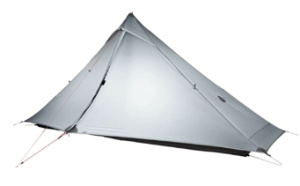
The 3FUL Lanshan 1 Pro (24.2 oz) is an ultralight single-wall trekking-pole tent with a side door and vestibule that can be rolled back in good weather for ventilation and views. The interior has a fully integrated bathtub floor, so you can pitch the tent in the pouring rain and still keep the interior dry. The tent is made of silicone-impregnated nylon (silnylon) and must be manually seam-sealed before use in rainy weather. The Lanshan 1 Pro is remarkably similar to the Six Moon Designs Lunar Solo. The biggest difference between the two is that the Lanshan 1 Pro is made with silnylon which tends to sag a bit when it gets wet, while the Lunar Solo is made with siliconized polyester, which sags less. Read the Section Hiker Lanshan Pro Tent Review.
6. Tarptent Rainbow
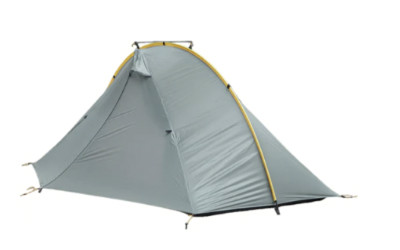
The Tarptent Rainbow is one of the few ultralight tents available today that does not require trekking poles to pitch. Instead, it comes with two poles, a long central one and a short brow pole that create a large internal living space that can fit a 25″ sleeping pad with ease and create two full-size vestibules that provide ample gear storage space. The Rainbow is easy to set up because the fly and floor are fully integrated, and the interior will stay dry even if you need to pitch it in the rain. It is made with 20D silicone-coated polyester with a 30D silnylon 66 floor for excellent strength and durability, even in very heavy rain. Read the SectionHiker Double Rainbow and Rainbow Li Reviews.
7. Durston X-Mid 1

The Durston X-Mid 1P is a 28-ounce double-wall trekking pole tent that is exceptionally easy to set up. This 2-door tent is made of 20D polyester with a 2500mm sil/PEU coating and requires trekking poles to pitch. All seams are taped, and the inner tent is optional, so you can use the rainfly if desired. The X-mid can be set up first in the rain to keep the inner tent dry, and it offers plenty of interior gear storage. This mid-style tent is quite stormworthy and includes extra guy-out points for extreme conditions. Read the SectionHiker X-Mid 1P review.
9. Six Moon Designs Skyscape Scout

The Six Moon Designs Skyscape Scout (SMD Scout) is an inexpensive 40 ounce, one-person, trekking pole-supported tent. It is a great option for tall hikers, backpackers who want to try out a trekking pole tent at an affordable price, or boy scouts (hence the name), who are ready for their own tent. It’s a heavier and less expensive version of the Skyscape Trekker listed above. It has two large side doors and vestibules for gear storage, requires two trekking poles to set up and includes a third roof strut to link the two poles and create a ceiling. The tent has a hybrid single-wall, double-wall design in which 80% of the rain fly is separated from you by no-see-um mesh. Read the SectionHiker Skyscape Scout Review.
10. 3F UL Lanshan 2 Trekking Pole Tent
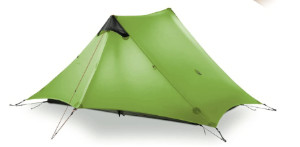
The 3FUL LanShan 2 Tent is a two-person trekking pole tent that’s lightweight, inexpensive, and reasonably well made. It’s different than the LanShan Pro listed above because its a double wall tent with a separate mesh inner tent with a bathtub floor, an external rainfly, with two separate doors and spacious vestibules. Weighing 2 lbs 7 oz, the Lanshan 2 is made with Sil/PU coated ripstop nylon. While this tent is sold by many offshore resellers, we recommend you purchase it on Amazon, where there’s purchaser protection in terms of shipping delays and manufacturer warranties. Read the SectionHiker Lanshan 2 Tent Review.
UL Backpacking Tent Selection Guide
Backpacking tent manufacturers that make ultralight tents use a wide range of materials and designs. When shopping for a tent, it’s important to understand the tradeoffs of the models you’re considering and how they can complement your adventures.
Ultralight Tent Materials and Price Points
Trekking poles tents are available in a variety of different materials and at different price points. Dyneema DCF is the lightest weight material and the most expensive, in part because it requires specialized manufacturing processes. Tents made with siliconized polyester (silpoly), siliconized nylon (silylon), and Polyurethane (PU) coated silnylon are much less expensive than Dyneema because they can be sewn using conventional methods. These three fabrics are also roughly comparable in price. It’d be difficult to say which is the best to make tents with because fabric quality varies widely depending on the manufacturer and specification to which it is made. That said, ultralight tentmakers are beginning to switch away from silnylon to silpoly because it has less stretch when it gets wet than silnylon and absorbs less water.
- Tents made with Dyneema DCF are very expensive, but also very lightweight, waterproof, and strong. They are more prone to damage from sunlight over the long term, but that’s seldom an issue for most people. Dyneema tents must be folded when packed not stuffed, but can still be surprisingly bulky despite their low weight.
- Tents made with siliconized polyester (silpoly) are an attractive alternative to Dyneema DCF because they don’t stretch much overnight or when they get wet from rain. They’re also far less expensive and some are seam-taped, so you can use them out of the box without any seam sealing.
- Tents made with PU-coated silnylon are generally more waterproof than regular silnylon, but you need to compare their waterproofing specs to be sure. The chief benefit of the PU coating over regular silnylon is improved UV resistance and the fact that the material can be factory seam-taped.
- Tents made with silnylon are still common because it’s an easy material for manufacturers to work with. While silnylon does stretch at night and when it gets wet, it’s not as big a deal as people make it out to be. Silnylon tents must be manually seam-sealed before they can be used in rainy weather. While you can do this yourself, my advice would be to pay the manufacturer to do it for you so you get a tent that’s ready to be used when it arrives.
Single-wall vs Double-wall Tents
Ultralight backpacking tents are available in single-wall and double-wall models, with separate inner tents. While both are susceptible to internal condensation, the advantage of a double-wall tent is the moisture collects on the underside of the rainfly and not on a wall that has contact with your sleeping bag, quilt, or other gear. The inner tent and rainfly on many double-wall tents can also be used independently from one another, for example as a standalone tarp or as a bug bivy, which can extend their utility. The advantage of a single-wall tent over a double-wall one is usually reduced weight.
If tent condensation ever becomes an issue for you, we recommend carrying a small absorbent face towel to wipe it away. Tent condensation is a small price to pay for reduced gear weight and it won’t kill you unless you’re a witch (wizard-0f-Oz reference).
Headroom
Many ultralight backpacking tents pole tents have a pyramid shape which can limit the amount of headroom and foot room available under the sloping ceiling. Lying on your back and staring at a ceiling that’s three inches from your face can be unpleasantly claustrophobic. Make sure you examine the length of the tents you’re considering, in addition to their peak heights.
Trekking pole tents that require two poles to set up usually have two peaks, which can increase the amount of livable space overhead, compared to a one-pole tent. Some tent manufacturers also reduce the slope of the ceiling to create more headroom. The best example of this is Tarptent’s use of carbon fiber end struts to increase the amount of room under the ceilings at the head and foot ends of their tents. The downside of these end struts is that it can make tents harder to pack horizontally in a backpack.
Vestibules
Vestibules are good for gear storage, especially wet gear storage, and for cooking under cover in windy or rainy weather. Most one-pole tents have a single vestibule, while two-pole tents generally have two. When buying a two-person tent, you’ll definitely want two doors and two vestibules so you can each have your own entrance and gear storage area. It can also be quite useful to have two doors and two vestibules on a one-person tent, especially if you anticipate stormy weather conditions where you might have to hunker down in your tent for a day. For that matter, many people use two-person tents as solo tents, something that’s feasible without a major weight penalty since most ultralight backpacking tents are quite lightweight.
Pole Length
When you choose a trekking pole tent, you want to make sure that it is compatible with the make and model of trekking pole you use if you have a preference. Fixed-length poles that are not adjustable can be difficult to use with trekking pole tents which have very specific height requirements. In addition, you want to make sure that your trekking pole handles are compatible if they have a non-standard grip.
SectionHiker never accepts payment for gear reviews or editorial coverage. When you buy through affiliate links on our site, we may earn a small commission at no extra cost to you. Help us continue to test and write unsponsored and independent gear reviews, hiking and backpacking FAQs, and free hiking guides.








 English (US) ·