
.jpg)
PROTECT YOUR DNA WITH QUANTUM TECHNOLOGY
Orgo-Life the new way to the future Advertising by Adpathway 
Winter Backpacking Packs are more specialized than regular three-season backpacks, with a stronger emphasis on carrying heavier loads, external attachment points, and durability for handling bulky gear with sharp points, such as snowshoes, skis, ice axes, and crampons. They also favor more pockets and quick access and stowage, so you can avoid standing around between gear transitions and getting cold. Pack volumes range from 50L to 80L.
Here are our picks for the best winter backpacking backpacks:
1. Hyperlite Mountain Gear Ice Pack 55L

The Hyperlite Mountain Gear Ice Pack 55L is a winter backpacking and mountaineering pack made with ultralight Dyneema fabric, which doesn’t absorb water and is very durable. It blends minimalist design with a roll-top and features an integrated crampon pocket, hip belt gear loops, numerous external attachment points, and daisy chains. A reinforced back panel helps carry heavier loads. Hyperlite also makes this pack in a 70L size. For day hikes when you need less volume, we also recommend the Hyperlite Prism 40, which has a top lid pocket.
2. Osprey Mutant 52L Backpack

The Osprey Mutant 52 packs a wealth of great features into a mountaineering and climbing backpack. It features a floating lid, wand, and ski carry system, a hipbelt with gear loops and daisy chains, ice tool and shaft holders, and a helmet attachment option. The top lid and hip belt are also fully removable, saving weight or letting you use it with a climbing harness. The 52 oz Osprey Mutant 52 is a great winter backpack for fast-and-light or hut-to-hut trips where you can streamline your gear list. We also recommend the smaller volume Osprey Mutant 38 for winter day hiking or ice climbing. Read the SectionHike Mutant 52 Review.
3. Gregory Alpinisto 50

The Gregory Alpinisto 50 is a configurable alpine pack that can shift from a load-hauling pack to a streamlined climbing companion. Its breathable, quick-drying back panel, removable padded hipbelt, aluminum-supported framesheet, and durable construction provide comfort and stability on long approaches. An integrated alpine toolkit organizes ropes, crampons, ice tools, a helmet, and other equipment, while modular straps offer secure attachment and backup utility. Additional features include hydration compatibility, side access, a removable top pocket, a weather-protective closure, wand and picket pockets, pulk-sled loops, an abrasion-resistant bottom lining, and cold-resistant aluminum hardware. We also recommend the Gregory Alpinisto 30 for winter day hiking and peakbagging.
4. The North Face Cobra 65L

The North Face Cobra 65 is a versatile winter backpack suitable for climbing, multi-day mountaineering-style winter trips, and backcountry skiing. Like many specialized winter packs, you can configure it in several ways depending on your trip needs, with optional components you can remove if you don’t need them. It includes dual side compression straps for snowshoes or skis, dual ice axe holders, a top lid with rope carry, a crampon pocket, and a hip belt with a pocket and tool carry. Read the SectionHiker Cobra Backpack Review.
5. Black Diamond Mission 55L Backpack

The Black Diamond Mission 55L is a top-loading, mountaineering backpack with a floating lid, front crampon pocket, hip belt loops, and a full-length side zipper for easy gear access. It is fully strippable with a removable waist belt, lid, and framesheet. A metal dogbone ice tool attachment securely holds technical ice tools and mountaineering axes, while a tuck-away rope strap secures even more gear on the outside. The mission is also available in a 75L volume. Both packs use 420d ripstop nylon with a UTS coating for bomber durability. Review forthcoming.
6. Mountain Hardwear Direttissima 55L

The Mountain Hardwear Direttissima 55L is a versatile top-loading mountaineering backpack with an adjustable torso length, which is rare in alpine backpacks. It has a floating lid with three secure zip pockets, a removable crampon pocket, rope carry, reinforced webbing haul loops on the hip belt for pulling sleds, and an A-frame and diagonal ski carry. It also has a large zippered front pocket for avalanche tools, side pockets for alpine essentials like tent poles, pickets, and wands, and wrap-around compression straps to lash gear to the outside of the pack. The pack is made from 210d nylon ripstop with an 840d nylon base, built to withstand anything you can throw at it.
7. Exped Lightning 60L

The Exped Lightning 60 is a versatile trekking pack with DNA suitable for light-and-fast mountaineering objectives. It is a roll-top pack with an adjustable torso length, featuring numerous external attachment points for securing bulky mountaineering gear, including technical or walking axes, to rope and tent bodies. It has two side stretch pockets for tent poles, pickets, and wands, plus glove-friendly hardware so you can adjust without exposing your hands to the cold. The Lightning comes in two volumes: 60L and 45L. Read the SectionHiker review.
8. Mammut Trion 50L Backpack

Built for alpine adventures, the Mammut Trion 50 combines durable, abrasion-resistant construction with comfortable, anatomically shaped padding on the hip belt and shoulder straps. Its rolltop closure, height-adjustable flap, and full rear or side zipper access provide flexible, convenient storage. Dedicated avalanche equipment compartments, two ice axe attachments, reinforced ski attachment, trekking pole carrier, and rope attachment keep essential gear secure and accessible. Hydration-system compatibility supports longer outings, while compression straps stabilize loads from the front and sides. Large shoulder-strap mesh pockets, flap pockets, and a key pocket offer quick access to smaller essentials, making this pack well suited for technical mountain activities.
9. Granite Gear Blaze 60 Backpack

The Granite Gear Blaze 60 is a great roll-top backpack with an optional top lid and front zippered access to the main compartment. While it’s not technically a winter backpack, its numerous external attachment points make it easy to carry technical gear. It’s also quite inexpensive and heavily discounted for reasons we don’t understand, given how great it is. Weighing just 48 oz, it features an adjustable torso length and hip belt, letting you carry 50+ lbs with ease. A woman’s Blaze 60, featuring gender-specific shoulder straps and a hip belt, is also available. Read the SectionHiker Blaze 60 Review.
10. Cold Cold World Chaos Backpack 66L
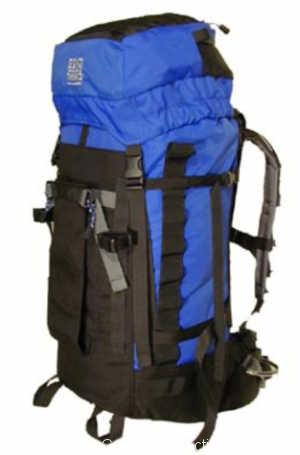
Chances are you’ve never heard of Cold Cold World Backpacks before, but their packs are famous in New Hampshire’s White Mountains amongst climbers and Search and Rescue teams. The Chaos is a frameless, top-loading backpack with a floating top lid, front crampon pocket, ski loops, gear loops on the hip belt, dual ice-ax loops with shaft holders, and multiple daisy chains that let you lash gear to the outside of the pack. It features an internal sleeping pad pocket, allowing you to use a foam pad as a frame. A stock Chaos weighs just 3 lbs 12 oz, which is respectable for a pack this technical and durable. Read the SectionHiker Chaos Review. The 50L Cold Cold World Chernobyl is also a winner, especially for gear-intensive winter peakbagging.
How to Choose a Winter Backpacking Pack
Backpacks tailored for mountaineering and winter backpacking use have a different feature set than most 3 season packs. Below are the features I’ve found most useful for winter trips in mountainous terrain. While I think these translate fairly broadly across winter locales, you need to judge which features are most relevant to your needs.
Volume and Weight
If you plan on taking weekend-length cold-weather trips, you’ll probably want a pack with 55-80 liters of internal capacity. The sweet spot is approximately 70 liters, but you may be able to reduce it to as low as 50 liters if you carry less gear or require less insulation. Choose a pack with adequate compression so you can shrink its volume when you don’t need it, while keeping the empty pack under 5 pounds. Pack and gear weight matters even more in winter than at other times of the year because you’ll be wearing and carrying more of it.
External Attachment Points
Mountaineering and winter backpacking packs need multiple external attachment points to carry sharp, pointy, or bulky gear (microspikes, crampons, shovels, and snowshoes) that won’t fit in the pack’s main storage compartments. The most useful external attachment points include compression straps, daisy chains, hip belt webbing or gear loops, and ice ax loops with shaft holders.
Compression Straps
Compression straps serve two purposes: to help compress a load and bring the weight closer to your core muscles, where it can be carried more easily; and to attach sleeping pads, snowshoes, avalanche shovels, or skis to the sides of your pack instead of the front, so that the load doesn’t pull you backward and off-balance.
When choosing a backpack, look for ones with two or three tiers of compression straps that run horizontally across the sides of the pack. The compression straps should be adjustable and easy to undo while wearing gloves, so you can slide winter tools under them. Avoid packs with compression straps that zig-zag back and forth across the pack, using one strap to save weight. These are very difficult to use, especially when wearing gloves.
Daisy Chains
Daisy chains are often sewn onto mountaineering and winter packs and can be used to lash extra gear to the back or sides of the pack using canvas or Velcro straps. They usually have many loops sewn into them that run the length of your pack from top to bottom.
Ice Ax Loops
There are two kinds of ice axes in this world – straight walking axes and curved climbing axes. If you need to carry a walking ax, look for a pack with at least one ice ax loop at the base and a shaft holder, both off-center on the back. The shaft holder can be a simple cord lock like those found on many Osprey packs, or a more robust buckle. If you plan on carrying two climbing axes, look for packs with two ice ax loops and shaft holders.
Hip Belt Webbing and Gear Loops
Some climbing-oriented packs feature canvas or plastic gear loops on the outside of the hip belt, allowing you to clip climbing carabiners to them. While not a substitute for a proper sit-harness, these loops can be quite convenient for racking climbing gear.
Crampon Pockets
Crampon pockets offer a convenient, safe place to store crampons when you’re not wearing them. Located on the side of the pack farthest from you, they keep the crampon points away from your arms, legs, head, and gear, where they can do real damage.
Floating Lids
In winter, a backpack that can expand in volume to carry more gear can be very helpful. One way to do this is to buy a pack with a floating lid, typically featuring a top pocket that can detach from the main body of the pack but remains secured by four straps. In this way, you can sandwich extra gear, like a coil of rope, between the pocket and the top of your pack.
Zipper Access
Zipper access to the front or side of the backpack is a highly desirable feature for winter use because it makes for much faster stops, eliminating the need to pop open a top lid and dig around your backpack looking for gear. You don’t want to stand around for very long on winter trips, but to get moving so your body can generate heat to stay warm.
SectionHiker never accepts payment for gear reviews or editorial coverage. When you buy through affiliate links on our site, we may earn a small commission at no extra cost to you. Help us continue to test and write unsponsored and independent gear reviews, hiking and backpacking FAQs, and free hiking guides.








 English (US) ·