
.jpg)
PROTECT YOUR DNA WITH QUANTUM TECHNOLOGY
Orgo-Life the new way to the future Advertising by AdpathwayNavigating the shift from volume to value in healthcare Company is expanding its proprietary technology, ScopeAI, across its 100 clinics, virtual care, and field medicine services in California, New York City, and Rhode Island
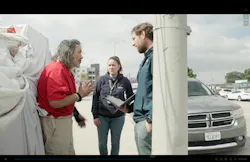
Courtesy of Akido In California, Akido’s tech-supported care model is bolstering street medicine programs. A February 2026 Healthcare Innovation article focused on how several California-based organizations are coming together to use AI technology and community health workers to bolster street medicine programs. The initiative uses the tech-supported care model of Akido Labs, which was founded in 2015 out of USC's Digital Health Lab. Acknowledging that it has moved past the R&D phase, Akido has now dropped the "Labs," from its name, becoming simply Akido. The company said it is building the first “AI-native health system” in the United States, expanding its proprietary technology, ScopeAI, across its 100 clinics, virtual care, and field medicine services, with access to a population of 1 million patients in California, New York City, and Rhode Island. In 2025 the company raised $60 million in Series B funding. The round was led by Oak HC/FT with participation from Greco, SNR, and existing investors Y Combinator, Future Communities Capital, Jeff Dean (Chief Scientist, Google DeepMind & Google Research), and the Comprehensive Blood & Cancer Center. Prashant Samant is the company's co-founder & CEO. Akido says its ScopeAI listens during the visit, organizes the clinical picture in real time, and hands the physician a diagnostic head start. Matt Siegler is Akido’s chief network officer. Previously he served in roles at Kaiser Permanente and most recently as chief growth and strategy officer at NYC Health & Hospitals.
Street medicine providers are a special breed, Siegler told Healthcare Innovation earlier this year. It’s difficult to find people who are committed enough to do this work, and it's difficult to sustain the work, he said. “You have to enable people and support them with a broad team of caregivers. You have to provide them with ways to reach these patients and follow up on their needs in an ongoing way. Doing that with paper and pen and physically out in the street every day as an M.D., going from tent to tent or shelter to shelter, can be very challenging and is not sustainable from a financial perspective for most providers,” he added. Akido’s model involves enabling community health workers and others with lived experience and cultural competency to reach people. The information they gather is sent to the physician’s device and they review it. They can then order through the EHR and decide the next step that the patient needs in their journey. Its use of technology paired with the clinical rigor and commitment to do this work is what Siegler says is the secret sauce. “Lots of people have technology, but they don't want to deploy it for this population.” Akido also announced a few other new execs. Matt Rothstein joined as vice president of engineering. At Goldman Sachs, he was integral to building the Apple Card platform, stood up Goldman's first real-time ML model in consumer, and scaled engineering from 10 to 250 people. He previously built patient record transfer systems at the National Institutes of Health and an ED charting system used across seven hospitals in Maryland. Cambron Carter joined as principal AI architect. Co-founder and former Chief Technology Officer of Pearl, he built a 60-person engineering team and co-led regulatory submissions for the world's first FDA-cleared dental AI medical device. Akido has launched an AI Clinical Advisory Council, an independent panel of clinicians, health equity voices, payer leaders, and patient advocates providing external oversight of Akido's AI systems and protocols. David Raths is a Contributing Senior Editor for Healthcare Innovation, focusing on clinical informatics, learning health systems and value-based care transformation. He has been interviewing health system CIOs and CMIOs since 2006. Follow him on Twitter @DavidRaths
About the Author
David Raths









 English (US) ·