
.jpg)
PROTECT YOUR DNA WITH QUANTUM TECHNOLOGY
Orgo-Life the new way to the future Advertising by Adpathway
Today’s winter hiking boots are waterproof, insulated, and compatible with traction aids such as microspikes, crampons, and snowshoes. While 200-gram insulated mids are fine for commuting and half-day hikes down to about 10-20 degrees (F), we recommend buying boots with higher calf coverage and 400-gram insulation for all-day hikes and mountain climbs in colder temperatures. We are experienced winter hikers with hundreds of successful mountain summits and understand what it takes to stay safe and comfortable on long and challenging winter hikes.
Here are our top 10 best winter hiking boot recommendations:
Insulated winter hiking boots sell out fast, so grab a pair of these while they’re in stock and before tariffs increase.
Best 400g Insulated Winter Hiking Boots
Most 400g insulated winter hiking boots are suitable for all-day winter hikes and snowshoeing excursions in temperatures in subzero temperatures. Most 400g boots have calf-high uppers which makes them warmer than mids because more of your lower leg is covered by insulation. While many manufacturers claim they’ll keep your feet warm down to -40F, that assumes that you’re actively hiking and not sitting around doing nothing. Realistically, they’re best worn in temperatures from 30F down to -15F. (If you plan to climb 4000-footers in winter in New Hampshire’s White Mountains, we recommend using 400g boots)
Oboz Bridger 10″ Insulated Winter Boots
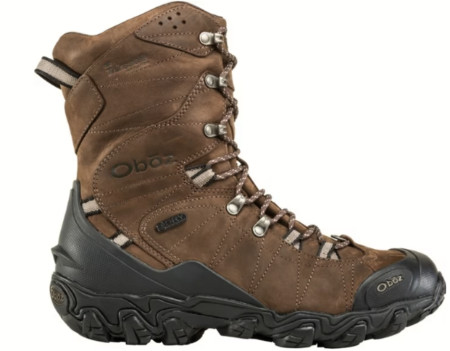
Oboz Bridger 10″ Winter Boots are lined with a waterproof membrane and insulated with 400 gram Thinsulate. The uppers are covered with synthetic leather for added protection, along with a beefy toe cap, and snowshoe-compatible heel cup. An arched sole and front D-ring provide gaiter compatibility, while aggressive lugs offer excellent traction on snow. The Bridgers feature a PU midsole and nylon shank for enhanced undercarriage protection, and are equipped with a wool-covered, reflective insole for added warmth. They’re available in wide sizes. A 9″ women’s model is also available. Read our Oboz Bridger 10″ Review. These have been my go-to winter hiking boots for the past six years. I’ve even purchased a replacement pair for when my current pair wears out.
KEEN Revel IV High Polar Winter Boots

KEEN’s Revel IV High Polar Boots are rated to -40F with 5 mm lugs for added traction in snow. These winter boots feature KEEN’s large signature toe box and run a bit wide, making them ideal for individuals who struggle to fit their feet into narrow boots. A beefy toe kick, heel ridge, and excellent side protection make these boots ideal for challenging terrain. A thermal heat shield insole is included for added warmth. A woman’s model is available. Read the SectionHiker Revel IV High Polar review. These are warm boots with a wide-toe box. They have fewer technical features than the Oboz Bridger above, but are still perfectly suitable for hardcore winter hiking.
The North Face Chilkat V 400
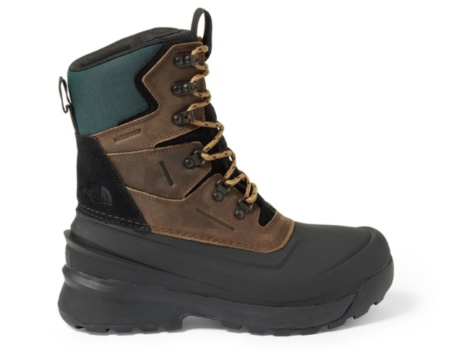
The North Face Chilkat V 400 is a warm, insulated winter hiking boot with a durable, waterproof outsole that provides excellent toe protection. Their high calf cuff provides excellent warmth, while gaiter rings and a heel arch provide compatibility with high gaiters. They also feature heel ridges that prevent the rear straps on snowshoes from coming loose, a premium feature. Their soles provide excellent traction and feature a curved rocker design, ideal for hiking. They are a bit heavier than other winter hiking boots, but they’re very warm, and the lack of seams around the outsole means you’ll never have to worry about leaks. A woman’s model is also available. These are bomber boots good for winter hiking on and off-trail. I used them for winter bushwhacking when I needed a sturdy boot that would provide ample protection and was absolutely leak-proof. They’re quite warm and perfect for more urban or rural work chores where you’re outside all day.
Salomon Toundra Pro
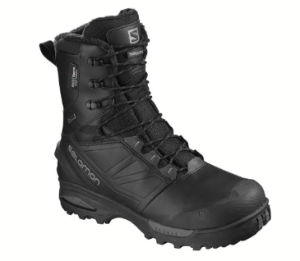
Salomon’s Toundra Pro was the first winter hiking boot to incorporate ultralight Aerogel insulation developed by NASA for spaceflight. Rated to -40F, these popular winter hiking boots have a large comfortable toe box, a reinforced toe kick for added protection, and a heel cap that is compatible with microspike and snowshoe bindings. An arch in the midsole provides gaiter compatibility, while a fleece-lined tongue and upper boot provide a cushy, comfortable fit. The Salomon Toundras run true to size. A women’s Toundra Pro is also available. Read the SectionHiker Toundra Pro Review. I wore a pair of these for a few years and think they’re great cold-weather hiking boots.
Best 200g Insulated Winter Hiking Boots
Most 200g winter hiking boots are ankle-high mids and retain less lower leg heat than calf-height 400g boots. On the other hand, they’re a little easier to hike with because they’re lighter in weight and feel more like regular hiking boots. 200g boots are best suited for temperatures ranging from 30°F to 10°F and are ideal for milder winter conditions and shorter duration hikes, where there’s a lower chance of being caught out after dark when temperatures drop.
Merrell Moab Speed 2 Thermo Mid

Merrell’s Moab Speed 2 Thermo Mids are 200g insulated waterproof winter boots with aggressively lugged Vibram soles that are perfect for cold weather and winter hiking. They have wide toe boxes, allowing your toes to splay out naturally, and rock plates to protect your feet from below. They’re insulated with PrimaLoft Gold Eco Series synthetic insulation and feature ultralight Aerogel insoles. Additionally, they come with Icetrek outsoles designed to provide improved grip on very cold, icy, or snowy surfaces. But the best thing about these winter boots is that they require no break-in time and are wearable right out of the box. A woman’s version is available. These boots are good when you want a lower profile boot for hiking that doesn’t include calf coverage and “walks” more like a regular mid.
Oboz Bridger 8″ Insulated Winter Mids

Oboz’s Bridger 8″ Waterproof Insulated Boots have 200g of winter insulation. They’re quite similar to the Bridger 10″ insulated boots listed above, but only come up over the ankle instead of mid-calf. The uppers are covered with synthetic leather for added protection, along with a beefy toe cap, and snowshoe-compatible heel cup. An arched sole and front D-ring provide gaiter compatibility, while aggressive lugs offer excellent traction on snow. The Bridgers have a PU midsole and nylon shank for added undercarriage protection and come with a quality insole for added support. They’re also available in wide sizes. The women’s version is called the Oboz Bridger 7″ Waterproof Insulated Boot. I own a pair of these Oboz Bridgers and use them in autumn and spring when temperatures are below freezing, but there’s little snow.
KEEN Revel IV Mid Polar Winter Boots
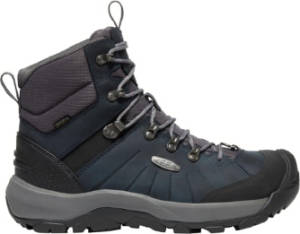
The KEEN Revel IV Mid Polar Boots are waterproof and have 200g of insulation, good for mild winter weather. They’re very similar to KEEN’s Revel IV High Polar boots, which extend to mid-calf instead of just over the ankle. The Revel IV Mid Polar has KEEN’s large signature toe box, which is particularly useful when you’re wearing a heavier sock in winter. They run a bit wide, making them ideal for people who have a hard time getting their feet into narrow boots. A beefy toe kick and heel protection make these boots ideal for more challenging terrain. A thermal heat shield insole is also included for added warmth. A woman’s model is available. These have the original KEEN fit, making them a good choice if you own other KEEN shoes and prefer your current sizing.
Columbia Bugaboot III Insulated Winter Boots

The Columbia Bugaboot III is a winter hiking boot with 200-gram insulation, leather uppers, and a wide waterproof rand that provides superior toe and side protection. While it is styled as a pac boot, it has rockered soles that make it easy to hike in. Deep lugs provide excellent traction while a lightweight midsole provides extra support for heavy loads. They have a front gaiter hook and snowshoe ridges on the heel to help keep straps from slipping. The Bugaboot III is available in a women’s model. These are dependable hikers good for winter hikes in milder weather. The wide rands provide superb waterproof protection in slush and snow.
Salomon Crosstrek Powder Mids

Salomon’s Crosstrek Power Mids are lightweight winter hiking boots with aggressive lugs for traction on packed snow. They’re made with PU-coated leather for maximum durability and waterproofing. Insulated with synthetic insulation, they feature a 4mm EVA foam sockliner, which has a temperature rating of 5°F, which is more than sufficient for winter day hikes or trail runs. They also feature Salomon’s glove-friendly quicklace lacing system and contragrip outsoles, which will be familiar if you use other Salomon footwear. A woman’s model is also available.
Best Mountaineering Boots for Winter Hiking
Mountaineering boots have rigid soles that make them compatible with crampons that lack flexible center bars, for use on rugged mountains with higher slope angles or thick ice. While you can hike in them, it’s a very different feeling than a soft-soled 400g or 200g insulated winter hiking boot. While insulated, most mountaineering boot manufacturers do not rate their boots’ temperature ranges, so you need to rely on anecdotal word-of-mouth assessments of their warmth level. If you hike across glaciers or on trips led by mountaineering guides, it’s usually best to ask them for their advice on what boots to bring. They may even rent you boots to use.
La Sportiva Nepal EVO GTX Mountaineering Boots

While most winter hikers use lightweight insulated hiking boots with microspikes for traction, there are times when a stiff-soled mountaineering boot and full mountaineering crampons are required. The La Sportiva Nepal Evo is a single-skin leather mountaineering boot lined with Gore-Tex Duratherm, a lightweight and waterproof insulation layer. They feature a rigid TPU sole and innovative lace locks, allowing you to get the lacing tight enough for front-pointing with crampons. An integrated mini gaiter helps seal the top of the boots for greater warmth and keeps out debris, while front and rear welts enable compatibility with all crampon types. Sizing is unisex. These hardcore mountaineering boots are made with leather that is soft enough that you can winter hike in them, too. Many of my hiking/climbing buddies swear by them.
How to Select Winter Hiking Boots
Winter boots should be waterproof and insulated to keep your feet dry and warm, have laces for a secure fit, be comfortable enough to wear all day, and be compatible with traction aids like microspikes and snowshoes. While the amount of insulation you need will vary, winter boots with non-removable synthetic insulation are the lightest weight and, therefore, the easiest to hike in. Boots made with synthetic materials are also lighter-weight and more waterproof than leather boots.
The reason you can’t use your regular 3-season boots or shoes for winter hiking comes down to their lack of waterproofing and insulation. Most insulated winter hiking boots are guaranteed waterproof out of the box. Many have lowers made with rubber or waterproof synthetics, so you don’t have to worry about the fabric absorbing water. If you do get moisture in your boots, insulated winter boots will still keep your feet warm. The same can’t be said about leather hiking boots, even when treated with waterproofing creams and sprays. If your regular hiking boots absorb water in winter, they can freeze, leading to frostbite.
Some boot manufacturers provide temperature ratings for their products, but there’s no standard way for measuring the warmth of winter boots. Understand that these ratings are estimates at best and that users will have varying experiences based on their activity level, health, weight, sex, metabolism, and other factors.
Some winter boot manufacturers publish the thickness of the insulation in their boots, while others don’t. For example, some boots have 200 gram Thinsulate insulation, a popular synthetic insulation, while others use 400-gram Thinsulate insulation. Primaloft and Aerogel are also used to insulate winter boots.
- Four of the boots listed above have 400-gram insulation or the equivalent, so they can be used well below zero. We recommend this insulation if you hike in the backcountry, where winter hikes may last far longer than anticipated.
- Five more have 200-gram insulation, suitable for hiking in temperatures down to 10-30F, especially in late fall or early spring when there isn’t that much snow on the ground.
- The tenth pair of boots is designed for light to mid-mountain hiking but can also be used for more serious winter hiking. You’d wear them in mountainous terrain where full crampons are required.
Key Winter Boot Features
Temperature ratings
While you need to take the manufacturer’s temperature ratings with a grain of salt, they are a good indication of the relative warmth of a boot. While it’s difficult to make warmth comparisons between boots that have different kinds of insulation, knowing the amount of insulation used in boots can help you compare the warmth of different models made by the same manufacturer.
Gusseted tongue
This is just like a regular boot tongue, except the sides are closed and sewn to the side of the boots to prevent water from leaking into the boot when you step in puddles.
Reinforced toe cap
In addition to providing more protection, a beefy toe cap won’t collapse the front of the boot when worn with microspikes or crampons.
Lugs
The soles of your boots should provide good traction when walking on loose or packed snow. Look for boots with a deep tread like a Vibram sole, although you’re likely to augment your boot with microspikes.
Cuff
Look for boots with a soft cuff that closes off the gap between your leg and boot.
Gaiter ring
A gaiter ring is a small ring attached to the top of the boot that you can hook your gaiters onto. It’s not the end of the world if your boots don’t have one since can still hook the gaiter to your boot laces.
See Also:
SectionHiker never accepts payment for gear reviews or editorial coverage. When you buy through affiliate links on our site, we may earn a small commission at no extra cost to you. Help us continue to test and write unsponsored and independent gear reviews, hiking and backpacking FAQs, and free hiking guides.








 English (US) ·