
.jpg)
PROTECT YOUR DNA WITH QUANTUM TECHNOLOGY
Orgo-Life the new way to the future Advertising by AdpathwayPivot Point Consulting, a Best in KLAS healthcare IT consulting company, recently announced a partnership with Microsoft to offer Microsoft Dragon Copilot to rural hospitals nationwide.
Through this collaboration, rural clinicians gain access to AI capabilities — such as ambient clinical listening, automated documentation, and real‑time visit summarization.
As part of the program, Microsoft is offering a 60 percent discount off MSRP to independent Critical Access Hospitals, independent Rural Emergency Hospitals, and independent Rural Community Hospitals.
Pivot Point Consulting's Zack Tisch spoke with Healthcare Innovation about the rural healthcare initiative and how rural healthcare providers can leverage AI, predictive analytics, and managed services.
Could you tell me a little about yourself and your organization?
I've been in the healthcare technology space for my entire career, which is a little over 20 years now.
What we do is help anyone in the healthcare ecosystem figure out how to navigate many of today's challenges, whether they're financial, technological, regulatory, cybersecurity-related, or just how to operate better.
A lot of what we did early in our journey was helping organizations transition from, originally paper, into digital electronic medical records, and then now more into an integrated ecosystem. Now, a lot more of our work is around how to drive and improve the business of healthcare and improve outcomes for everybody. What can we do, faster, better, cheaper, to help with that overall healthcare experience for all of us as patients?
Could you talk about the rural healthcare initiative?
First of all, I am a rural healthcare patient myself. Both my neighbors are farmers. We have a lot of the same challenges that I think a lot of people do in a rural setting. We may not have the same options or availability that you might have in a big city. We have to cover not just a lot of people, but also a really wide geography, which also introduces challenges on the staffing side, on the technology side, instead of just having one home base that's easy for the patients to come to. The challenges are really great.
One of the things that I'm most excited about regarding this transformation is that I think we're both seeing the dollars, but also the vendor support to really help make this happen.
A program we're participating in with Microsoft is to provide discounted services for some of their AI and AI-powered technology products, specifically for rural healthcare organizations, given that they are extremely mission-driven. The dollars aren't there, but those technologies can absolutely help transform their mission and help them keep the doors open. In this challenging time, we're seeing a lot of organizations start to shut down and back off some of their services.
What are some of the ways that are very specific to rural healthcare in which organizations can take advantage of AI technologies?
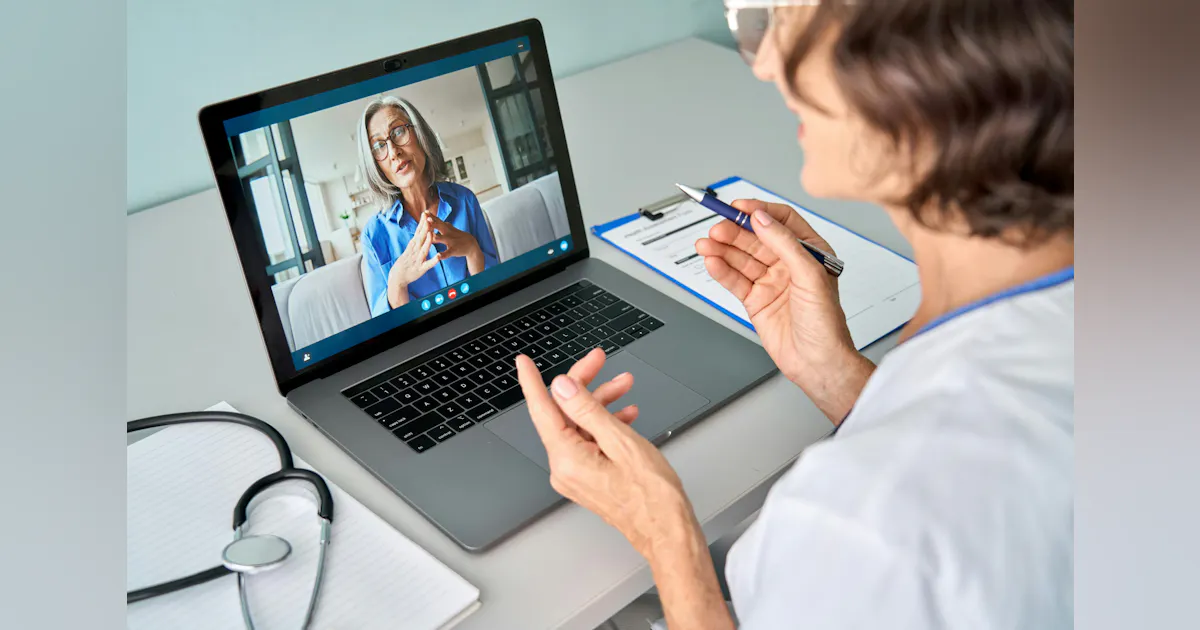
One of the areas that we focus on is how to keep the patient on the care journey. The more you can keep the patient compliant with the plan, the less likely they are to come in again. You can treat them more successfully, maybe just through telehealth or telemedicine, and you can free up that slot to then be able to see another patient, rather than just have them come back in to remind them of the same information that you told them maybe six months ago. Things like AI chatbots are really successful at that, where it's not just blasting out a big email with a bunch of information to the patient, but really something that can actually have a conversation with them, and that can have that conversation with them over time in a way that feels more like interacting with a caregiver. We've seen really great success with that around heart failure. We can give them suggestions and direct them to a caregiver so they can get seen and get back on track.
Another good example we've seen is around analytics. If you can look at patients more as a population, you can use those tools to do some outreach and education. The data shows that it has an extremely positive impact on their overall health and utilization of healthcare services.
We try to look at what the things are that the caregiver requires their medical background to do. And then…where technology can jump in. We want the provider spending their time talking to and evaluating the patient, not necessarily having to type. Ambient listening, an AI product, is really successful with that. We're always looking at administrative tasks and tasks that don't require clinical decision-making, and we can make them a little faster through AI.
When considering AI technology, what should healthcare organizations look out for?
I would say number one, technologies that are not built specifically for healthcare. We have a lot of unique requirements around our data, and I think, first and foremost, making sure you have something that will safely and securely store and work with your data, in support of things like HIPAA requirements. You could have a regulatory penalty that could be financially significant.
Two, ensure it's a product and vendor that can plug into your core platforms. Typically, that's your electronic medical record (EMR). Anytime people have to jump out into a different system to do their work, it's always a distraction and slows them down. There are also additional risks of data loss and cybersecurity threats. You want something that can live safely and securely within that product.
Don’t try to be the first one to do something. There are a lot of great ideas with AI, but it is very much the Wild West right now. Probably eight out of every ten ideas won't stick around long-term. Let some of your larger brothers and sisters in the health system world try things out. They're really great about sharing use cases and case studies. Then take advantage of some of those lessons learned.
Also, take advantage of programs like Microsoft's discount program. Those programs will probably be around for another 12 to 18 months, but beyond that, probably not. Where there are opportunities to take advantage of subsidies, grants, or vendor discounts, absolutely take advantage of those while they're available.
Lastly, make sure that you really include your providers and your caregivers. There are a lot of good technologies that end up not being successful in healthcare, and not because there's a problem with the technology, but really because of challenges with adoption. Make sure they understand what's in it for them, and also that you've done your due diligence to really build it to their workflow and not just make assumptions that because it worked at a big health system down the street, it's going to work in a rural setting.
What are some common pitfalls or mistakes that you see?
A big one is really about usability. Just turning the technology on isn't enough. You really have to sit down with the staff and providers and show them how and where to use it in their workflows. I would spend less time on setting up the technology and more time on provider adoption. The sites where providers are most engaged have ultimately achieved the best outcomes.
Start small with something measurable, solve that problem, then move on to the next one. Don't try to do everything all at once. It's really easy to get excited and get ahead of yourself in a lot of organizations; maybe turn on a tool and go to the next one, and don't actually stop to measure and make sure they're getting the benefit. Focus on the deployment utilization, and if you’re actually getting the value. And then once you kind of feel like that adoption is there, then move on to the next problem.
We're at the point now where it does make sense to start adopting these things rather than continuing to wait another year or two.
Could you elaborate on the Microsoft partnership and how that works?
Microsoft is providing some pretty heavy discounts to rural healthcare organizations for specifically their Dragon Copilot products, which really help providers with a lot of that documentation capture and some of the workflow administration. What they brought us in to do as their partner is to provide a free readiness assessment to all interested organizations. We'll come in and do about a day-and-a-half assessment with an organization. We'll look at all the aspects, top to bottom, that will impact their success. This includes technology readiness, governance, organizational readiness, training, workflow standards and best practices, change management, and cybersecurity. Ultimately, we'll present our findings back to them and then give them a step-by-step plan to remediate any potential risks. The idea is to really maximize their opportunity for success.
Looking ahead, what do you foresee for rural healthcare and the challenges it faces?
I think the challenge will be how we can all work together. I think there's a great opportunity for statewide or regional rural health coalitions that are using technologies that can talk to each other.
I'm in the state of Wisconsin. If we have, let’s say, 100 different rural health systems -- it's a big ask to ask all 100 of those to be really good at every medical specialty. What if each one only had to be good at two or three? Then we share our network with each other, at least to do virtual consults and to do telemedicine, and use our power at a smaller scale to operate. With the technology that is a place we can potentially get.
I'm excited to solve the problems within an organization and then see how we can take some of those learnings to try to enable this to work in more of a network. This is something where everybody wins if we can figure out how to deliver better-quality care at a lower cost to rural medicine patients.








 English (US) ·