
.jpg)
PROTECT YOUR DNA WITH QUANTUM TECHNOLOGY
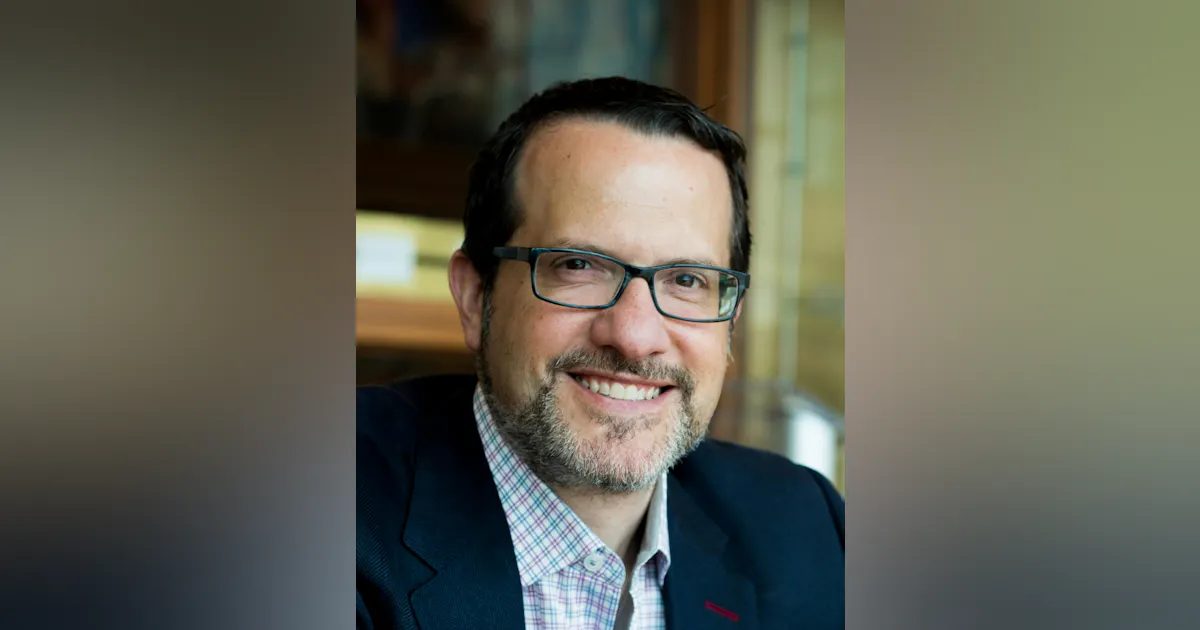
Orgo-Life the new way to the future Advertising by AdpathwayDuke University spin-out Pluto Health, which helps connect patients to services they may not know are already covered under their health plan, has expanded the number of health plans it works with to include UnitedHealthcare, Aetna, Blue Cross Blue Shield, Ambetter, and Cigna in select states. Joy Bhosai, M.D., M.P.H., founder and CEO of Pluto Health, recently spoke with Healthcare Innovation about the company’s business model and growth.
The Durham, N.C.-based company says that many patients are unaware that insurers cover preventive services such as screenings, vaccines, and wellness visits at no cost. Recognizing this, and by flagging needed services, Pluto helps connect patients to critical services. Pluto adds that insurers reap the benefits of more efficient operations through automation of care alerts, scalable patient outreach via AI-integrated clinical workflows, and data-driven tracking of gap closures and outcomes.
The company says it works to unify fragmented health data—including medical, pharmacy, and social factors—to identify care gaps. From there, its AI models facilitate personalized action plans and evaluates if patients are meeting guideline-based care, which may include assessing for overdue cancer screenings, at-home labs, referrals to speciality care, chatting with a clinician in real-time, or medication reconciliation.
Bhosai, a former chief of digital health and strategy and assistant professor of medicine at Duke, said the company’s list of potential customers includes “anybody who's interested in closing a care gap. Our job is to understand a patient well enough to understand what services need to be delivered for them. We center a lot of our work and evaluations around preventive health and also your age-appropriate cancer screenings and try to deliver on those resources from the comfort of your home.”
She said Pluto’s efforts are often “white-labeled” by health systems. “When Walmart Health was around, we worked on something with Walmart that was white-labeled,” she said. “And sometimes the enterprise prefers that our name be used.”
I asked Bhosai if Pluto had targeted certain states for expansion or whether it just involved where its partner payer organizations have operations.
“I think it's a little bit of both,” she said. “We really wanted to help a lot of our team members I was able to recruit from Duke with the mission of addressing the inequities that are often left in healthcare. We looked up states where there are lots of uninsured or underinsured, where there are huge Medicaid populations, because we can provide such a convenient solution for folks out of the comfort of their home.”
Bhosai gave a hypothetical example of how Pluto works with a patient. “Let’s say a patient has asthma, and they also have diabetes. We would organize around what their history is and what the care gaps are, in terms of maintenance, meds, labs, etc.,” she said. “And then we would work with the patient ahead of time to understand what tests can be done, even well ahead of an appointment. For that patient, we would send the phlebotomist to their house to do all of the preventive health things ahead of time, if we could. And then if the patient sets up an appointment with us, we'll review everything they need in their care plan. It is really about understanding how to work with patients and their schedules and deliver care remotely and as asynchronously as possible.”
Bhosai noted that Pluto also works with life sciences companies and helps educate patients about potential clinical trials.
Next up, Pluto has built what Bhosai calls a personalized health intelligence system that patients can access. ”Think of it as your own personal GPT, where not only do you get insight on your health, but within the same screen, we deliver on what's needed,” she said. “So you could say, ‘Hey, how's my cholesterol doing? And it would say ‘it looks like you need a check. It's been over a few years. Would you like us to send a phlebotomist to your house?’ And you could type in Yes, and our system would say, ‘OK, let me know what time tomorrow,’ and it would just get done. I'm really excited about that, because it's seamless healthcare. There are clinicians in the background, but what I think is so important in healthcare is making things convenient for patients, because that's why a lot of care gaps exist.”








 English (US) ·