
.jpg)
PROTECT YOUR DNA WITH QUANTUM TECHNOLOGY
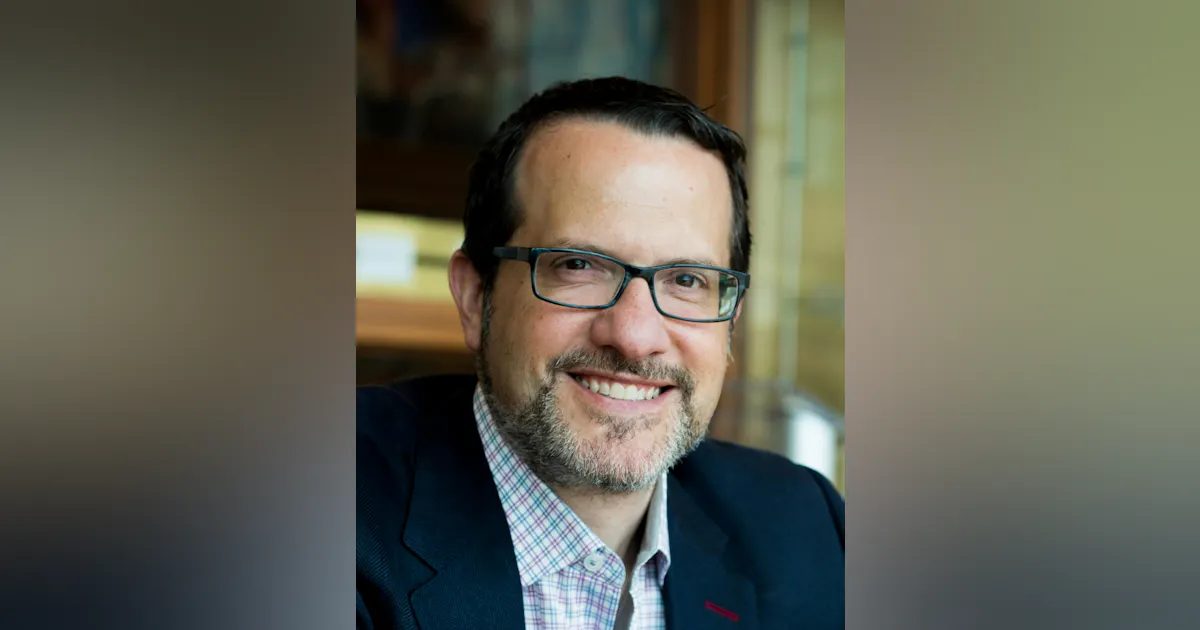
Orgo-Life the new way to the future Advertising by AdpathwayRecognizing that many Americans face potential Medicaid coverage loss, Cedar, an AI platform that works with health systems to help patients navigate the financial experience, shifted gears to develop Cedar Cover to help patients seamlessly access coverage and financial assistance while protecting provider revenue. Cedar CEO and co-founder Florian Otto recently spoke with Healthcare Innovation about the company’s approach to working with health systems.
The company says that Cedar Cover serves as a digital safety net that assists patients in identifying, securing, and maintaining coverage through four key capabilities: Medicaid Enrollment, Proactive Medicaid Renewal Workflows, Denials Resolution, and Medication Assistance. Through partnerships with Fortuna Health and TailorMed, Cedar identifies potentially eligible patients and assists in securing coverage for patients, and reduces bad debt for providers. Health systems using Cedar Cover include Novant Health, Baystate Health, ApolloMD, and The Iowa Clinic.
Healthcare Innovation: Could you tell the story of Cedar’s founding and then we can talk about how it’s evolved?
Otto: I saw from some personal experiences that the patient financial experience is pretty broken. Most health system are really good on the clinical side, because they invested in the last 50 years in great doctors, great nurses and so on. But the administrative side has really not kept up. It's tough to understand the bills. It's tough to pay the bills. They are not personalized — and that's basically what we have done. We started 10 years ago to create a more compassionate, simple and personalized experience similar to what you find anywhere else in in the consumer world. I mean, your Amazon account looks different from mine. Uber knows where you want to go before you open the app.
HCI: One of the issues that I find with medical bills is that it's not so much that the provider organization’s communications are bad, but there's a flurry of bills from the insurer and there's a flurry of bills from the provider, and they are crossing over each other, and you don't know which ones to pay. You don't know if they're telling you to pay, or if you're waiting for the insurance company to do something else first. So it is not just the health system involved; there’s the whole insurance side of it. That's confusing too, right?
Otto: It's a great segue. In the first five years after our launch, we figured out the health system part to make this more personalized and more mobile-friendly, but then we basically figured out that you cannot solve the problem only focusing on the provider, because what is the problem? Conceptually, all these billing systems are provider-centric or payer-centric, but they are not patient-centric. And in the end, they should be patient-centric, because the patient is often the payer, at least with a credit card for the out-of-pocket payments.
So we acquired a company called OODA Health in 2021 and that was exactly the purpose, because they had integrations with payers. So today you get a notice that your bill is ready from whatever health system, and the good news is that United Health or Cigna have already adjudicated your claim. It's ready to be paid. You have a maximum out of pocket payment for $1,000 and you have $275 left. We also have integrations with HSAs.
HCI: Can you talk about the launch of Cedar Cover?
Otto: Early last year, we started offering more affordability solutions. When we started 10 years ago, it was more about transparency and convenience, but now it's more about affordability for patients. We got deep into that — finding additional coverage for patients to pay the bill, and Medicaid enrollment, medication assistance and the coordination of benefits. The last product that we launched involves agentic AI for all the inbound phone calls with billing questions.
HCI: Besides that agentic AI, is there AI involved in the other aspects of personalization?
Otto: We have used machine learning from the beginning in that we're using algorithms similar to what Amazon uses with your shopping cart — nudges and personalization. If the last time you clicked on, “send me the bill in Spanish,” then the next bill will be in Spanish.
HCI: Can you make the sales pitch to health systems based on other customers’ experience —looking at patient satisfaction scores? Can you say not only are you getting more revenue and/or getting paid faster, but also the the patient satisfaction scores go up?
Otto: Basically, there are four things that matter for health systems in this space. The first is patient satisfaction. We gather feedback on the patient billing experience. That's usually the lowest point of the entire care journey, right? And 89% of the patients give us four or five stars. We are billing in the name of the hospital, so it's white-labeled. The second thing is percentage of collection. And it's basically out of each dollar owed, how much do patients pay? For health systems, that is usually extremely low, literally in the 30 to 40% range, and we are lifting that by 20 to 25% almost everywhere. The third is acceleration of the payments, because of what you described — patients gets these bills, and what do they do? Nothing. They just wait until the third invoice, and then at some point they probably pay. So the average days outstanding is super long, and we usually reduce it by half, because we don't have these monolithic engagement cycles, like 30, 60, 90 days. The last thing is that we also want to reduce the administrative cost, because we have a better integration within the health system, and a reduced number of paper statements, reduced number of inbound phone calls, and that increases efficiency.
HCI: Do you work with provider groups of of all sizes?
Otto: We work with health systems and physician groups, but only with large physician groups. I would say no client has fewer than 150 doctors. That's probably the very smallest one we have. The sweet spot are the large health systems, but some physician groups have thousands of doctors. I’d day our business is probably two-thirds health systems and maybe one-third physician groups.
HCI: I was told you have some thoughts about the new Access model from CMS. The agency describes it as testing an outcome-aligned payment approach in Original Medicare to expand access to new technology-supported care options that help people improve their health and prevent and manage chronic disease. Is Cedar envisioning being involved in that?
Otto: We don't have a partnership or a special product for this. We are interested in it, because the mission of the model and why we started the company are pretty aligned. Overall, I'm pretty excited about it, because we strongly believe that separating payments from health outcomes is impossible.
HCI: CMS just came out with the proposed rates to pay for these services in this new model, and I think generally the reaction was that they were pretty low, and people were disappointed, or saying they are going to struggle to make it work for them. Is that right?
Otto: Yes. I mean everything from Medicare right now is not necessarily highly reimbursed, as we have seen with Medicare Advantage over the last 18 months. But on the other side, the rates will never be enough to make people say, ‘This is so amazing. We can just make so much money with it.’ And I don't think that's the purpose, either, because doing something that costs more is also probably not what society needs, right? I think having a healthy amount of constraints actually makes sense. When you have more constraints, then you also are a bit more resourceful and efficient. If you don't have these constraints, you're just basically getting bloated.
Access’ capitation model is interesting, because fundamentally you get more rewards for keeping the patients healthy. And that is what excites everybody.
HCI: So what's the link between that kind of model and the patient financial experience?
Otto: We are talking about the financial constraints for the providers, right? To do this model, you really need to run a tight shop — so efficiency in revenue cycle — how you do billing, how you automate things with, for example, agentic AI, is absolutely critical, because you cannot scale this with human bodies. If you scaled with human bodies, the expenses and the revenue grow at a similar rate, right? Only technology can bend this curve, which I think is important.
HCI: When you are deploying an agentic AI solution in partnership with a health system, what happens as far as their vetting of it, or the questions they ask about it in their own AI governance framework? Does it vary from health system to health system?
Otto: It varies, of course. What is interesting is that every single health system has an AI committee that needs to review this. It's also pretty common that on the security side and safety side, somebody needs to look at it, and that's usually the CIO, because it can be an entry point for malware.
But the interesting piece is that almost every single health system is excited and says, yes, we want to do something in that space. Why is that? They’re getting pressure from their boards to innovate there.
Getting back to the vetting, remember that this is not life and death. These agents are not making the recommendation of doing a surgery or not or going to the emergency room or not. I think that gets them a bit more comfortable to say, OK let's do this. You don't want to mess up the billing experience, but what is the alternative? It's a human being in the call center who's not being paid a lot of money, who turns over twice a year, on average. They also are not flawless. We have seen that most of the use cases with the voice agent actually have better results than with the human being.









 English (US) ·