
.jpg)
 9 hours ago
8
PROTECT YOUR DNA WITH QUANTUM TECHNOLOGY
Orgo-Life the new way to the future Advertising by Adpathway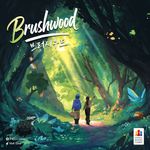
Ever since I was a child, I’ve spent part of August in the Italian Alps, as my mother was born in Val di Fiemme and we still have my grandparents' house there.
Even now that I have a family of my own, I love going hiking in the mountains with my wife and kids. Those moments are deeply relaxing and peaceful, and I thought it would be wonderful to capture that exact same feeling in a board game.
When designing a game, I don't always start with the theme or the atmosphere I want players to experience. Often, I'm drawn to the idea of making a mechanic I came up with work, or tweaking a system I tried elsewhere and found interesting.
For Brushwood, however, the spark came directly from thinking about the beauty of the mountains and the tranquility of those walks.
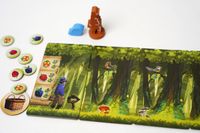
The core idea—building the journey of a walk by laying down forest cards side by side—was the very first building block, and it remained completely unchanged all the way to the published version.
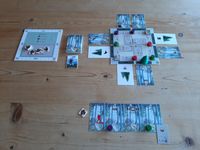
The rest of the game, on the other hand, went through a major evolution between the first prototype and the final edition. Unless I’m miscounting, I think I went through as many as 16 different versions, tweaking everything from the cards to the main board. Initially, I wanted to include as many forest elements as possible to capture everything that makes a hike enjoyable and exciting. On top of what’s in the game today—like birds, mushrooms, and squirrels—the early cards also featured butterflies, beetles, and bees.
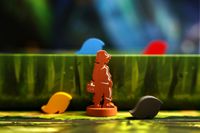
As is often the case with me, I tend to start designing by overloading the game with options. Maybe out of fear that it will feel too simple, maybe to offer more choices, or to create deeper strategic layers... Whatever the reason, during development, I also experimented with lumberjacks, rangers, scouts, and explorers.
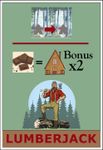

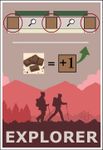
But as the design progressed, I realized the importance of stripping away the excess and keeping only what was strictly necessary. The goal was to ensure a lighthearted, pleasant gameplay experience that still offered just the right amount of tension in the player's simple decisions.
The card drafting system—a square board with two draw piles on each side—also remained identical from the first prototype. Originally, though, berries were placed in pairs in the center of the board, corresponding to each card stack. When a player moved the shared pawn, they had to choose whether to pick the berries or draw the card from the space where it stopped. While this structure created an asymmetry in the number of cards players finished the game with (which I really liked), it forced players to constantly refill berry tokens and caused way too much analysis paralysis.
On top of evaluating the next three available cards, players also had to consider three possible pairs of berries—an overload of information that didn't fit the relaxed vibe I wanted to convey. So, I redesigned this dynamic by placing a designated space for berry tokens on the board between the cards. This allowed players to choose a forest card to add to their tableau and, alongside it, take one of the two berries located to its left or right.
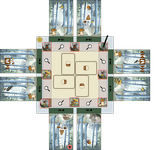
While this solution worked better than the first, it still wasn't quite there. I remember testing the game during a meetup with other Italian designers, where Paolo Mori gave me a few invaluable suggestions to simplify the berry collection. His feedback helped shape the definitive system that I eventually presented at the SPIEL Essen fair in October 2023. At SPIEL Essen, I pitched the prototype to several publishers, and almost all of them asked for a review copy. Korea Boardgames was the fastest to offer a contract, even though another publisher had requested to be notified before I signed anything.
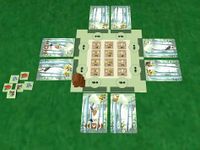
When I accepted Korea Boardgames' offer and informed the other publishers that the game was no longer available—asking if they’d like me to arrange the return of their prototypes—I received a response that I still look back on with great fondness. One publisher wrote back: "One final personal question: If it is not needed, may I keep the prototype to play it with my mother-in-law once in a while? That would be great." The mother-in-law in question was over ninety years old and enjoyed playing Brushwood so much that she wanted to keep the prototype. That little anecdote filled me with immense pride!
Development with Korea Boardgames took a bit of time, not because of the game mechanics—which ultimately saw minimal changes—but rather to find the right art direction. In December 2023, an illustrator had initially been selected, but a few months later the team decided to entrust the artwork to Matt Sanz, who hit the nail on the head and did a fantastic job. We heavily focused on designing a card background sequence where the trees weren't repetitive, but still formed a seamless forest panorama no matter the order cards were placed next to each other.
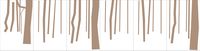
The goal was to create three or four variant backgrounds with varying tree layouts whose left and right edges connect seamlessly in any sequence. The end result came together perfectly and looks fantastic on the table.

The game was originally slated to debut at Nuremberg in 2025, but due to these artistic updates, we decided to push the launch back by a year and officially present the game at the 2026 Nuremberg Toy Fair, in the final form you can finally enjoy today.






 English (US) ·