
.jpg)
PROTECT YOUR DNA WITH QUANTUM TECHNOLOGY
Orgo-Life the new way to the future Advertising by Adpathway 
A common dilemma when selecting a sleeping pad for backpacking or thru-hiking is deciding between a closed-cell foam pad and an inflatable one. Both varieties have pros and cons, and which you choose really depends on your individual preference. But there are definitely considerations to keep in mind when making this choice, which we’ll dive into below.
What is a foam pad sleeping pad?
A foam pad is made of closed-cell foam, a dense foam with tiny pockets of air. You’ll see hikers carrying these outside of their packs, usually strapped to the top. Closed-cell foam pads are lightweight but bulky, and usually have a lower R-value than inflatable pads. Some fold up like an accordion, which makes them more compact and easier to carry, while others roll up. They are super convenient and don’t take any effort to inflate at night, but they aren’t as cushy to sleep on. They are incredibly durable, though, so you won’t have to worry about popping them.
What exactly is an inflatable sleeping pad?
An inflatable pad consists of a shell material and lightweight insulation or a reflective material on the interior that increases protection from the cold ground. They roll up into small cylinders that can be as small as a 32 oz. Nalgene bottle, and tuck easily into a pack. They must be inflated every night and deflated in the morning, and aren’t as durable as a foam pad, but are warmer and often more comfortable.
How to Choose
Price
Foam sleeping pads are much less expensive than inflatable pads. The most popular foam pads (regular-sized) are between $45 and $ 50, while the popular inflatable pad models are between $150 and $200. Inflatable pads use higher-tech, pricier materials and are also more complex to manufacture. If you’re on a budget, a closed-cell foam pad is your best bet.
 Foam pads are virtually indestructible.
Durability
One of the biggest differences between foam and inflatable sleeping pads is durability. If you plan to cowboy camp on bare ground, particularly in the desert, you need to watch out for sharp rocks and abrasions that could puncture an inflatable pad. But popping is less likely if you always plan to sleep in a tent or a shelter on the trail. This doesn’t mean you don’t need to be careful, but most tent sites won’t destroy your inflatable pad.
Warmth
If you plan to hike in early spring or late fall, it can get very chilly at right in different regions. Many foam pads have a maximum R-value of about 2.2, which will not keep you warm enough if the temperature drops near freezing. When it gets this cool, you’ll want to switch to a sleeping pad with a higher R-value in the 4 to 5 range. If it’s snowing or the ground is frozen, you’ll want a pad with an R-value of 5 to 6.
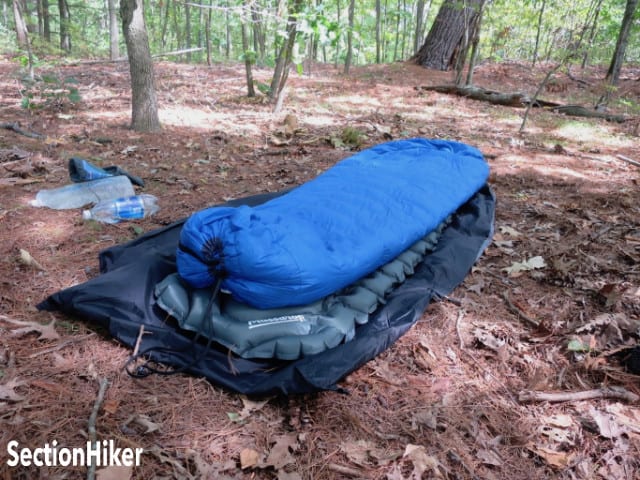 Inflatable sleeping pads are more comfortable for side sleepers than foam pads
Comfort
A foam pad is thinner and doesn’t have the same cushioning on hard surfaces. Side sleepers often prefer the extra padding from a few inches of an inflatable pad over the thin sleeping surface of a foam pad. If you sleep mostly on your stomach or back, you will likely be fine with the thinner foam pad. Side sleepers have a smaller surface area of their bodies in contact with the ground, which creates harsher pressure points on the hips and knees. The NEMO Switchback foam pad, for example, is only 0.9 inches thick, while the NEMO Eclipse inflatable pad is 4 inches thick, providing much more cushioning.
Multiple Uses
Hikers love to throw their foam pads onto a rock for a snack break, and they unfold quickly to provide a seat outside the tent at camp. Not only is an inflatable pad not prime for rock sitting, but you’re also probably not going to want to blow it up more than once a day.
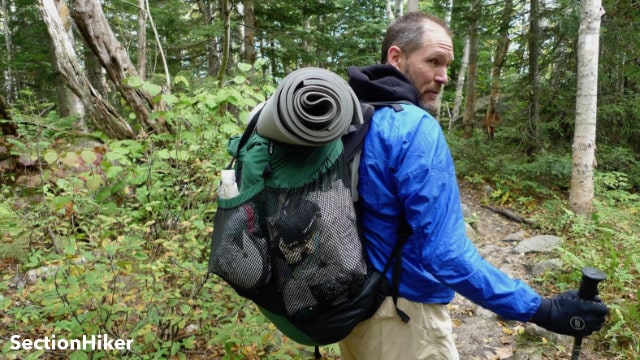 Roll-up foam pads are inexpensive but bulky to pack
Packability
A foam pad has to sit on the top of your pack, and you’re stuck with the entire width, which can make tight squeezes on the trail a pain in the butt. The inflatable pad rolls down to a tight cylinder and can fit in the outside mesh of your pack or be wedged into an open part in the main body of your pack.
Level of Effort
It can take well over a dozen breaths to inflate the popular Therm-a-Rest NeoAir XLite NXT. After a long day of hiking, that’s often the last thing you want to do. You might find yourself watching the other hikers at camp unfold their foam sleeping pad, throw it into their tent, and be asleep while you’re still getting lightheaded from inflating your sleeping pad. That said, there are plenty of options out there that don’t take the 30 breaths of a NeoAir and more and more inflatable pads are bundled with inflation sacks that do the work for you.
The Bottom Line
Foam sleeping pads are best used in warmer weather or when you have to sleep on a highly abrasive surface that would puncture an inflatable pad. While foam pads can be used in multiple ways, many people prefer an inflatable pad because it provides more comfort and warmth and packs down smaller. You can also carry both, which is what many winter hikers do: an inflatable pad for extra warmth and a foam pad for sitting on snow and for use as an emergency backpack if your inflatable pad is punctured.
To summarize:
Foam sleeping pads are:
- Much less expensive
- More comfortable for back sleepers
- Require virtually no effort to set up
- Can be used in multiple ways (sleeping, sitting, etc)
Inflatable sleeping pads are:
- Warmer for colder weather
- Much smaller to pack
- More comfortable for side sleepers
For an even deeper dive into sleeping pads, check out the 10 Best Backpacking Sleeping Pads and Sleeping Pad R-Values.
SectionHiker never accepts payment for gear reviews or editorial coverage. When you buy through affiliate links on our site, we may earn a small commission at no extra cost to you. Help us continue to test and write unsponsored and independent gear reviews, hiking and backpacking FAQs, and free hiking guides.









 English (US) ·