
.jpg)
PROTECT YOUR DNA WITH QUANTUM TECHNOLOGY
Orgo-Life the new way to the future Advertising by Adpathway
As ultralight backpacking gear has gotten lighter weight, so have ultralight frameless backpacks. So much so, that many thru-hikers, section-hikers, and long-distance backpackers can now carry frameless ultralight backpacks for their adventures. Designed for loads of 20-25 pounds or less (including food, water, and fuel), these backpacks and their manufacturers have proven to be wildly innovative in their use of cutting-edge materials, colors, and features. While backpacking this light isn’t for everyone, the increased availability of ultralight backpacking gear and access to know-how through social media has made it more achievable than ever.
Here are the 10 frameless ultralight backpacks that we recommend that embody these qualities.
Be sure to read our Frameless Ultralight Backpack Selection Guide below which explains these tradeoffs in greater detail.
Note: If you want an ultralight backpack that has a frame or frame stays, a fully-featured hip belt, can comfortably carry 25-40+ pounds, but still weighs between 2 – 3 lbs, see our article, The 10 Best Ultralight Backpacks (with frames).
1. Zpacks Nero Ultra (38L)
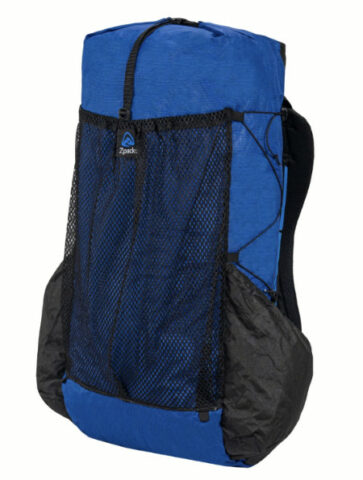
The Zpacks Nero Ultra 38L is an frameless rolltop pack that weighs 10.3 oz. It’s made with a durable waterproof material (called Ultra 100) and seam taped making the pack highly water-resistant. The pack has two side pockets and a large stretchy mesh center pocket for quick access items. There is a top strap so you can lash gear on top of the pack, side compression straps, diasy chains on the shoulder straps to attach pockets, a removable hip belt that can be adjusted for three torso lengths, and a sit pad that provides back padding. Read the SectionHiker Nero 38 Review. It’s available with standard unisex shoulder straps, smaller female sized shoulder straps, or vest-style straps.
2. Gossamer Gear Kumo (36L)
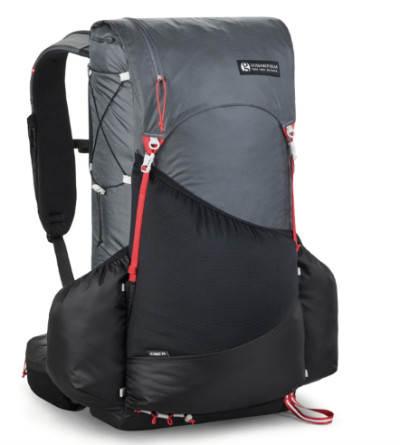
The Gossamer Gear Kumo is a frameless backpack made with Robic Nylon that weighs 20 oz. It has 28L of closed storage and 8L of open storage in its side and front mesh pocket. In addition, there’s an external pad pocket behind the shoulder straps that holds a foam sit pad (included) and a map-sized zipper pocket in the fold-over lid. The hip belt has pockets and is also removable. Gossamer Gear also makes a vest-style version of the Kumo called the Fast Kumo for fastpacking. Read the SectionHiker Fast Kumo Review.
3. Mountainsmith Zerk (40L)
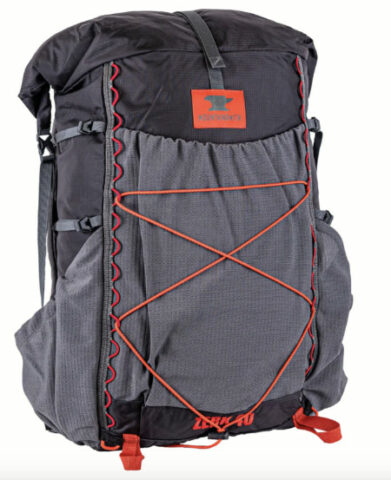
The Mountainsmith Zerk 40 is inspired by Ultra-running backpacks. It has a roll-top closure, removable hip belt strap, and a running vest-style shoulder strap system. Numerous open mesh pockets make it easy to store frequently accessed gear and food on the pack’s exterior so you don’t have to open it during the day. The pack comes with bear can straps so you can lash a canister on top and includes numerous external gear loops to attach additional gear to its exterior. While there is a foam pad in a pad pocket behind the Zerk’s shoulder straps, its primary purpose is to protect your back from being poked by the pack’s contents. Read the SectionHiker Review. Updated in 2024, the latest version includes added daisy chain attachment points, dual ice axe loops, dual side compression straps, and embroidered design. We also love the Mountainsmith Zerk 25.
4. Pa’lante Packs V2 (31-37L)
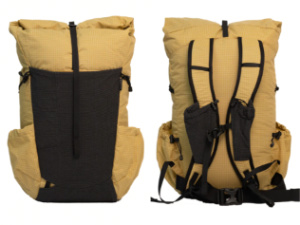
Pa’lante Packs is one of the original movers among second-generation frameless backpack manufacturers and many other of their innovations have been copied now by others. Their V2 backpack includes the original bottom pocket for stowing snacks, layers, and trash, shoulder strap pockets, a stashable hipbelt, adjustable side pockets, and a designated stake pocket. The V2 is available off-the-shelf in two torso lengths: 16″ and 19″ and two colors: sand and black.
5. Osprey Talon Velocity (30L)

The Osprey Talon Velocity 30 is a frameless backpack with a running vest-style suspension that’s great for fastpacking. While it’s on the heavy side for an ultralight fastpack (38 oz), it has an adjustable length torso which is rare among vest-style packs and greatly enhances the fit. Numerous pockets built into the vest-style harness and hipbelt let you easily access squeeze bottles, snacks, your smartphone, or sunglasses while you’re on the move without having to stop. Volume-wise, the pack has 34-35L of total storage including its open pockets. Read the SectionHiker Talon Velocity Review. A women’s version, the Tempest Velocity 30 is also available.
6. Superior Wilderness Designs Ultragrid Superior (35L)

The Superior Wilderness Designs UltraGrid Superior is a 13 oz frameless ultralight backpack with 36 liters of capacity: 27 liters of closed internal storage and 9 liters on the exterior pockets. The pack is made with UltraGrid, an abrasion and ripstop resistant recycled nylon reinforced with Utra 200 fibers. The pack has four external pockets, two on each side. The pack is designed for loads up to 18-20 lbs. Several low-priced customizations are also available.
7. Mountain Laurel Designs Burn (38L)

The Mountain Laurel Designs Burn is a 38 liter frameless rolltop backpack that weighs 16.5 oz. Made with Ultragrid or Ultra X 200/100 (your choice), it has a padded hipbelt, S-shaped shoulder straps, deep side pockets, and a solid stretch front pocket for improved durability (not shown here). With a recommended load range of 18-25 pounds, the thing that sets the Burn apart from other ultralight backpacks is the quality of its construction and bomber durability. The pack has over 50 heavy-duty sewing bartacks and can withstand multiple thru-hikes. Minor customizations such as shoulder strap or hip belt pockets are also available.
8. Gossamer Gear G4-20 (42L)
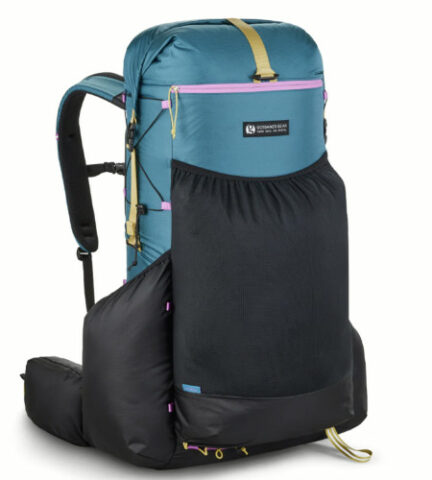
The Gossamer Gear G4-20 is a 42L frameless ultralight backpack that weighs 25 oz and can carry up to 25 lbs comfortably. The G4-20 has a front stretch mesh pocket, two side pockets including one that’s large enough to carry a shelter, an external map pocket, and a roll-top closure. Its internal storage capacity is 30L with 12L in its mesh and side pockets. The well-padded hip belt, which includes pockets, is not removable, but you can ditch the molded foam sit pad covering the pack’s back panel and reduce the pack weight to 21.7 oz. Read the SectionHiker G4-20 Review.
9. Nashville Packs Cutaway (42L)
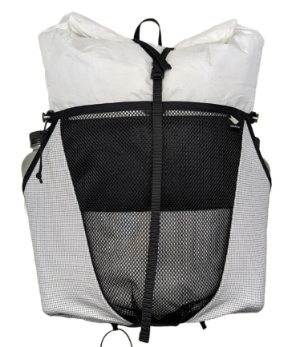
The Nashville Packs Cutaway is one of the most innovative frameless ultralight backpacks we’ve encountered in a long time. It’s a 40L (total volume) roll-top (also available in 20L and 30L sizes) with side and front pockets, as well as a bottom sleeve for trash or hats, buffs, and snacks, and is designed so that all of the exterior pockets can be accessed on the move while wearing the pack. While it is available in a variety of ultralight fabrics, the thing that sets this pack apart is the optional vest-style shoulder strap system which is hands-down the most comfortable, best-fitting, and functional vest-style shoulder strap system we’ve ever used. This is because Nashville has a unique way of measuring your size for the best fit. You can also get the Cutaway with regular shoulder straps because the pack is modular and you can switch between them. Read the SectionHiker review.
10. ULA Ultra CDT (54L)

The ULA Ultra CDT is a 54-liter frameless rolltop backpack with an internal pad pocket. Weighing 28.2 oz (20 oz without a hipbelt), the CDT is a streamlined backpack with 36 liters of closed storage in the main pack bag and extension collar, with the remainder distributed across its side pockets, front mesh pocket, and hip belt pockets. The pack is made with Ultra 200 and Ultra 400, two highly abrasion-resistant and waterproof fabrics, although the seams are not sealed. While the Ultra CDT is not the lightest frameless backpack available today, it is one of the largest in terms of overall volume. It is available with J-shaped or female-friendly S-shaped shoulder straps and comes in a very wide range of torso sizes and hip belt lengths. Read the SectionHiker CDT Review.
Frameless Ultralight Backpack Selection Guide
 Early model of the Gossamer Gear Frameless G4 Backpack – Frameless packs have come a long way since 2011.
How to Go Frameless
If your aim is to reduce the weight of your backpack to close to a pound or less, here are some ways of achieving that goal.
- Use a frameless backpack, since you don’t need the added support or weight of a frame or even a hip belt for loads under 20-25 pounds.
- Reduce the volume of your pack to 40L or less. which forces you to use lighter-weight and more compact gear.
- Pick backpacks made with ultralight fabrics like Dyneema DCF, Ultra, or EcoPak which are waterproof and highly durable.
Custom vs. Off-the-Shelf Backpacks
Many frameless ultralight backpacks are made by hand by cottage manufacturers and can be customized in terms of colors, fabric, or features. Some of the more established backpack manufacturers or retailers listed above only offer “stock” backpacks with a fixed set of features. The advantage of purchasing a stock backpack is that it’s usually available immediately without a long wait time. If you decided to go the custom route, be sure to contact the manufacturer if you have any questions before you order. Most custom backpacks are non-returnable.
Frameless Ultralight Backpack Volume
How much volume do you need in an ultralight backpack, when you’re trying to get your TOTAL pack weight below 20 pounds? It’s hard to make a blanket recommendation because it ultimately comes down to the climate you plan to hike in and what your clothing, sleep insulation, shelter, nutrition, and water needs will be. For general three-season conditions, most UL backpackers find that a 40L pack provides more than enough volume for a 3-5 day trip, including gear, food, fuel, and water. It gets much more difficult to fit everything you need into a 30L backpack, however, unless you can resupply more frequently, you go stoveless, or you don’t need to carry much water. However, given the list of packs above, there’s not a huge weight penalty for carrying a higher volume pack than you need, since they’re all so lightweight and you can compress them using a roll-top closure or side compression.
Massive External Storage
Frameless ultralight backpacks tend to have a lot of external storage which is accessible while you’re still wearing the backpack. This is as much a mantra as a design philosophy with the underlying goal of hiking as many miles as possible (like all day) without ever having to stop and take your backpack off. Many frameless ultralight packs come with pockets sewn onto their shoulder straps, bottom stretch pockets so you can reach underneath a pack when worn to pull out snacks or deposit used wrappers, and accessible side pockets.
Ultralight Backpack Fabrics
Most ultralight backpacks are made with Dyneema Composite Fabrics (DCF), XPac, Nylon (Robic, Cordura, Dyneema X, etc.) In terms of durability, Ultra is usually the most durable in terms of abrasion resistance, then EcoPak, XPac and LiteSkin, then DCF, and finally Nylon, although it depends on the denier or weight of the material used. DCF and XPac revolutionized UL backpack manufacturing because they’re so lightweight, but are being quickly overtaken by newer waterproof fabrics like EcoPak and Ultra which are even more robust and ecologically sustainable products.
The biggest areas of wear and tear on a backpack is the base, where you put it down on the ground, and the side pockets, especially if they’re made with mesh. Most UL pack makers have switched to more durable mesh, use more durable stretch mesh that has finer holes and is less prone to snagging, or have switched to making external pockets with solid fabrics for better durability.
DCF, XPac, ECOPAK, Ultra, and LiteSkin are all waterproof materials so they won’t absorb water when it rains. DCF has the advantage that it can be seam-taped which greatly increases the waterproofing of a backpack. While XPac, ECOPAK, and Liteskin can be seam-sealed, most people don’t bother and line their packs with trash compactor bags or use waterproof stuff sacks. Very little water will get in anyway. It’s much the same with Robic Nylon and other high-tenacity nylons although they will soak thru, can make your gear wet, and take a while to dry out. See the following FAQs for more advice and reader discussion:
- Dyneema Composite Fabrics FAQ
- DCF vs X-Pac for Ultralight Backpacks: Pros and Cons
- Do You Need a Backpack Rain Cover?
- How to Keep Your Backpacking Gear Dry with Trash Compactor Bags
Hip Belts on Frameless Backpacks
The hip belts found on frameless backpacks are not load-bearing because there’s no frame to transfer to load to the hips. This explains why many ultralight packs don’t have them, they’re removable, or stowable, and only made with webbing if they’re included at all. Their only real purpose is to provide an anchorage for hip belt pockets or to prevent the pack from bouncing against your torso if you walk fast.
Since the hip belts are not load-bearing, all the weight will rest on your shoulders. When choosing packs, you should consider how much shoulder strap padding you prefer and the strap width that you find most comfortable.
Shoulder Straps
An increasing number of frameless pack makers are including S-shaped backpack straps on their packs, which are more comfortable for women because they accommodate breasts more comfortably. Many men also find them more comfortable than the J-shaped shoulder straps that were used previously.
There’s also an increasing use of vest-style shoulder straps on many backpacks which can take some getting used to if you were born and bred on more conventional shoulder straps. The added width and pocket storage on vest-style packs makes them an attractive feature and can help distribute the load across your shoulders, especially if your pack lacks a hip belt.
Torso Length
Shorter torso lengths are also increasingly available to accommodate women, who on average, aren’t as tall as men. However, matching your exact torso length is less critical on a frameless backpack because the hip belt is not load-bearing. The fitting process is actually more similar to fitting a daypack (without a hip belt) than a regular framed backpack, although matching your torso length is still a good benchmark to aim for.
Check Out All of SectionHiker's Gear Guides!
- 10 Best Hiking Shoes and Trail Runners
- 10 Best 2-Person Backpacking Tents
- 10 Best 1-Person Backpacking Tents
- 10 Best Backpacking Stoves
- 10 Best Backpacking Water Filters
- 10 Best Lightweight Backpacks
- 10 Best Ultralight Backpacks
- 10 Best Ultralight Backpacking Quilts
- 10 Best Lightweight Backpacking Chairs
- 10 Best Backpacking Sleeping Pads
- 10 Best Backpacking Rain Jackets
- 10 Best Hiking Daypacks
- 10 Best Hiking Pants
- 10 Best Trekking Poles
SectionHiker never accepts payment for gear reviews or editorial coverage. When you buy through affiliate links on our site, we may earn a small commission at no extra cost to you. Help us continue to test and write unsponsored and independent gear reviews, hiking and backpacking FAQs, and free hiking guides.








 English (US) ·