
.jpg)
PROTECT YOUR DNA WITH QUANTUM TECHNOLOGY
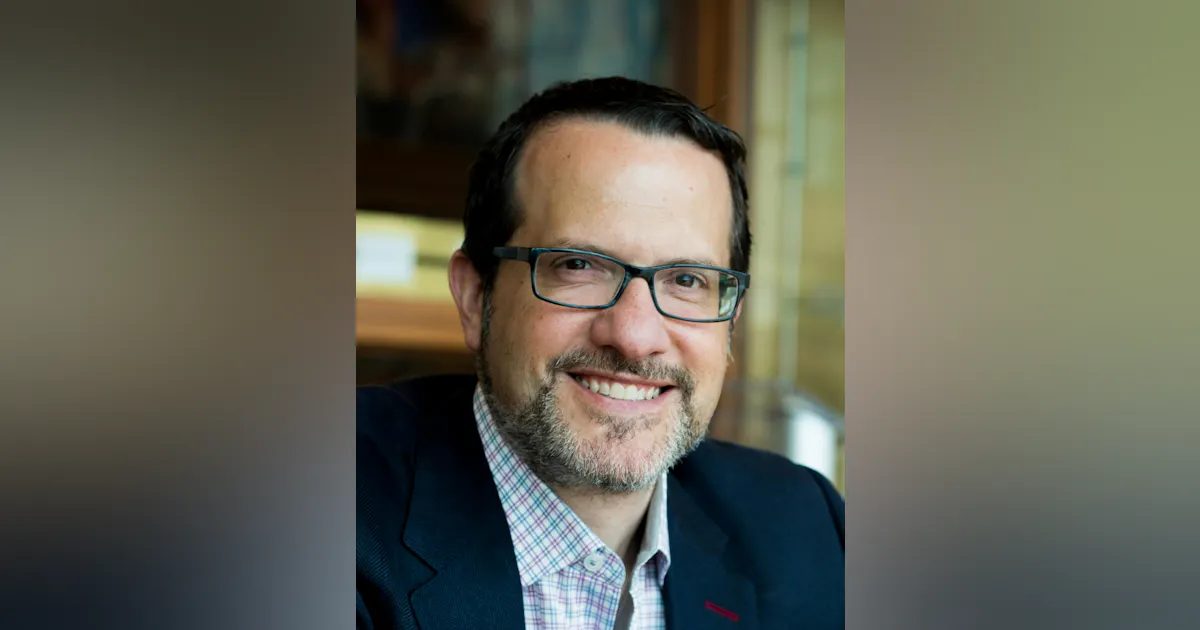
Orgo-Life the new way to the future Advertising by AdpathwayEvergreen Nephrology, which works with practices on value-based payment models for kidney care, operates across 24 states with a network of over 1,000 providers. Scott Lloyd, the company’s chief development & strategy officer, recently spoke with Healthcare Innovation about the importance of provider buy-in for value-based care. We were joined by Britt Newsome, M.D., M.P.H., chief medical officer of Colorado Kidney Care, an Evergreen partner.
Healthcare Innovation: Scott, could you talk a little bit about the history and business model of Evergreen Nephrology?
Lloyd: We formed Evergreen Nephrology in late 2021 because we knew that there were unmet needs for people living with late-stage kidney disease. There are services that they need that are often not provided by their nephrologist, who's frequently their principal care provider. We know that they have complexity around medications and high utilization of inpatient facilities. In a fee-for-service environment, those things are not easily accessed by lots of folks.
There were some early mover kidney value-based care organizations, but collectively their models were principally around remote care management and doing it without any meaningful coordination with the physician who provides the majority of their care, which is their nephrologist. We built the business on a foundation of taking the things that have worked well in delivering value-based care through primary care. We do it in deep partnership with the patient's physician, who in this case happens to be a nephrologist.
HCI: You used to work at DaVita. Were there some lessons learned from your experience there that you brought to Evergreen?
Lloyd: I think the principal thing that I would note there is that DaVita and other dialysis providers deliver really high-quality and important care to people with end-stage renal disease. But if you want to change the outcomes of people with late-stage kidney disease, they need deep intervention earlier in their disease progression. I think that was the important lesson for me. While DaVita and other dialysis providers can deliver high-quality care, it's difficult to change the trajectory of a patient and to empower them in a way to lead to a different outcome.
HCI: Dr. Newsome, could you talk about Colorado Kidney Care and your experience in transitioning to a value-based care model?
Newsome: We're probably very similar to the other practices that are involved in value-based care in that we are a single specialty nephrology practice. We have about 45 kidney providers and we cover most of the Front Range here in Colorado. We started our partnership with Evergreen around 2021, and this was our first foray into value-based care. Previously, we had been practicing traditional nephrology in which our interactions with the patient were one on one, provider to patient. We felt that the value-based care model really spoke to our desire to be more than that. I like the analogy of saying you can pull one person out of a river at a time or you can build a bridge and get more people across more easily. I think the value-based care model is more consistent with the latter. Instead of just the one-on-one provider interaction, we have a whole wrap-around team that's able to help the patients.
HCI: What about coordination with the person's primary care physician? Is that something that's happening more in the value-based models?
Newsome: In the pre-VBC world, our ability to interact with the primary care physician was limited almost entirely by the amount of time available to the individual provider in a given day. So when we have a small army who's available to help us take care of the patient, they can help fill those gaps in terms of primary care communication. A lot of our patients rely on the kidney doctor for a lot of their primary care. For patients with end-stage kidney disease, we see them as frequently as once a week. So we are very high touch with those patients, and we're able to address almost all of their issues. A primary care physician is still very important in the relationship. I would say that, in summary, value-based care has allowed us to really deepen our interaction with the primary care physicians.
HCI: What are some of the tech tools or analytics or support mechanisms that Evergreen brings to the table to help make what you're doing now different than what it looked like five years ago?
Newsome: I think the average medicine practice, whether it's nephrology or a different specialty, does not have the expertise to drive deep analytics, so we rely on our outside partner to do a lot of that work.
Lloyd: The technology that we built certainly does things like manage large quantities of data that we aggregate from payers and from practice EMRs, laboratories, health information exchanges and other sources, and allows us to take that data and use it in a way to stratify the patients and apply care resources in a way that is most going to meet their needs. All of that is about risk stratification. In addition to that, we're able to measure the outcomes of the work that we do and the practices do to make sure that the things we're doing are driving toward the outcomes that the patients ultimately want.
HCI: Does Evergreen actually provide some kind of care management or coordination with other resources, or offer ways for the practices to do that themselves?
Newsome: Evergreen has provided a care structure that involves an interdisciplinary team that's really new to the world of nephrology. If we think of a patient with cancer, they have an entire team helping them, and we're just now to the point where that type of model is brought to patients with kidney disease. They are embedded in our practice, and they help coordinate care between the nephrologist and the patient. They do a lot of work for the practice on behalf of the patient, helping with medication management, appointment scheduling, filling the gaps after hospital discharge, which is a huge opportunity for morbidity and sometimes unfortunately mortality for patients. So getting the patients to a soft landing after hospitalization is a big part of that team.
Lloyd: One of our programs is a thing we call Evergreen Compassionate Care. Dr. Newsome just touched on the mortality rate. Even under the best of circumstances, it is quite high in this population, and one of the things we're focused on is allowing patients and their caregivers to make choices around end of life. The Evergreen Compassionate Care Program is designed to support the capabilities and capacity of nephrologists to engage patients and their caregivers to make informed decisions. We don't operate a hospice program or a palliative care program. But you mentioned connecting to resources in the community. Every community has different sorts of palliative and hospice resources, and when a patient is eligible for those services, one of the things we do is try to connect them to whatever service we think will best meet the needs of that family.
HCI: What are some of the keys to success in getting buy-in from the clinicians in making the transition to working in a slightly different model than fee-for-service? Are there some lessons learned, or some things that you found helpful there?
Newsome: What I found helpful with my practice is the providers seeing firsthand what coordinated care can do for their patients. Once we see the better outcomes that happen with this expanded care model, then at least for my partners, we become true believers pretty quickly. It becomes not only less work for the provider, but it's work that we're not particularly good at. I think we clinicians are good at learning how to titrate hydrogen ions and esoteric things like that. But care coordination is not our strong suit, so having a team that is able to accomplish those tasks very quickly helps providers understand the benefits of the model.
Lloyd: I think in addition to the things that Dr. Newsome said, I would just note a couple of other things. One, the timing of cash flows for value-based care is generally quite delayed. You're delivering care today on the promise that you'll be paid later. So not only is it important for us to provide some of the financial resources to bridge that gap of time, but also to structure compensation during that period of time to drive the right behaviors with physicians. And we're very fortunate to have Dr. Newsome on this call, who is obviously very committed to the transformation that's required.
We have to meet each practice and each physician individually where they are. There are physicians who are really excited about embracing change and locally they have leadership that's good at supporting and driving change. There are others where it takes a different approach, and we have to have enough flexibility to be able to meet each practice and each physician where they are.
HCI: What are some of the outcomes that can convince the nephrologists that this is working? Fewer hospitalizations. Are there some others that you look at in terms of quality of life or clinical outcomes?
Newsome: Absolutely. There are some aggregate metrics that I can think of when we think about kidney care. One of the most important outcomes for us is something called an optimal start. No one wants to start dialysis, obviously, but when we start it optimally or in the right manner, with the right dialysis access, it’s called an optimal start and within the Evergreen model, I think our start rates are 58% optimal start rate, which is about 45% higher than the national average. So that's huge.
HCI: So the national average isn't very good, is it?
Newsome: It's not very good, and that's for a lot of different reasons we can talk about, but having this care model makes that particular metric better. Transplantation access is another metric we focus on. For some patients, dialysis is the right therapy. For others, transplant is. And collectively, we've been able to achieve a 25% higher transplant access rate than the national average, so that really feels good. One of the other metrics that we think about is the progression of kidney disease longitudinally, going from good kidney function to worse kidney function, and Evergreen has been able to slow disease progression by 35%, which is really kind of amazing. That leads to fewer dialysis patients, fewer dialysis starts, which is our goal collectively.
HCI: Could you talk about some of the alternative payment models? There are some from CMMI, right? But do you also work directly with other payers?
Lloyd: We participate broadly in two types of models from a contracting standpoint today. We participate in a Medicare ACO called Comprehensive Kidney Care Contracting, or CKCC. The easiest way to think about that is a Medicare ACO where you have to have a kidney disease diagnosis to be eligible to join. In that model, we become responsible with the physicians that are participating for the total quality and cost of care.
HCI: So that has upside and downside risk?
Lloyd: Correct. We participate, typically, in the global risk track, where we collectively are responsible for all the up or downside risk. We also have contracts with a number of national and regional Medicare Advantage plans. The structure of those programs is very similar to that ACO and we are responsible for both the quality and cost, with up and downside risk in those. This year, we are likely to introduce programs in other lines of business, including commercially insured patients. The thing that we have learned in the five years that the business has been operating is that the clinical needs of patients are the same, no matter how their care is paid for, but structuring a contract that will allow us to invest the right amount of resources and do it in a responsible way, which is to say where we can be confident that we will spend less money providing the care than the savings that we're generating, is a little bit different with each of those lines of business.
HCI: Scott, I read that you're entering new markets like South Carolina and expanding in Alabama and Tennessee. So it seems like you're in expansion mode.
Lloyd: We're being really disciplined about entering new states. We’re doing that where we find the right combination of payer and physician partners to enter new geographies, and where we have delivered results in existing geographies. Our focus is on making services that Dr. Newsome was talking about available to as many Medicare-eligibles in those states as possible. What you'll see over the next couple of years is a disproportionate focus of our growth being in states where we already have operations, and then when all the right elements to enter new states exist, like existed in South Carolina this year, we will enter new states.
HCI: Going back to CMMI’s CKCC model, are you guys happy with the way that's been going? Are there things you wish that CMMI would do differently?
Lloyd: I think the CKCC program has been successful in these ways: No.1, speaking on behalf of all participants through 2024, which is the most recent period that they've released results for, objectively there's been material improvement in quality, and I think we're all very proud of that. The second thing is to different degrees, the physician participants have generated income that for most practices has been greater than what they've invested. So I think it's been marginally profitable, on average — with a few practices doing quite well and some others struggling a little bit.
The part that's been hard is that the program has been a modest net cost to the Medicare program and to the taxpayer. So the short answer to your question is that we have a number of ideas. And I will applaud the CMMI leadership, because they are engaged in soliciting stakeholder feedback.
The program is scheduled to expire at the end of 2027 and they are deep at work on what the successor program will be, beginning in January of 2028. They have signaled full intent to have a successor program. I expect two things: one, the successor program will have many elements that are similar to CKCC. And there will be very limited changes in the program before 2028. One of the things we anticipate with 2028 is a program that is 10 years in duration. So far, by and large the participants have been in urban or metropolitan areas, and there's very little participation in rural areas. By creating this longer runway, and some of the elements on how they create the benchmark or the financial goals, they are signaling an opportunity to invest over the long run, rather than a short sprint, as some of these things have been. And I think those are emblematic of the changes that they need to make, and that they're likely to make.
Newsome: From a practice standpoint, having that certainty is really helpful. It takes practices time to get good at something, so having that lead time is important. From a financial standpoint, the only thing that I'll say is that being reimbursed for what I view as preventive care, slowing progression rates, and increasing optimal start rates feels really good for a provider — where we're not being rewarded for managing an end-stage condition. You know, that's not what we're here for. So having a program that provides the framework to do that, I love it. I think it's invigorating as a clinician, and it kind of puts winds in our sails to do that type of work.









 English (US) ·