
.jpg)
PROTECT YOUR DNA WITH QUANTUM TECHNOLOGY
Orgo-Life the new way to the future Advertising by AdpathwayNavigating the shift from volume to value in healthcare At this year’s Healthcare Innovation Summit in Washington, D.C., healthcare leaders tackled some of the industry’s biggest challenges — from AI governance and cybersecurity to interoperability, digital medicine and operational transformation. Here are just a few of the conversations and themes that stood out throughout the day. One of the things I enjoyed most about hosting my first Healthcare Innovation Summit on May 12 in Washington, D.C., was watching conversations evolve over the course of the day. A speaker introduces an idea in the morning, another panel builds on it after lunch, and by the closing keynote, I could feel the audience connecting the dots in real time. From cybersecurity and AI governance to interoperability, digital genetics and physician engagement, the conversations throughout the day reflected a healthcare industry trying to move beyond experimentation and into practical, sustainable transformation. There was plenty of excitement around AI, of course, but what stood out to me most was how grounded the discussions were. Speaker after speaker focused less on hype and more on operational reality: What actually works? What scales? What protects patients? And how do organizations innovate responsibly while under enormous financial and workforce pressure? We opened the morning with a topic that immediately set the tone: resilience. In “What Happens When the Lights Go Out,” moderated by Richard Staynings, Ph.D., professor at the University of Denver and healthcare cybersecurity luminary, the conversation focused on what happens when healthcare systems fail, whether because of cyberattacks, infrastructure issues or operational disruptions. Attila Hertelendy, Ph.D., director of innovation and technology, research and assistant professor at Best Israel Deaconess Medical Center and Florida International University, and Natalie Sullivan, M.D., assistant professor of emergency medicine and assistant director for the Disaster and Operational Medicine Fellowship at George Washington University Hospital, shared insights that were both practical and sobering, particularly around maintaining patient care during downtime events. What struck me was how much the discussion centered on adaptability and preparation, not just technology. In healthcare, resilience is no longer only about preventing failure. It’s also about how quickly organizations can respond and continue delivering care when disruption inevitably happens. That theme carried throughout the day, especially once the discussions shifted toward AI. Our AI governance panel, moderated by Rajiv Leventhal, senior analyst, healthcare and pharma marketing at EMARKETER, brought together a fascinating mix of perspectives from providers, policy experts, and security leaders. Speakers including Raj Ratwani, Ph.D., vice president of scientific affairs/director/professor at MedStar Health Research Institute, Heide Bajnrauh, managing director for Manatt Health, Aaron Bryant, assistant vice president of artificial intelligence and data governance at Inova Health System, and Chad Wilson, CEO and former CISO with Wild Duck Labs AI Research Lab, explored what AI governance actually looks like inside healthcare organizations right now. What really resonated with me was the growing consensus that governance is not slowing innovation down. In many cases, it is the thing making innovation possible at scale. There was a lot of discussion around balancing opportunity and risk, especially as organizations rapidly adopt AI for clinical documentation, analytics, administrative workflows and patient engagement. The conversation felt refreshingly honest. Nobody was pretending there are easy answers yet, but there was also a shared understanding that health systems can’t afford to stand still. Cybersecurity conversations remained front and center all day long. Sharon Finney, director of information security at Children’s Hospital of Philadelphia, delivered a thoughtful presentation on defending health data in an AI-driven environment, walking attendees through the realities of securing increasingly intelligent and interconnected systems. Later, during the CISO leadership panel, speakers including Finney, along with Richard Staynings, Anahi Santiago, Ph.D. and Benoit Desjardins, M.D., professor and chief medical cybersecurity officer at University of Montreal (CHUM), discussed the growing pressure security leaders face as innovation accelerates. One thing I heard repeatedly throughout those sessions was that cybersecurity can no longer sit in its own silo. Security leaders are now deeply involved in conversations around AI strategy, digital transformation, governance, and enterprise operations. The role itself is evolving in real time. Another recurring message was that resilience is becoming just as important as prevention. Healthcare organizations are increasingly focused on how they maintain continuity and patient care during disruptions, not simply how they avoid them. Another conversation that resonated with attendees focused on innovation and scale. During our Fireside Chat with the Healthworx Accelerator and CareFirst BlueCross BlueShield, speakers Soo Jeon, head of Healthworx Accelerator, Piyush Khanna, vice president, health services, and Josh Curtis, manager, digital products, talked candidly about what it takes to move innovation beyond pilots and into operational reality. That “pilot purgatory” issue came up in several sessions throughout the day. Healthcare organizations are full of promising technologies and interesting ideas, but scaling them across an enterprise is a completely different challenge. The discussion was practical. The speakers talked openly about governance, infrastructure, operational alignment and creating systems that allow innovation to succeed instead of getting stuck. The afternoon sessions continued building on many of those same ideas. Michael Levy, CEO of Digital Health Institute for Transformation, and Aaron Bryant, Inova Health System, discussed the growing pressure on health systems to simultaneously improve patient experience, reduce costs, strengthen security and support workforce sustainability. AI and automation were certainly part of that conversation, but again, the focus remained on real-world implementation rather than abstract futurism. The discussion centered on how organizations can thoughtfully redesign care delivery while managing the day-to-day realities facing health systems today. The interoperability discussion led by Stephanie Brown, DC HIE president and executive director of CRISP DC, alongside Bruno Petinaux, M.D., chief medical officer at George Washington University Hospital and Cedar Hill Hospital, and Gayle Michelle Olano Hurt, VP of patient safety and quality at the District of Columbia Hospital Association, brought a grounded and practical perspective to the day’s discussions. The session title itself, “Because Interoperability Shouldn’t Be Aspirational,” captured the tone perfectly. For years, interoperability has often felt like one of those healthcare goals everyone agrees on but struggles to operationalize. This conversation focused on practical coordination and whole-person care. The panelists grounded the discussion in patient impact, showing how data sharing and regional collaboration can directly improve care delivery and clinical decision-making. Later in the afternoon, we shifted into one of the most forward-looking conversations of the summit: digital genetics. David Flannery, M.D., director of telegentics and digital genetics at Cleveland Clinic, and Karen Smith, M.D., M.Ed., executive medical director, global services division of hospital medicine at Children’s National Hospital, explored how digital medicine, telehealth, AI-supported tools and remote monitoring are reshaping access to genetic services. The discussion covered everything from newborn screening programs to global care delivery challenges and the ethical complexities of cross-border genetic data. It was one of those sessions that reminds you just how quickly healthcare is changing. Topics that may have sounded futuristic only a few years ago are now becoming operational and immediate. We closed the day with a keynote from Patsy McNeil, M.D., MBA, FACEP, executive vice president and system chief medical officer for Adventist Healthcare, that offered a completely different, but equally important, perspective on healthcare transformation. Her presentation focused on physician behavioral change and how concepts from marketing science and behavioral economics can influence quality improvement efforts. After a full day of discussions centered on technology, governance and infrastructure, it was a fitting reminder that healthcare transformation is ultimately still about people. And as I reflect on the summit, that just may be the biggest takeaway for me. Yes, AI dominated many of the conversations. Cybersecurity concerns are intensifying. Interoperability challenges remain difficult. And healthcare organizations are under tremendous pressure to transform quickly. But throughout the day, the speakers consistently brought the conversation back to practical implementation, responsible governance, operational resilience and patient impact. The future of healthcare innovation is not going to be defined by technology alone. It’s going to be shaped by how thoughtfully organizations integrate those technologies into care delivery, operations, workflows and culture. And if the conversations in Washington, D.C., were any indication, healthcare leaders are increasingly focused on getting that balance right. Melinda Taschetta-Millane is Market Content Director of Healthcare Editorial, and Head of Content for Healthcare Innovation.
Key Highlights
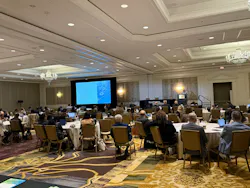
Starting with a Conversation About Resilience
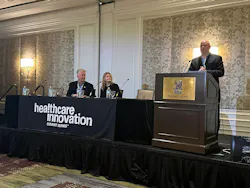
What Happens When the Lights Go Out focused on what happens when healthcare systems fail. Speakers included, from left, Richard Staynings, Ph.D., Natalie Sullivan, M.D., and Attila Hertelendy, Ph.D.
AI Governance Moves Into the Operational Phase
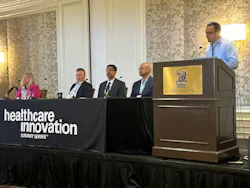
Rajiv Leventhal leads a panel on AI governance, including from left: Heide Bajnrauh, managing director for Manatt Health, Aaron Bryant, assistant vice president of artificial intelligence and data governance at Inova Health System, Raj Ratwani, Ph.D., vice president of scientific affairs/director/professor at MedStart Health Research Institute, and Chad Wilson, CEO and former CISO with Wild Duck Labs AI Research Lab.
Why Cybersecurity Is No Longer a Separate Conversation
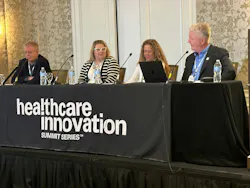
The CISO leadership panel included speakers(from left) Sharon Finney, Richard Staynings, Anahi Santiago, Ph.D. and Benoit Desjardins, M.D.
Moving Beyond Pilot Programs
Balancing Transformation with Operational Reality
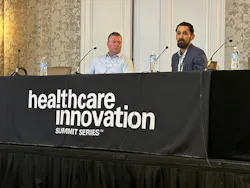
Michael Levy, right, CEO of the Digital Health Institute for Transformation, and Aaron Bryant of Inova Health System explore how health systems are balancing rising expectations around patient experience, cost reduction, security, and workforce sustainability.
Making Interoperability Practical
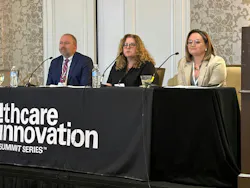
The interoperability discussion led by Stephanie Brown, right, executive director of CRISP DC and president of the DC HIE, alongside Gayle Michelle Olano Hurt of the District of Columbia Hospital Association and Dr. Bruno Petinaux of George Washington University Hospital and Cedar Hill Hospital, brought a grounded, practical perspective to the day’s conversations.
Digital Genetics Moves Into the Mainstream
A Reminder That Transformation Is Still About People

Patsy McNeil, M.D., MBA, FACEP
About the Author
Melinda Taschetta-Millane









 English (US) ·