
.jpg)
PROTECT YOUR DNA WITH QUANTUM TECHNOLOGY
Orgo-Life the new way to the future Advertising by AdpathwayNavigating the shift from volume to value in healthcare Q&A with Ajay Kumar, M.D., chief clinical officer, and Padmanabhan Premkumar, M.D., president of Hartford HealthCare Medical Group
ID 181066017 © Kyle Lee | Dreamstime.com In 2025 Connecticut-based Hartford HealthCare won the American Hospital Association’s Quest for Quality Prize for continuous improvement in patient safety. The health system saw a 70% reduction in hospital-acquired infections between 2015 and 2023. In a wide-ranging interview, two of the health systems clinical leaders discussed approaches to patient safety, value-based care and the principles leading artificial intelligence implementation. Healthcare Innovation spoke with Ajay Kumar, M.D., executive vice president and chief clinical officer, who helps lead quality improvement work across the $7 billion health system with seven hospitals and 40,000 employees. Joining the conversation was Padmanabhan Premkumar, M.D., president of Hartford HealthCare Medical Group and also president and CEO of the organization’s clinically integrated network. Healthcare Innovation: I know the kind of patient safety improvements Hartford HealthCare was recognized for don't happen overnight. Could you talk about the journey — and some things you focused on that seemed to have the biggest impact? Kumar: It requires a tremendous amount of discipline and organizational design. We began by identifying the core principles of our organization, which are always driven from leadership. We put ourselves on the journey that we are going to be one of the best in the country in improving safety and quality. We have standardized protocols and procedures through councils disseminated across the system. We have a great accountability model — not just that we have to be tough on getting things done, but also coach, teach, mentor, and make sure people have the right tools, with just culture built into the process. We have done a lot of cultural change in the organization, driven by appropriate resource allocation, investment, and up-training of the people. But the most important thing is that clinical teams come together in a council fashion and democratically debate the issues and get to the right place. That has been the fundamental change in our system that has allowed us to get there. The AHA is not just looking at quality scores, but the culture, our cost-conscious care, our innovation, our health equity, and how we manage harm events across the system. So this was a very proud moment for all of us in Hartford HealthCare to receive that award because it exemplifies a lot of different domains we've been working in for a long time. HCI: Dr. Premkumar, could you talk about the approach you have taken with the clinically integrated network (CIN)? Premkumar: We have close to 4,400 clinicians who are part of our network. The biggest thing for us is the alignment that you need in terms of population health and the quality metrics that you're focused on. Over the last three to four years, we've done a tremendous job from an organizational standpoint of setting clear goals. For example, we have set hypertension and diabetes priorities by Zip code, with kidney health as core measures within the healthcare system. That same level of rigor is now transmitted through the entire CIN. Measuring those disease processes helps prevent heart attacks, strokes, and kidney disease, which are vital to people. We've taken all of our payer contracts in the the value-based environment and summarized the core measures where caring for somebody really means that they're going to live longer. That level of connectivity with our care managers has aligned the organization to achieving what matters most from a patient care perspective, which is why our star ratings have improved year over year, and why our patient outcomes have improved year over year. The organization and the CIN have come together to deliver those outcomes. HCI: One challenge we hear about from other organizations that have CINs is that the clinicians who aren't employed physicians have an array of EHRs, and it's difficult to share the data or do the analytics. Has that been an issue or have you found a way to solve that? Premkumar: That has been an issue for us. I would say that our membership standards, which we have evolved over the last three to five years, have really helped us. If you are part of our CIN, there are core things that you have to do. You actually have to contribute to the quality, safety, the data, and analytics. We are an Epic shop. We have provisioned Epic CareLink access, so it doesn't matter what EHR you have, you could still have access to Epic CareLink. We've helped transition several of our independent practitioners to have Epic Community Connect. Even if you don't have Epic, CareLink, or Community Connect, there are things that you need to provide in order to be a core member of our CIN. We actually have escalation pathways for folks who don't meet those standards. We really hold people accountable to be part of Hartford Healthcare because you can't achieve these outcomes unless you contribute to them. Courtesy of Hartford Healthcare "I believe quality and safety and cost are all parts of one equation," says Ajay Kumar, M.D., executive vice president and chief clinical officer. "If we're not able to support reductions in expense, we’re not going to be able to invest in the quality and safety." HCI: Dr. Kumar, can we switch back to the hospital setting? Are there other things that Hartford HealthCare has done to standardize care to improve systemwide performance beyond the patient safety aspects discussed earlier? Kumar: Yes. One of the things I'm very proud of is what we call clinical care design, which is our systemwide effort to reduce cost across the system. We want to make sure care is affordable. One of the ways to do that is to reduce the amount of waste we have in the system and reduce variation. Clinical care design brings our clinicians together along with the supply chain, contracting and other groups to figure out if we can eliminate waste, while not compromising quality and safety. That is our north star. We are on the track for over $77 million in savings this year, which is a pretty big achievement for our system. I believe quality and safety and cost are all parts of one equation. If we're not able to support reductions in expense, we’re not going to be able to invest in the quality and safety, which is really important for community care. HCI: Let’s talk about some AI innovations. I've read about something called PatientGPT, which is a patient-facing AI tool in the portal. Could you talk about the impact so far? Premkumar: PatientGPT was homegrown here at Hartford HealthCare with a vendor partner in K Health. It lives within our MyChart portal within Epic. Currently more than 300,000 primary care patients have access to the product. It's gone through the full auspices of governance from a quality and safety standpoint that Ajay leads. In addition to that, in its initial testing phase it went through IRB approval for phase one and two. Subsequently, there is a well-defined quality study that we're doing, given that it's being launched across the state of Connecticut. HCI: Is the goal that people can get get more information about a condition? Does it help guide them to the care setting that is appropriate? Premkumar: Yes. We want Hartford HealthCare to be the hub for health, wellness, and clinical care across the state of Connecticut. Today people use the Web or search engines or chatbots outside of the healthcare system to help navigate for their care or to ask general questions. We want the healthcare system to be the be-all and end-all because we know who you are. That’s why I started by saying it's HIPAA-protected. All the data is contained. Patients aren't uploading their medical record into MyChart; it already exists. Patients don't need to upload their labs or any of their remote patient monitoring data. Everything exists within the EMR for us, which is where patients can come in and ask general questions. Patients can have care navigation questions. Patient can ask clinical questions. We believe PatientGPT is smart enough that it sniffs out emergent conditions and directs you to the emergency room. It doesn’t interact with you in those critical situations or in behavioral health situations. HCI: You’ve also worked with K Health on HHC 24/7, a virtual primary care platform, right? Premkumar: Yes, that's that's been live for more than a year. That was our first patient-facing AI on the clinical side, but with a human physician or an advanced practitioner on those visits. We’ve done nearly 65,000 visits across Hartford HealthCare. We see nearly 240 to 250 patients during the weekdays. We see nearly 150 to 170 people on the weekends. For us access to care is the game-changer. People are looking for care, and HHC 24/7 was an avenue to create access in the palm of your hands, to be available 24/7, day or night. We do full-blown primary care, and it's a longitudinal experience. We want you to come in and have a true primary care experience. We focus on care gaps, breast cancer screening, colon cancer screening — all of the various things that I talked about with value-based care, all bundled into one app and one experience, because we think that's the thread all through HHC that you need to have. HCI: Was staffing for that a challenge? Premkumar: Actually, it wasn't. We have folks who are multi-state credentialed who work on the virtual platform. I can recruit people from outside of the state of Connecticut to work on the platform, so that's why it's easier to staff. Originally, it was just advanced practitioners, but today we have a good group of physicians and advanced practitioners because the complexity of patients on the app is so significant today. HCI: Could we talk briefly about Hartford HealthCare’s deployment of Abridge ambient clinical intelligence? Kumar: Abridge has been an amazing technology. It was initially rolled out in the medical group under Prem's oversight in primary care. Now we have expanded to the emergency rooms. I believe we are the only institution that also is piloting it in the nursing area. Nurses have some of the toughest job in the country, in my opinion, and they're really finding it such a useful tool to assist their day-to-day work. HCI: Abridge held a big event in New York a few weeks ago, and they talked about addressing other parts of the workflow. Do you see other possibilities upstream and downstream of just a patient/physician conversation? You have already mentioned the emergency room and nursing… Premkumar: One of the the reasons why we partner with the vendors that we partner with is we want to find people who have the right ethos, not just from operationalizing the technology that they have, but the innovation and collaboration that that we want to really push on. With Abridge, we believe that we can impact every aspect of the patient clinical visit — from pre-charting to intra-visit to post-visit to documentation, coding, and billing. We actually have pilots in all three of those various arenas occurring in the physician realm. Similarly, in the nursing realm, as Ajay mentioned, it's going to expand beyond just standing in a room and talking to a patient. For us, we want to synthesize the medical record, the visit, and the data in such an easy way that our physicians and clinicians can work at the top of their license, and that allows medicine to be far more simplistic than it is today. Because we believe it's burdensome, which is impacting access to care. HCI: When you hear from Epic about their roadmap, do you have to make decisions about working with some of these other vendors vs. waiting for what Epic says they're going to do in AI or other types of innovations? Premkumar: I will give you an example. We had a texting vendor that we used where we would text patients their appointment reminders, care gap closures, and all of that. We pushed our Epic partners so we could have this capability built within the electronic medical record, and we switched over to Hello World and Cheers almost two years ago. We are agnostic. If Epic can do what we need to do, and they're great partners of ours, let's go do it. But for us, we want to make sure our patients have what they need in the palm of their hands, and time is an enemy for us because healthcare doesn't wait for us. HCI: Could you describe the AI governance structure within Hartford HealthCare? Kumar: We have a very robust system. It starts with our strategy about the artificial intelligence implementation. We are focused on clinical and non-clinical equally at this time. We have an executive AI governance team, which actually makes a decision about the AI implementation — the right partners, right tools, and also the governance process. I’d like to believe we are ahead of the game, and probably one of the best in the country. We have a very multidisciplinary team of legal ethicists, clinicians, and nurses. Everybody is sitting together opining about the safety implementation challenges. It is not a top-down approach. A business unit in Hartford HealthCare can come up with an innovation they like. As long as it fits all the principles we have laid out for how it needs to get done, we are happy to support and implement that. David Raths is a Contributing Senior Editor for Healthcare Innovation, focusing on clinical informatics, learning health systems and value-based care transformation. He has been interviewing health system CIOs and CMIOs since 2006. Follow him on Twitter @DavidRaths
Key Highlights

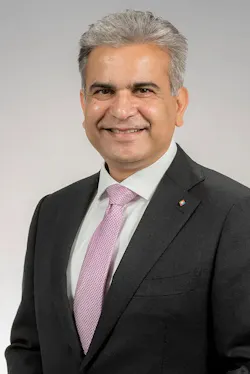
Kumar: The adoption of technology has to have some principles in our system. One, it has to be meaningful and bring value to the patients. It has to improve a clinical workflow as much as possible. But also, it can’t cause too much tech burden, which actually can be counterintuitive. So we're very careful. There are certain things in Epic which are going to be very helpful for our healthcare delivery model. We are looking at the AI suite Epic is releasing right now, and some of the areas such as incidental finding could be very useful. We chose Abridge because they were ahead of the game. The company's values aligned very well with us. The mindset they had of innovation and trying to challenge the status quo is who we are at Hartford HealthCare. About the Author

David Raths









 English (US) ·