
.jpg)
PROTECT YOUR DNA WITH QUANTUM TECHNOLOGY
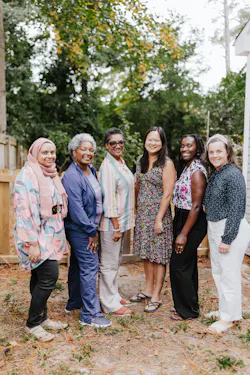
Orgo-Life the new way to the future Advertising by AdpathwayNavigating the shift from volume to value in healthcare The Healthcare Innovation Innovator Awards recognize organizations that are using innovative, practical approaches to solve real-world challenges in healthcare. This is the first in a three-part series profiling our 2026 award winners and the work behind their innovations. Courtesy of UNC Health UNC Health’s Jennifer Tang, M.D., (third from right) and Rachel Peragallo Urrutia, M.D., (right) meet with some of the doulas from Momma's Village-Fayetteville in North Carolina. To address ongoing disparities in pregnancy outcomes, researchers at the University of North Carolina and community health leaders developed a randomized controlled trial that aims to improve maternal health outcomes, patient satisfaction, and communication, particularly for Black moms. Because of the study’s potential impact and the interesting combination of community doulas and HIE data for clinic alerts, Healthcare Innovation chose the project as one of its Innovator Award winners for 2026. The study is called ACURE4Moms. “ACURE” stands for “Accountability for Care through Undoing Racism and Equity.” It is funded by a $10 million, multi-year grant from the Patient-Centered Outcomes Research Institute (PCORI) and uses data alerts from the NC Health Information Exchange Authority’s NC HealthConnex HIE. Rachel Peragallo Urrutia, M.D., associate professor in the UNC Department of Obstetrics and Gynecology and a co-principal investigator, explained the impetus for the study: “Across the United States, we have an epidemic of preventable maternal morbidity and mortality that seems to be increasing and that definitely disproportionately impacts certain populations, both in terms of maternal deaths and maternal severe complications after delivery, as well as infant deaths,” she said. “There is a huge disparity in low birth weight between families who identify as Black and families who identify as white. We thought that this shouldn't exist and we wanted to work together with the community to come up with a way to prevent that problem, to reduce the disparity, and to improve health outcomes for everyone.” The work also was inspired by earlier research done in North Carolina. The Greensboro Health Disparities Collaborative had done a study called "A Cure: Accountability for Cancer Care Through Undoing Racism and Equity.” Using patient navigation and data accountability tools, they reduced disparities in terms of receiving treatment for lung and breast cancers in several cancer centers. The researchers sought to adapt some of those methods for the maternal health problem. “It was very inspiring because there are still few interventions that have been successful in actually reducing disparities between Black and white people in this country,” said Jennifer Tang, M.D., professor in the UNC Department of Obstetrics and Gynecology and co-principal investigator. “To have a study that was able to do it through data was exciting for us to hear about and to think could we do the same thing for pregnant women? “There is a huge disparity in low birth weight between families who identify as Black and families who identify as white. We thought that this shouldn't exist and we wanted to work together with the community to come up with a way to prevent that problem, to reduce the disparity, and to improve health outcomes for everyone.” With low birth weight, however, they have a very short time to intervene while a woman is pregnant. That is what led them to another evidence-based study or intervention that involved community-based doulas. There was another study out of Greensboro that found that women who were matched to a community-based doula early in pregnancy had lower rates of low birth weight, as well as other bad outcomes. The UNC research team wanted to see if the effects of community-based doulas, plus data interventions, could move the needle. “Low birth weight, unfortunately, just keeps getting worse for all women, but particularly for Black women, so we really can't wait. We need to generate the evidence now,” Tang added. The project is a four-armed, clustered, randomized trial involving 39 prenatal sites. The first arm is the control arm or the standard care arm. Those nine clinics didn't get any interventions. They're doing their standard of care, and the study is following their pregnant patients for two years. The second arm is the data intervention. These nine clinics were randomized to use data dashboards with data alerts from the HIE, as well as maternal health equity education and training sessions. The third arm has the community-based doulas matched with clinic patients who are at high-risk for low birth weight. The clinics in the fourth arm got both the data interventions and the doula interventions. “That way we could look at the synergistic effect of the two as well as the individual level effects of the two interventions,” Tang explained. The project is still ongoing. The first clinics started in the study in June 2023 and finished in June 2025. The last clinic in the study started in December 2024 and will finish in December 2026. Maya Jackson is founder and executive director of MAAME Inc. and doula lead for the western half of ACURE4Moms sites in North Carolina. She stressed that as community-based doulas, they provide more extensive care than a private doula or a doula that works for an institution. “A lot of our work is full spectrum. We’re there at every stage from conception, pregnancy, sometimes loss, birth, and postpartum, and we are also there for an extensive time postpartum, which often is left as an unseen form of care after the baby is born,” she said. “We do a lot of education. We do a birth preference that really helps our families prepare for any of the changes that may occur during labor. We help them with advocacy — how to do informed decision-making, how to pose questions to their provider. That way they have a clear understanding of what their care plan looks like.” Jackson added that a lot of these families are dealing with life situations that are sometimes more difficult than their current medical conditions or the pregnancy. “When you add on issues of housing, domestic violence, and financial situations, these things can impact the pregnancy and exacerbate the situation even more,” she said. “The fact that we've been able to come in and help families navigate these things on top of the care that the clinics provide shows the benefit of community-based doulas.” She said the doulas can make the providers aware of some of the challenges that they’re seeing with patients. “We also work as facilitators. If there is a misunderstanding from the provider or the nurse, or maybe from the patient or a family member, we do a good job of making sure everybody is on the same page to have the best outcome possible.” Besides the person-to-person connections, the project also has a high-tech approach. “We developed an electronic maternal warning system to notify the clinics whenever a patient had a risk factor,” explained Shawn McCartt, senior consultant — technical lead at software development and IT consulting firm J2 Interactive. “It’s based off the HIE's analytics environment, where we have data coming in from providers across the state. We can set up alerts and notifications built upon that data coming in for the panel of pregnancies that has been provided to us. We created a near-real-time system receiving information about patients' diagnoses, their conditions, the observations that are done, their blood pressures, and we send out notifications when certain logic triggers them.” For each clinic that is enrolled, they can see only their clinic's data, but they see the patients that they've enrolled for the maternal health alerts,” said Anita Valiani, M.P.H., health analytics and external services team lead for NC Health Information Exchange Authority (NC HIEA). “The four alerts are the high blood pressure, critical high blood pressure, missed visit, and aspirin alert. They could see which ones are in progress and which ones the provider has followed up on.” She added that the HIE has chronic disease alerts in other programs, but these are the only ones that providers have actually followed up on. “Even though it was a guided study by the team, this was really well followed up on,” Valiani said. “I think we have an 80% to 85% rate of follow-up from providers at these sites on the alerts. So that was good.” One of the challenges, McCartt said, was setting it up in a way that clinicians were not getting alert fatigue from too many alerts. “Timing them correctly was a challenge. In some cases, we built upon an earlier NC Notify system that NCHIE has created for various conditions. This was a bit more advanced in that we could combine with different sub-criteria. An aspirin alert has almost 20 different inclusion and exclusion criteria to determine whether or not aspirin should be recommended.” Leandra Blevins, senior health informatics reporting and analytics specialist at SAS, also consulted with the HIE on the project. “We spent a lot of time trying to understand what the research team’s needs were and trying to understand what our data could support,” she said. “It was really rewarding because it's always fun to work with people who have very different backgrounds and perspectives.” Although it is too early to make assessments about the impact of the interventions, Tang said qualitatively they have heard good things about the alerts and how the clinicians have interacted with them, how it has helped them to track down a patient who perhaps they didn't realize had missed visits, and they were very grateful. “Some clinics and providers were appreciative that it made them think about how to improve their workflows, and make sure that their patients were getting onto baby aspirin if they had risk factors for preeclampsia,” she added. “It’s very overwhelming as a provider to remember everything all the time, but when you have an alert that's reminding you, it's that backup just to make sure that things aren't missed.” We created a near-real-time system receiving information about patients' diagnoses, their conditions, the observations that are done, their blood pressures, and we send out notifications when certain logic triggers them. One obvious question is whether there is some way to sustain the work beyond the grant funding period. “We've thought a lot about that, and we have spoken to our stakeholder advisory board. We have representatives from Medicaid and from the Department of Public Health,” Peragallo Urrutia said "As far as doula support goes, that's been a moving target. Maya and others have done a lot of work with the private payers to have ways to reimburse for doula support after the study ends.” For the data pieces, she added, they don't have a clear plan for sustainability. “I think that it's going to require us publishing our data and talking about it and seeing what kind of differences it made, because it is a big investment. As Anita said, the providers in the study used the alerts, but after the study was done, they're not really raising their hand to continue doing them. One, they haven't yet seen the data to know how effective it was or could have been; and two, they're already overburdened with providing care. To have a nurse do these alerts unfunded when they're already bursting at the seams is really hard. I think there would have to be some good data to support its use, as well as policy support that might help, such as value-based payments that could help support some additional staff time, as well as policies around a way to streamline this process. Ideally, this would be something that could integrate with the electronic health record. It would make it a lot easier for them to interact with. But that would require funding to make happen. There would need to be some system and policy changes to help this be sustained.” Nevertheless, everyone on the project team found the work inspiring. “It is just really rewarding work,” McCartt said. “To actually see the data get put to use and to know that what I'm working on is actually directly impacting the patients is not that common, and it was definitely a good feeling.” “If we want to improve health outcomes, it is really important for us to include community at the forefront and as a partner in research,” Jackson said. “This team had the foresight to do that.” Valiani said she is often asked if she would work on something like this again and she says yes. “This was a big lift for HIEA and HIE. We don't meet with the doulas and the providers, so hearing about it from Jen and Rachel every week is so rewarding to hear.” A challenge for HIEs and informatics executives to think about is that pregnancy is a very different state than any other time in healthcare, noted Peragallo Urrutia. “It's the only time you have two patients, and it's a short time. It's a very impactful time, but a lot of data systems are set up for adult health or pediatric health, but not for this unique time.” She said that made it challenging for them to gather and identify specific data related to pregnancy. Things like due date, birth weight and whether someone is pregnant or not were not initially easy to get out of the data. “I think it would be important for HIEs to think through that piece, because if they can lay the structure to identify these key pregnancy variables within their data, it could really impact the work that we could do in this field.” Learn more about Healthcare Innovation's Annual Innovator Awards Program David Raths is a Contributing Senior Editor for Healthcare Innovation, focusing on clinical informatics, learning health systems and value-based care transformation. He has been interviewing health system CIOs and CMIOs since 2006. Follow him on Twitter @DavidRaths
Key Highlights

The Impact of Community Doulas
Using the HIE’s Data
The Project’s Sustainability
About the Author

David Raths









 English (US) ·