
.jpg)
PROTECT YOUR DNA WITH QUANTUM TECHNOLOGY
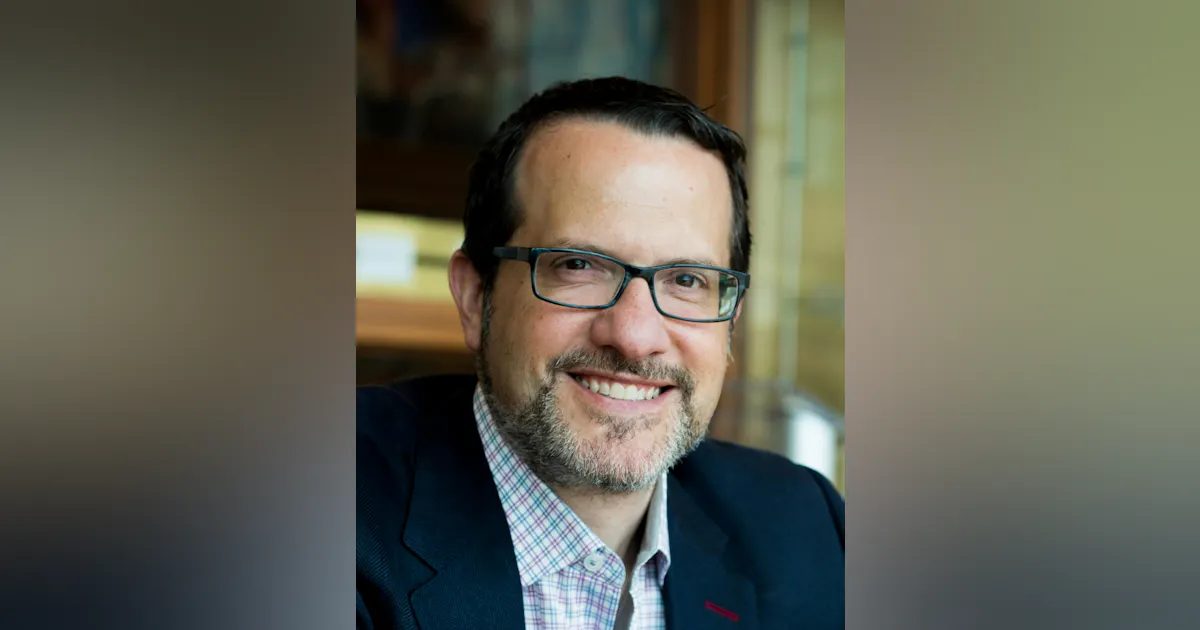
Orgo-Life the new way to the future Advertising by AdpathwayIndianapolis-based Marathon Health, a provider of advanced primary care (APC) for employers, labor organizations, and health plans across the U.S., announced today, April 2, the appointment of Chris Pricco as CEO. Pricco succeeds co-founder and longtime CEO Jeff Wells, M.D.
In a recent interview with Healthcare Innovation, Nirav Vakharia, M.D., COO of Marathon Health, explained the APC model. “[W]e work directly with employers who are self-funded, meaning they are covering the entire healthcare expense for their population, and offer them an alternative to what they may normally have access to, which is a hospital system or medical group in the community,” Vakharia said. He underscored that the model enables improved accessibility, longer appointment times, more team-based, holistic care, and a better experience for providers.
According to a news release from Marathon Health, Pricco assumes the role of CEO amid rising demand for advanced primary care (APC). Healthcare Innovation sat down with Pricco to discuss his new position and vision.
Before this new role, Pricco led Paradigm’s specialty networks and payment integrity platform. Prior to that, Pricco held senior leadership positions at Optum for over 15 years, most recently serving as COO of the medical benefit management division. Before Optum, Pricco was the founding CFO and later CEO of Renaissance Health Care.
You stepped in to lead Marathon Health’s "next chapter". Beyond geographic expansion, what specific innovations in the care model are you prioritizing to differentiate Marathon Health?
Marathon Health really has a differentiated model, and there are no fundamental changes that I would anticipate to that model. I certainly have some priority areas that I'm interested in furthering.
First, just to maintain a very flexible model, because we contract directly with employers. Some are very geographically concentrated; if they have a big plant in an area, that might mean they might benefit from a full-on site clinic right at their location. Other employers are more dispersed and spread out, and might have people all over a region or all over the country. We have a network model where they can access any of our clinics. Being really flexible with our customers and making sure that we can service them how they need to be serviced, based on how their population is organized - that's certainly a big focus of mine.
Second would be using all these data assets that we have. We get medical claims data, we get pharmacy data, and we have a bunch of clinical data that we're gathering through the course of our interactions with patients. So, taking all of that data and using it as a strategic asset. When you combine those data sets, we can really drive a whole bunch of insights for our populations that we can then feed back to those employers as they consider how to design their benefit plans and how to interact with their populations. Some of those insights we can bring to them and really use to improve the health of their populations and to lower their costs.
Last, we're always looking to simplify what is a very complicated healthcare world. We provide very easy, quick access to primary care providers who, in turn, develop very trusted relationships with these particular employees and their family members. That's really a guiding principle. It helps the consumer navigate a really fragmented, difficult-to-understand healthcare system.
Why did you join Marathon Health?
I’ve spent more than 30 years in the healthcare industry. What drew me to Marathon is its value proposition to the marketplace. The patient gets quick access to care, and they develop this trusted relationship over time. That's really what a lot of patients are looking for in this system. The employer is looking for a manageable cost profile, probably first and foremost. Our model produces that.
One of the statistics we've studied is for our engaged members; we see more than $1,000 in savings per engaged member per year, compared to a member who's not engaged with our program. We're seeing really compelling cost savings for the employer and a good return on investment for our program.
What our providers have really liked about our model is that they have the time to listen to their patients, to understand their patients, see fewer than 25 or 30 patients a day, and just take more time with them and deliver holistic care.
Between the patient, the employer, and the provider, that value proposition really rings true for all the stakeholders in this equation.
Dr. Jeff Wells is transitioning from CEO to a member of the Board after founding and leading the company through its formative years. How do you envision your partnership with Jeff evolving in this new structure, and what specific "founder’s wisdom" are you keen to keep at your fingertips?
I've gotten to know Jeff through the recruiting process. He and I have spent a lot of time together in this transitional process, which is still ongoing. He's going to stay around for another couple of months as a full-time employee. After that, he's going to be joining our board of directors and will be completely available, not only to me, but to other leaders and employees of Marathon as we continue to build out what was really, in many ways, his vision.
The impact he's had on Marathon Health shouldn't be understated. His commitment and passion for this advanced primary care model are really unparalleled. As he transitions to this board role, we're going to have close connectivity with him. He's still going to be highly involved in the company.
What I'm really taking away from him is this unwavering belief in this model that when you free up provider time, and you provide easy access for the patient to access this type of care, everything else kind of flows.
You’ve noted that primary care receives only 5 percent of investment but influences 90 percent of total costs. How is Marathon Health specifically leveraging that 5 percent to disrupt the other 90 percent for employers like Tyson Foods or Cargill?
Primary care is a very small percentage of the actual cost of medical care in total. When you consider primary care, specialty care, hospital care, and pharmaceuticals, and add all that up, primary care is less than 10 percent, but it is typically underinvested in.
We invest deeply in it, as we've already described. The key is when you've got a trusted relationship with your primary care physician and can access them quickly; as they get to know you, they can help you navigate the rest of the healthcare system.
We also use data to drive more traffic to those really high-quality doctors based on objective data. That's how a relatively small-spending primary care area can deeply influence the downstream costs of specialty care and hospital care, and really make a big impact on the total cost of care.
Employers are predicting a 7-9 percent increase in healthcare costs this year. How does Marathon's per-member, per-month (PMPM) model provide the "budget predictability" that CFOs are now demanding?
CFOs are under a lot of pressure at companies right now. This is one of their bigger line items other than salaries. This tends to be one of their larger cost line items, depending on the nature of the company, but it is a big budget problem they've got to deal with.
The traditional approaches of tweaking benefit designs or increasing cost sharing have sort of run their course. They really don't work that well anymore. They're not having a meaningful impact. Our fixed-cost, per-member-per-month payment model goes directly to what they're looking for: a lot of predictability. They're investing in a model in which the primary care relationship will help them manage all those downstream costs. It's not just the primary care line item that CFOs are worried about; it's the total cost of care, and that's exactly what we try to deeply impact.
Why are primary care physicians drawn to work with Marathon Health, and what do they find intriguing about the APC model?
We are very successful in recruiting providers, both physicians and advanced practice nurses, into our model. If you ask most primary care doctors why they went into medicine, it was not to see 30 patients a day. It was to develop meaningful relationships with their patient panel and to help people be healthy, understand the health system, and use it well.
How is Marathon Health leveraging AI currently, and how do you plan to continue to utilize new technologies in the future?
One of our principles at Marathon is that AI is not replacing clinicians. AI is only going to be used as a decision support mechanism for clinicians, but clinicians are still going to be involved in every situation. Any recommendations or data provided through an AI vehicle would be assimilated and reviewed by clinicians who are going to continue to make any patient care decisions for the consumer. What AI can do is give clinicians time back in their day to do the things that they want to do.
One specific example of how we're using AI today is that it can record the interaction between the patient and the physician, and it can handle much of the documentation that the physician would otherwise have to take time to complete after the patient departs. By listening to the interaction, AI can do 90 percent of that documentation automatically, and then the physician or nurse just needs to review that and make sure it was all recorded correctly. We're looking at situations where we can save 8 to 10 minutes per patient visit, just because AI is doing much of the recording of what happened, rather than the physician having to go in and type it all into the record.
The other places we're using artificial intelligence are in some operating areas where it can be used. These could be areas where patients are calling in, maybe needing a medication refill. AI can just do that very quickly for them. That also lets us keep our costs down and provide more value to the employer.
Any last thoughts?
It’s the outcomes that this model produces. It's not the model itself. The model is what produces these really strong outcomes. The patients really like it. It's producing strong results financially. It's really a value-added benefit that they (employers) can tout along with other benefits they offer. Providers really enjoy practicing in this type of model, where it's not so volume-based. All of those things work together to create the outcomes that we talked about.









 English (US) ·