
.jpg)
PROTECT YOUR DNA WITH QUANTUM TECHNOLOGY
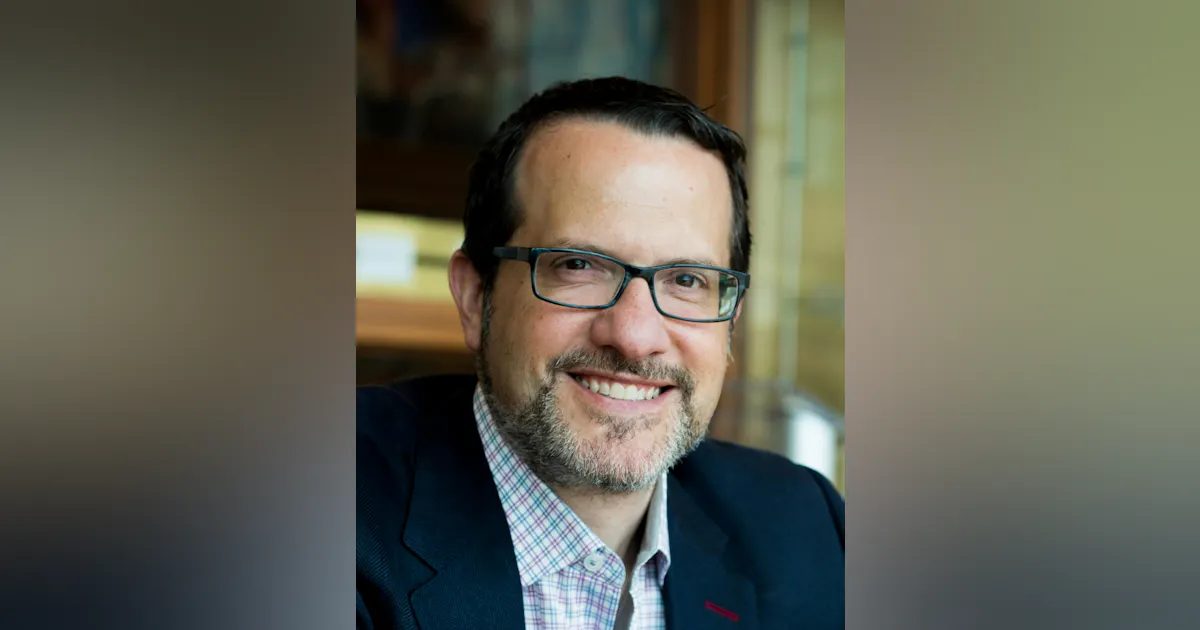
Orgo-Life the new way to the future Advertising by AdpathwayPractice-based research networks (PBRNs) are groups of primary care practices working together to answer community-based healthcare questions and translate research findings into practice. During a recent webinar, Melinda Davis, Ph.D., a professor in the Department of Family Medicine at Oregon Health & Science University, spoke about the impact the Oregon Rural Practice-Based Research Network (ORPRN) is having in her state.
In her role as director of ORPRN, Davis collaborates with patient, community, and health system partners to adapt and implement interventions to improve health equity in rural and low-resourced settings.
Davis was speaking last week along with several other PBRN leaders during a webinar hosted by the Agency for Health Research & Quality’s National Center for Excellence in Primary Care Research (NCEPCR).
Partially funded by AHRQ, ORPRN is a statewide practice-based research network that was founded at Oregon Health and Science University (OHSU) in Portland. Its mission is to improve health for all Oregonians through community-partnered research, education and health system transformation.
“While we have rural in our title, in about 2010 we expanded to working with all clinics, including urban and suburban practices, because we realized those settings also struggled with implementation or quality improvement or even sometimes accessing training,” Davis said. “Since 2019 we've worked with over 400 primary care clinics. That's about half of the primary care clinics in the state. We've worked with all of Oregon's coordinated care organizations (CCOs), our Medicaid accountable care organizations. We've reached over 5,000 unique learners in our education programs.”
ORPRN also hosts the state's ECHO (Extension for Community Healthcare Outcomes) telemedicine network, and delivers multiple Echo trainings each year. It has engaged 70,000 individual patients in different projects over time, as well as partnered with professionals and collaborators in all 36 of Oregon's counties
For Davis, the connection to rural Oregon is personal. “I grew up in a rural area, and when I started with ORPRN I actually had the opportunity to serve that area, and as a faculty member, I've partnered with that portion of the state, as well as the whole state, to advance a lot of interventions to improve screening and prevention for chronic conditions.”
She said her interests in rural health, preventive care, and participatory implementation science blend well with the approaches in practice-based research. “When I was advancing early in my career, I didn't realize this was a professional possibility,” she said. “I’m so grateful for having connected with the PBRN community.
Davis joined the network in 2007 as a regionally based practice facilitator. At the time there were 13 staff with three regionally based team members, and it served about 49 clinics and 150 member clinicians. She transitioned to a faculty role in 2011. “The team grew a lot during the period of COVID. Part of that was actually driven by being a recipient of the CMS Accountable Health Communities award and some other large grants,” she said. Currently, they have 55 staff members with about 20 who are regionally based across the state. “We've evolved so we have a research arm, an education arm, and a health system transformation team.”
ORPRN’s budget is $9.3 million encompassing over 80 projects. That’s funded about half by federal awards, about a quarter by state awards, and then another quarter by other funds. “Our success as a PBRN is based on collaborations with clinical partners across the state,” Davis said, “as well as with academic partners, both at OHSU and in other settings that can include experts across the state who are known in their own communities or spheres.”
ORPRN also is one of the inaugural Care for Health Network research hubs. It provides community engagement to support co-design studies and integrate rural practices into existing NIH-funded studies.
Davis detailed some of the impact ORPRN has had. “We’ve done numerous studies that have enhanced better access to care for rural and low-resourced patients; increased quality, safety and efficiency; reduced variations in care; improved provider retention; supported dissemination of best practices and supported identifying and addressing questions relevant to practice.”
Some of Davis’ early work revolved around interventions to improve colorectal cancer screening in rural communities. The pilot work spun into efforts to improve clinical workflows and look at regional variation in screening patterns, and to do simulation modeling to figure out what are the most effective interventions. She noted that in the work she was doing around colorectal cancer, along the way she discovered parallel threads around behavioral health and substance use interventions. “I attribute much of the network success to support early on from AHRQ in terms of our project activities, but also in terms of the methods we use for implementation and partnering with sites over time,” she said.
She used the following example to illustrate the benefit of partnering with a PBRN on research design: A seasoned researcher seeks to enhance diversity in their pragmatic clinical trial. They start cold-calling Federally Qualified Health Centers across the state. After six months they've enrolled one clinic. After 12 months, over 200 patients have been identified as eligible for the study, but only five were recruited. Moreover, the researchers were unable to access data from the electronic health record on enrolled patients. The clinic medical director is frustrated and advocates to avoid studies with the researcher’s institution.
In contrast, she presented an alternative scenario where the researcher has a new idea, but realizes working with community clinics is outside their expertise. “They present their idea at the CTSA design studio and are referred to a PBRN. The PBRN team helps refine the study design, data collection strategies, clinic impact fees, and they transition participant recruitment to both visit-based and population outreach strategies,” she said. Based on input from the PBRN’s advisory board, they align outcomes with a state quality incentive metric.
Using PBRN data, the team identifies and approaches four clinics within one month. The same FQHC agrees to participate within three months. PBRN staff are embedded in the clinic supporting participant enrollment and data collection activities in alignment with clinic workflows. The PBRN team also helped refine EHR documentation to support process and outcomes reporting. Within nine months, the participant recruitment target has been met, the project is celebrated by the FQHC leadership, who are eager to partner on the next study.
Davis said PBRNs offer a way for researchers to have an impact on health outcomes, build community connections and do rewarding work. “If you are looking to get engaged, I encourage you to partner with the PBRN in your region, because of these opportunities to connect with clinics and to have relationships that extend beyond individual projects, to have collaborations with academics as well as community partners that anchor these projects to local needs, and then to have the reward of community belonging and impact in your own life.”









 English (US) ·