
.jpg)
PROTECT YOUR DNA WITH QUANTUM TECHNOLOGY
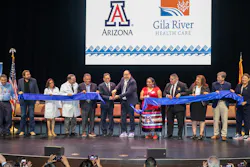
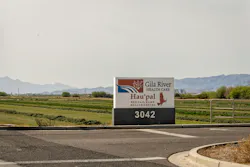
Orgo-Life the new way to the future Advertising by AdpathwayNavigating the shift from volume to value in healthcare The partnership establishes the first M.D.-granting medical school branch on Tribal land, emphasizing community-based training On August 18, the University of Arizona and Gila River Health Care (GRHC), the Gila River Indian Community's tribally operated healthcare system, announced a long-term partnership to establish the nation's first M.D.-granting medical school branch located on the lands of a sovereign Tribal Nation. Gila River Health Care campus According to a news release, the University of Arizona College of Medicine – Phoenix Regional Medical Branch in Sacaton, Arizona, is designed to educate future physicians within a Tribal healthcare system while strengthening access to care in Tribal, rural, and medically underserved communities. Beginning in July 2027, ten students will be admitted annually to the University of Arizona College of Medicine – Phoenix's three-year M.D.-granting Primary Care Accelerated Program at the Gila River Branch. Students will receive full tuition scholarships funded by GRHC. They will complete the first 18 months of their foundational medical education in Phoenix before relocating to Sacaton for the final 18 months of clinical education. The U.S. continues to face persistent physician shortages, particularly in rural and Tribal communities, according to the press release. Arizona ranks 42nd in the nation for primary care access, and its rapidly growing population has intensified demand for primary care physicians. Research shows that physicians are more likely to practice where they train, making community-based medical education a proven strategy to strengthen Arizona's long-term healthcare workforce. Rather than expanding medical education solely through large academic medical centers, the Regional Medical Branch places students within a community-based healthcare system, where they will learn by caring for patients and by working alongside physicians serving Native communities every day. The news release also noted that the development of primary care residency programs at GRHC is under exploration and would further strengthen the long-term goal of retaining physicians to serve the community and other underserved areas. Inspired by a similar partnership announced last year with Onvida Health in Yuma, the Regional Medical Branch further advances the University of Arizona's commitment to expanding community-based medical education throughout Arizona. The Association of American Medical Colleges projects that the United States could face a shortage of up to 86,000 physicians by 2036, with Tribal and rural communities expected to be among the most affected. ID 375482648 © Rosemarie Mosteller | Dreamstime.com Gila River Indian Community, University of Arizona and Gila River Health Care Announce Partnership "There's a real challenge for rural health hospitals to recruit trained professionals to come and work in their communities," said Robert Pablo, chairman of the Gila River Health Care Board of Directors, in a statement. "We are very fortunate to launch this first-of-its-kind partnership between Gila River Health Care and the University of Arizona, which will establish a starting ground for these young doctors to jumpstart their careers." Pietje Kobus-McAllister has an international background and experience in content management and editing. She studied journalism in the Netherlands and Communications and Creative Nonfiction in the U.S. Pietje joined Healthcare Innovation in January 2024. Sign up for our eNewsletters Get the latest news and updates


About the Author

Pietje Kobus-McAllister










 English (US) ·