
.jpg)
PROTECT YOUR DNA WITH QUANTUM TECHNOLOGY
Orgo-Life the new way to the future Advertising by Adpathway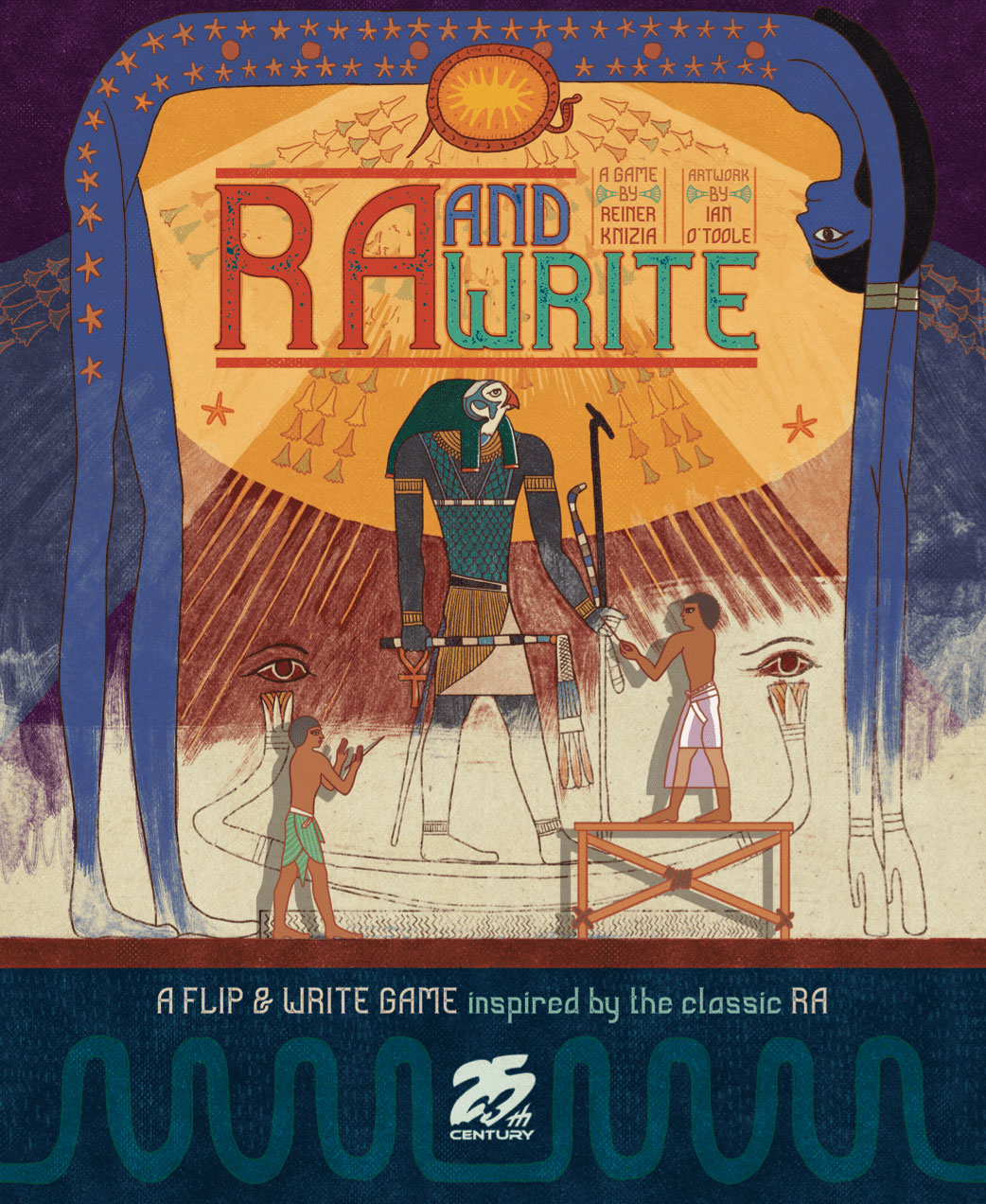 When your spouse is an Egyptologist, it’s hard to pass up an opportunity to play and review the newest Ra iteration—Ra and Write. Even harder when you’re planning a visit to see an art show about Ancient Egypt’s gods.
Designed by Reiner Knizia with art by Ian O’Toole, the game pulls forward themes which will be familiar to fans of Ra, translating the classic auction game into a flip-and-write format that fits in your travel bag.
Gameplay Overview:
In this flip-and-write game, players advance different tracks of their civilization to score the most points. Ra and Write is played over three rounds, representing the Old, Middle, and New Kingdoms of ancient Egypt. During a turn, the active player reveals three cards representing various tracks of your civilization. That player chooses which card to claim for themselves and leaves the other two cards for opponents to select from. Players mark their score sheets, claim any bonuses, and the turn passes to the next person. When three Ra cards have been revealed, the round ends, players score their progress, and advance to the next kingdom. Play concludes, and final scores are tallied after the New Kingdom round.
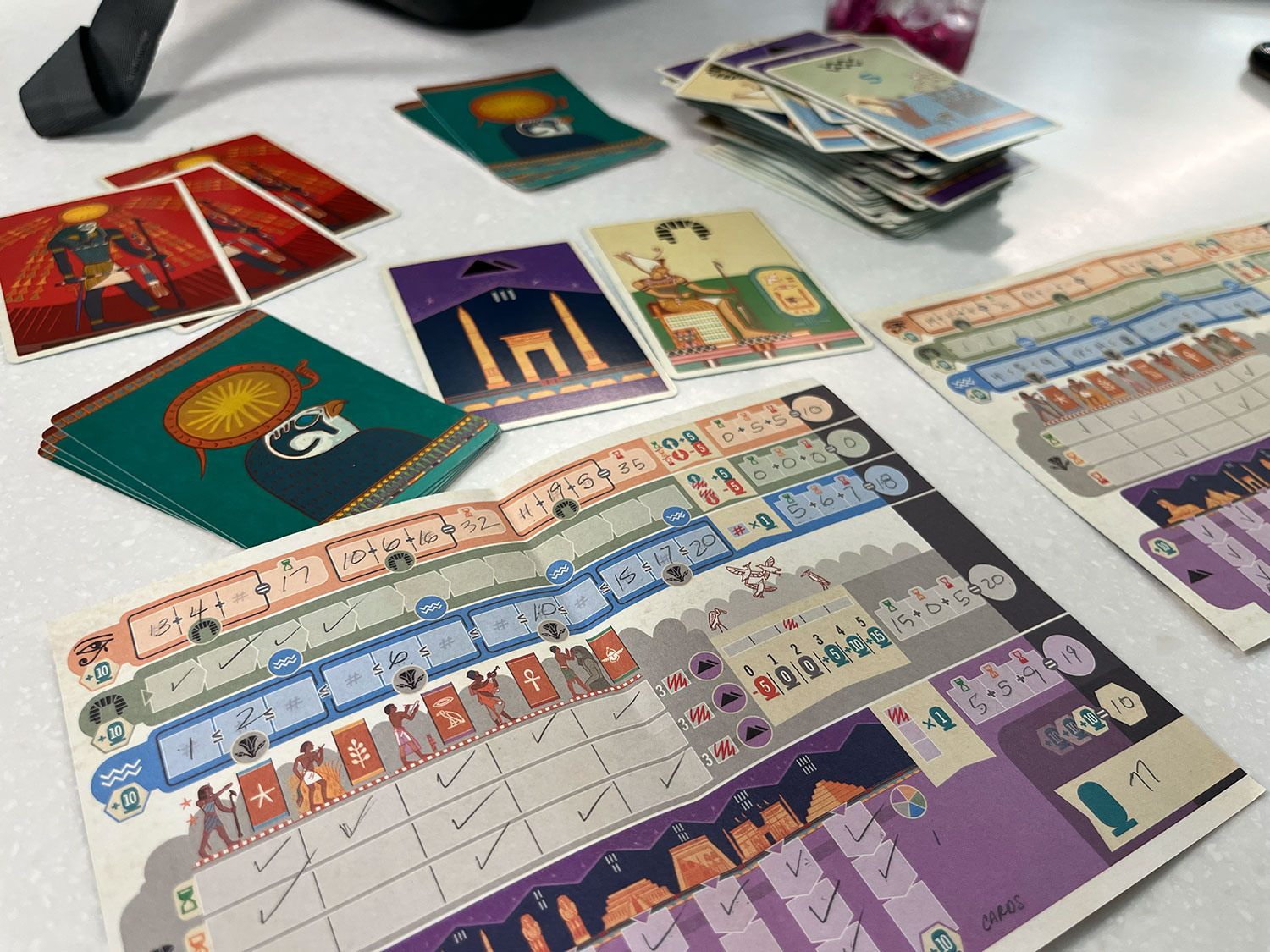 Revealed cards score along each track, but once three Ra’s have been revealed, it’s pencils down.
Gameplay Experience:
Ra and Write successfully translates some of the tension from the original Ra into a streamlined format, though it makes notable trade-offs along the way. The game excels in portability and setup speed—you can be playing within moments, making it ideal for travel or impromptu gaming sessions. The resource selection and scoring adjustments work particularly well across different player counts, maintaining engagement whether you’re playing with two or four players.
The interactive elements remain surprisingly strong for a flip-and-write. You’ll find yourself frequently glancing at opponents’ score sheets, trying to gauge which cards they need and whether you can deny them critical resources. This creates meaningful decisions beyond simply optimizing your own track advancement.
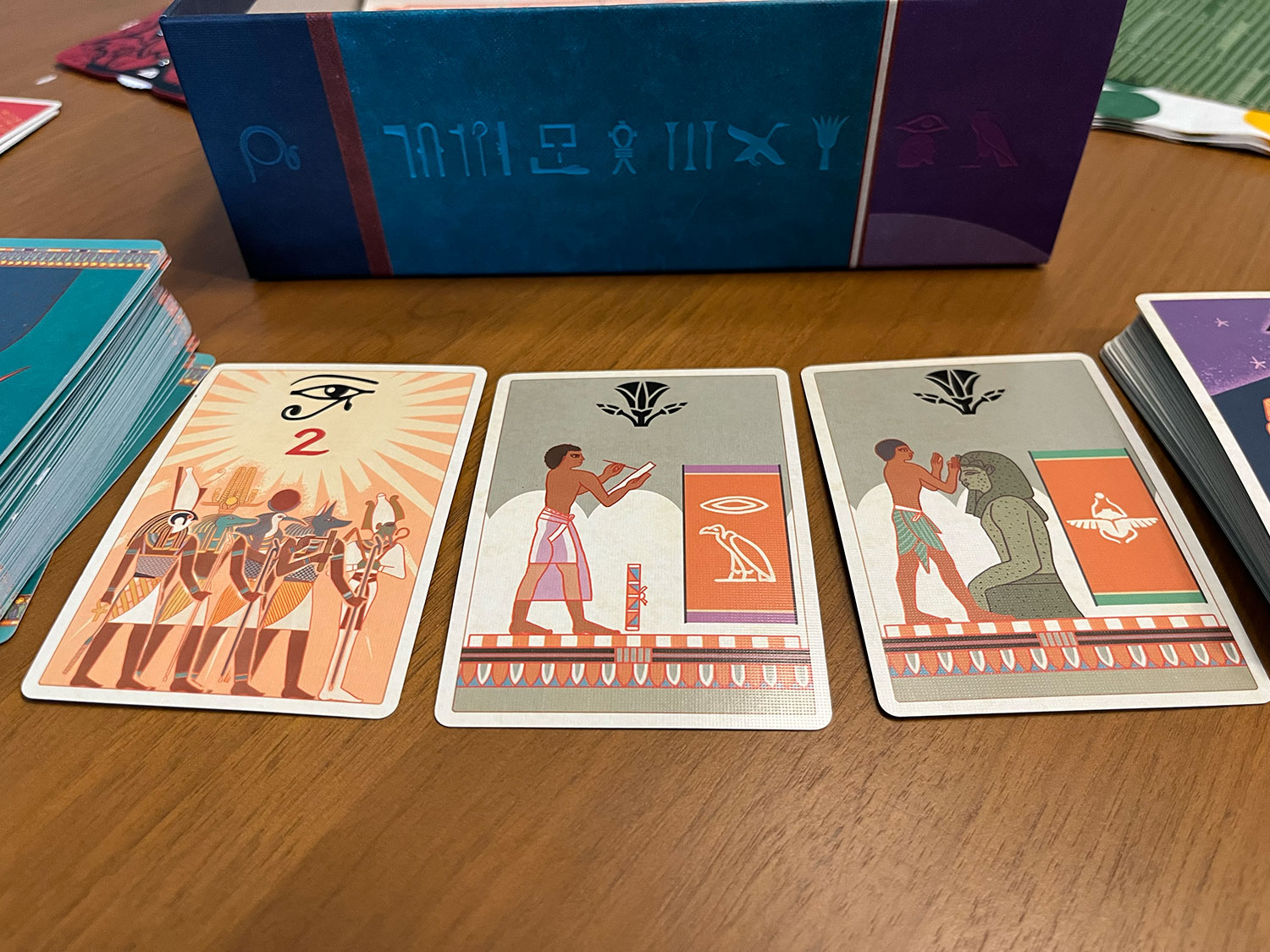 Great art and iconography on the cards. These cards reveal opportunities to score along the Ra and Civilization tracks.
I was surprised to find a steeper learning curve than expected. It took us most of a play-through to fully grasp the strategic implications of our choices. The score sheet requires some time to parse, though veterans of the original Ra will find this easier. Once you understand how to leverage civilization and monument cards while maintaining balance across other tracks, a dominant strategy begins to emerge that can flatten repeat play.
The Ra card mechanic preserves the original’s push-your-luck tension, though it occasionally feels swingy when multiple Ra cards appear in quick succession. While you can mitigate this through Pandemic-style deck management (shuffling Ra cards throughout the deck rather than having them all cluster together), it remains less elegant than the auction-based control of the original game.
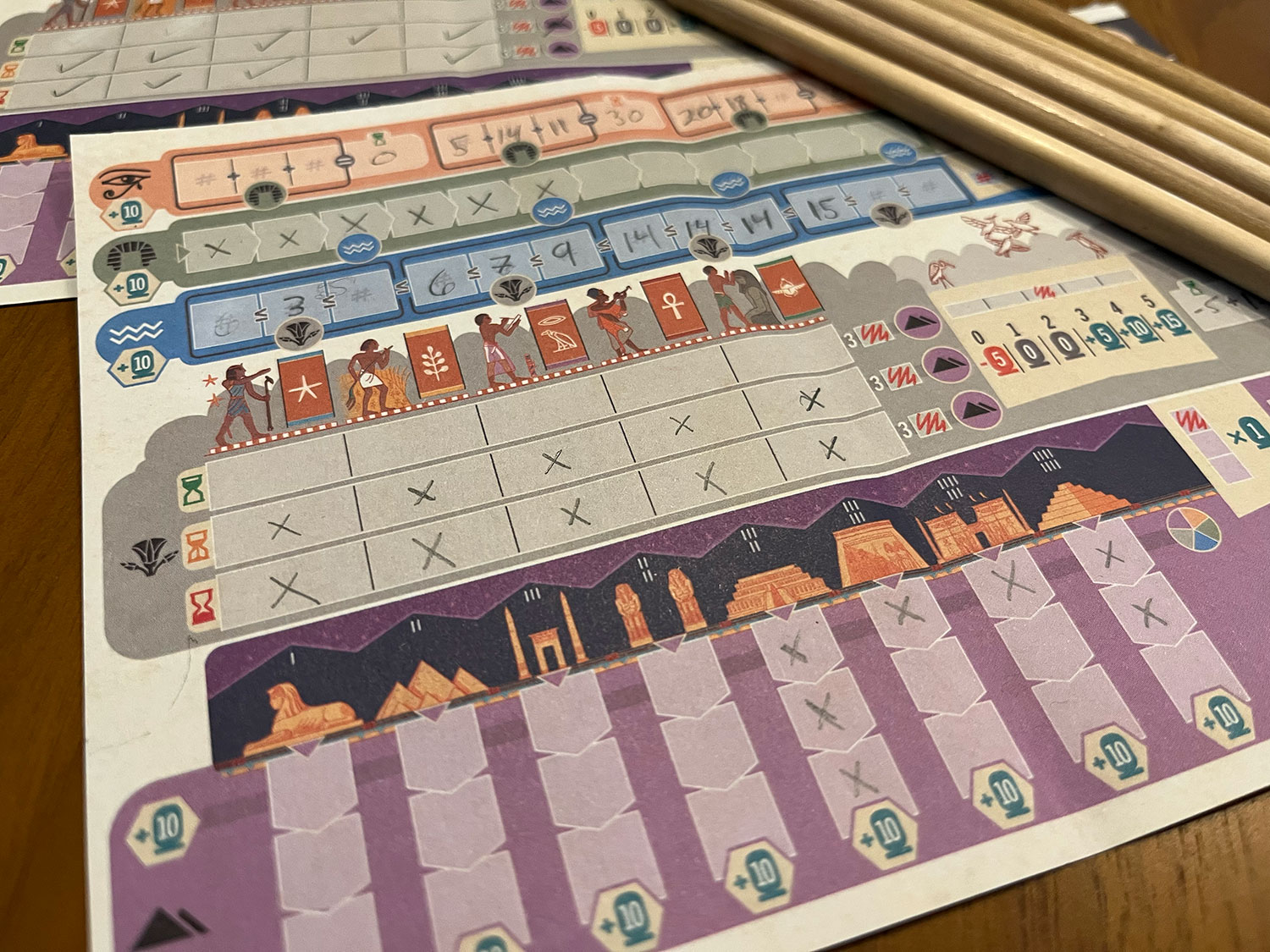 Combinations win the day with Ra and Write. Focus on Civilization and Monument tracks to score big.
Speaking of which, the absence of bidding mechanics and the economic tension they created is keenly felt. The bag-passing ritual and resource management that defined Ra have been replaced with something simpler, but perhaps less memorable. The game would benefit from laminated score sheets for repeated play, as the tracking mechanics are solid once mastered.
Ian O’Toole’s artwork brings visual appeal to what could have been dry score sheets, and the three-kingdom structure maintains a narrative arc across rounds. The civilization tracks offer varied paths to victory, encouraging different strategies from game to game. The card selection mechanism, where the active player gets first choice, but opponents still have limited but meaningful decisions, creates a nice tension.
For a flip-and-write, the player interaction level is commendable. You’re not just heads-down optimizing your own sheet—you’re actively considering what your opponents need and how to leverage your position as the active player to maximum advantage.
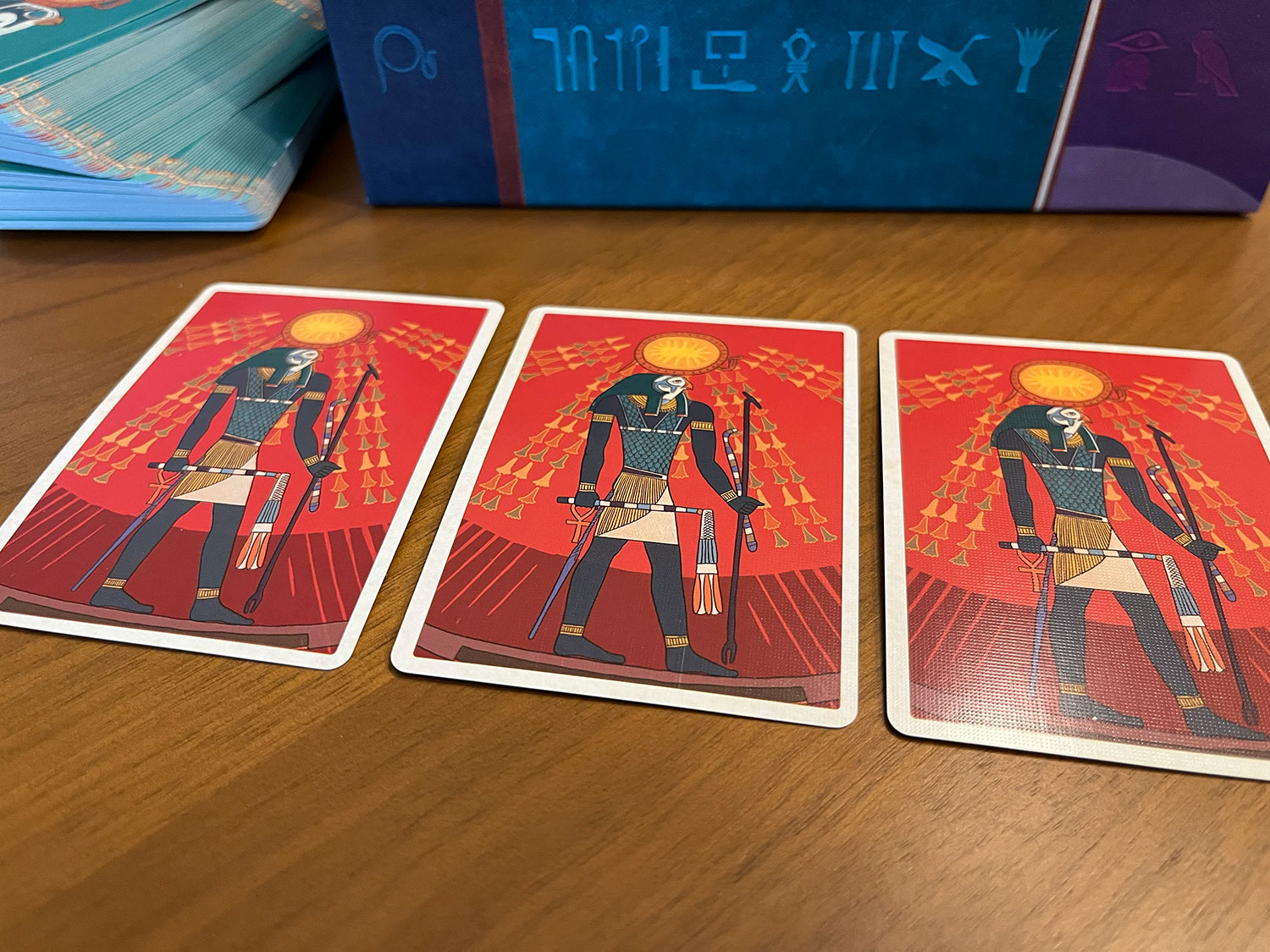 Great art work mirrors the tiles in the latest version of the classic Ra.
The original Ra’s auction system was its beating heart, and that is largely absent here. The dramatic moments of committing your best sun tile to a crucial lot, or watching an opponent swoop in with a higher bid, simply don’t translate to the flip-and-write format. What remains is mechanically sound, but the game is a notably flatter experience compared to the original version.
The initial learning experience can be frustrating, but it’s quickly overcome after the initial play-through. The iconography and scoring conditions require explanation, and the optimal scoring strategies aren’t immediately intuitive for everyone. This creates a gap between your first play and when the game clicks. It’s likely that this may discourage some players from returning to the game.
Once mastered, the game’s strategic space feels somewhat narrow. Experienced players will likely converge on similar approaches, focusing heavily on the civilization and monument synergies while keeping other tracks simply serviceable.
Final Thoughts:
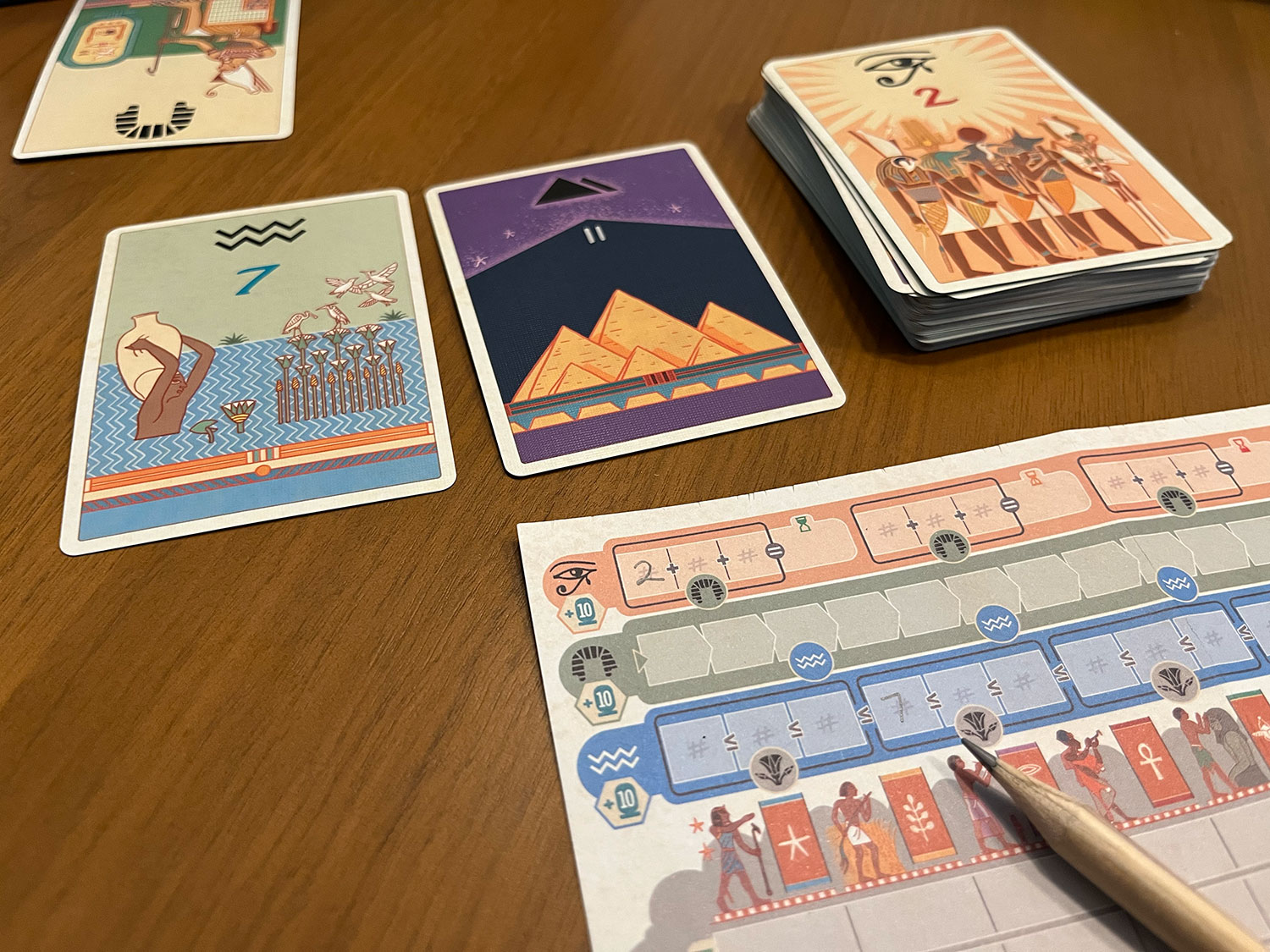 A player takes one of three cards on their turn leaving two for the table to choose from.
Ra and Write occupies an interesting middle ground—it’s neither a pale imitation nor a complete reinvention of its predecessor. What it offers is accessibility and convenience, distilling Knizia’s classic into a format that plays in under 30 minutes.
The question becomes: what are you looking for? If you want the original Ra’s auction tension, economic maneuvering, and dramatic moments, you’ll find this version lacking. But if you’re seeking a light strategic flip-and-write with meaningful player interaction that captures the thematic essence of ancient Egypt’s rise and fall, Ra and Write delivers a solid experience.
For fans of the original Ra, this makes a nice travel companion—a lighter alternative when table space or time is limited. For newcomers to the Ra universe, it serves as an accessible entry point, though I’d encourage seeking out the original to experience what made the design special.
Given my household connection to Egyptology, Ra and Write offers pleasant thematic immersion without complexity barriers that might keep it off the table on a weeknight.
Final Score: 3.5 Stars – It’s good, occasionally very good, but stops just short of greatness—a competent adaptation that serves a specific purpose well without fully capturing the magic of its inspiration.
 Hits:
Hits:
• Portable– take it out of the box and carry it with you for a quick head-to-head game with your partner at dinner before the food comes out
• Plays very similarly at the various player counts
• Nicely retains the original theme
Misses:
• Absent auction makes this a very different game
• Narrow strategy, may not make it back to the table often for some

/pic9707511.jpg)
/pic9736005.png)








 English (US) ·