
.jpg)
PROTECT YOUR DNA WITH QUANTUM TECHNOLOGY
Orgo-Life the new way to the future Advertising by AdpathwayNavigating the shift from volume to value in healthcare States seek to expand EMS programs that do at-home visits that can help prevent readmissions through disease-specific assessments, chronic disease management, patient education, and medication reconciliation
• Across the U.S., rural health transformation plans leverage federal funding to empower EMS agencies with new tools, training, and programs such as community paramedicine and Mobile Integrated Health. • These initiatives foster early intervention, reduce unnecessary hospital visits, and integrate EMS into broader healthcare delivery, enhancing rural health resilience. ID 22213605 © Tyler Olson | Dreamstime.com In July Bowling Green, Ky.-based Med Center Health announced it had received $310,070 through Kentucky’s Rural Health Transformation Plan to strengthen its community paramedic program and expand access to at-home healthcare services throughout the region. The grant will enhance Medical Center EMS’s ability to improve access to care, reduce preventable hospital readmissions, and decrease unnecessary emergency department visits. “Community paramedics set a higher standard of at-home patient care,” said Jon Henbest, one of Med Center Health’s community paramedics, in a statement. “We help bridge the gap in care after patients leave the hospital by providing personalized support in their homes.” Across the country, state rural health transformation plans signal that states are turning to emergency medical service personnel to provide more preventive services to patients in their homes in rural settings. By doing at-home visits with patients following hospital discharge, they can help prevent readmissions through disease-specific assessments, chronic disease management, medication reconciliation, and fall risk assessments. In Arkansas, a $10 million grant will help develop the EMS Coordinated Network for Emergency Navigation, Community Care and Telehealth, which will replace ambulances and add telehealth communications, connectivity and patient-monitoring equipment, data sharing, training, and a Patient Navigation Hub. Another program will equip rural hospitals and EMS providers for emergency teleconsultation and triage, including platform onboarding, workflow development, training, implementation, and evaluation. Alabama's EMS Treat-in-Place Initiative In Alabama, the rural health transformation plan will help establish a pilot program to institute "treat-in-place" for EMS providers. The program is expected to receive $25 million in grants over five years. The state notes that many EMS units are often unavailable to take local calls because they are transporting low-acuity patients who do not require full emergency department level of care or inpatient admission. These situations reduce overall ambulance availability for true emergencies in local communities and are exacerbated in rural communities with lower overall ambulance availability. Unnecessary transport also increases the amount of time EMS is required to wait at EDs before discharging patients to hospitals, increasing the total EMS turnaround time and reducing coverage for other patients. Implementing an EMS Treat-in-place Initiative model would allow EMS providers to treat patients on-site and be reimbursed for their services, saving transportation costs, reducing ED overcrowding, and decreasing the resource burden on hospitals. It also creates a needed revenue source for EMS providers and keeps ambulances in the community, thereby reducing response times and improving overall care for residents, especially in rural areas. Mobile Integrated Health in North Carolina The North Carolina Department of Health and Human Services will provide $10 million to 39 local EMS agencies through the NC Rural Health Transformation Program. The funding gives EMS providers across North Carolina the tools, training, and resources needed to support residents with substance use disorders beyond the initial 911 call. The goal is to help EMS organizations expand Mobile Integrated Health (MIH) and Community Paramedicine (CP) programs. The five-year initiative is designed to strengthen behavioral health crisis response, improve treatment access for individuals experiencing substance use disorder (SUD), and reduce emergency department use associated with mental health crises and opioid overdoses. The state notes that MIH differs from community paramedicine in that it integrates a broader range of services and types of providers. MIH may involve, for example, emergency medical services (EMS) personnel, nurses, and social workers, whereas community paramedicine involves only EMS personnel. Because MIH providers include a range of specialists, they can offer services such as chronic disease management, referrals to other care providers, and telephone advice instead of immediate dispatch of EMS services to 911 callers. MIH services can include community paramedicine, in which paramedics and emergency medical technicians (EMTs) are trained to provide non-emergency services and collaborate closely with other providers, services, and organizations to fill gaps in access to healthcare in rural communities. Expanding Access in West Virginia A $1 million initiative through the rural health transformation program aims to help rural EMS agencies expand access to healthcare in rural and underserved areas of West Virginia, according to a report by West Virginia Public Radio, which included an interview with state Secretary of Health Arvin Singh, Ed.D., M.B.A., M.P.H. “The purpose of this is to help the EMS providers expand their role beyond emergency transportation and to become more of an integrated part of the healthcare system,” Singh said. “Examples I could give are on-scene assessment and treatment, chronic disease support, hospital discharge follow-up, and then connecting people to their primary care and different community resources.” Singh said community paramedicine gives the healthcare system another way to reach people earlier. “A paramedic may identify someone struggling to manage their diabetes, taking medications incorrectly, maybe even missing appointments, facing barriers like transportation, and they can help connect that individual to those resources that could include nutrition support and other upstream preventative ideas before emergencies happen. It’s not about paramedics replacing physicians, it’s about creating more touch points.” David Raths is a Contributing Senior Editor for Healthcare Innovation, focusing on clinical informatics, learning health systems and value-based care transformation. He has been interviewing health system CIOs and CMIOs since 2006. Follow him on Twitter @DavidRaths
Key Highlights
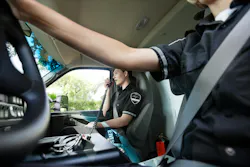
"EMS professionals are uniquely positioned at the intersection of emergency response and healthcare delivery, serving as a critical link in the continuum of care for rural communities," said Tom Mitchell, chief of the NCDHHS Office of Emergency Medical Services, in a statement. About the Author

David Raths







 English (US) ·