
.jpg)
PROTECT YOUR DNA WITH QUANTUM TECHNOLOGY
Orgo-Life the new way to the future Advertising by Adpathway
With spring hiking and backpacking season on the horizon, here are some important gear maintenance tasks for you to perform to prepare for your next trip. If you have other spring gear maintenance tips you’d like to share, please leave a comment below.
1. Pre-Soak Your Water Filter
 Pre-soak your water filter if it dried out over the winter.
If your water filter has dried out in storage over the winter, or it’s brand new, soak it in water overnight to saturate the fibers so that water can flow through it freely. It’s best to do this before your first trip, so you don’t damage the filter trying to force water through it when it’s still dry. When in doubt, read the manufacturer’s instructions about how to bring a dry water filter back to life. Bonus Tip: If you use Aquamira drops instead of a water filter, check their expiration date.
2. Replace Worn Out Hiking Socks
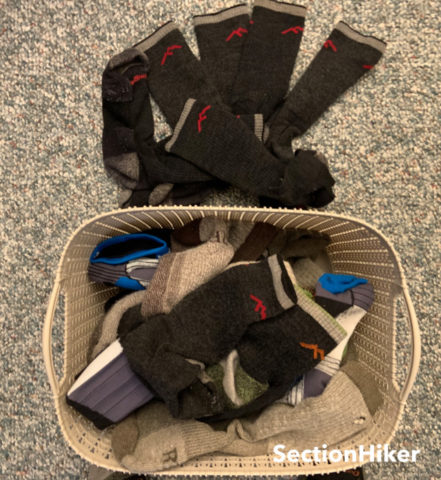 Sort through your sock drawer and replace the ones that are worn out.
Sort through your sock drawer and replace the hiking socks that have holes or are very thin and don’t have any cushion and fluff left in them. The thing that wears out socks quickly is sand and grit, especially if you wear porous trail runners that let it into your shoes. If you use Darn Tough Socks, they’ll replace socks with holes and in some cases, ones where there’s no fluff left. See the Darn Tough Guarantee for details. If you don’t use Darn Tough Socks, now’s a good time to switch.
3. Update Navigation Apps and Maps

There’s nothing worse than going on a hike and finding out that your navigation app (Far Out Guides or GaiaGPS) license has expired, the app has been upgraded and you’ve been logged out until you can get network connectivity again, you don’t have the background or base maps downloaded, or the app is not loading because of some unforeseen error. Check to make sure it’s up to date and working at the beginning of the season and periodically thereafter. In addition, be sure to update the operating systems on all your devices, including satellite messenger and Smartphone operating systems. You should do this all the time, but especially in April if you’ve been out of action during the winter.
The same holds for paper maps, and you should seriously consider updating your set if a new version has been published. Yes, paper maps do go out of date, even if it’s less frequent than app updates, and it pays to update them so you have correct trail and bridge information if hazardous stream and river crossings exist, roads have been closed or opened, and fires, floods, or other natural disasters have closed off areas.
4. Replace Trekking Pole Baskets
 Summer baskets and snow baskets
Take the snow baskets off your trekking poles and replace them with summer baskets if you prefer using them. Personally, I keep my snow baskets on year-round because I find it helps minimize pole breakage by preventing the pole tips from getting wedged between rocks. But most people switch back to using their smaller summer baskets.
5. Wash and Repair Your Hiking Gaiters
 Wash your gaiters, repair any holes, and replace straps if required
When was the last time you washed your gaiters, either waterproof/breathable gaiters or just plain nylon ones? They work and feel much better when they’re clean, especially if they’re made with Gore-tex or other waterproof/breathable fabrics. Inspect them carefully and repair any holes with repair tape or shoegoo, and replace the gaiter straps if they’re busted or close to death.
6. Permethrin Everything
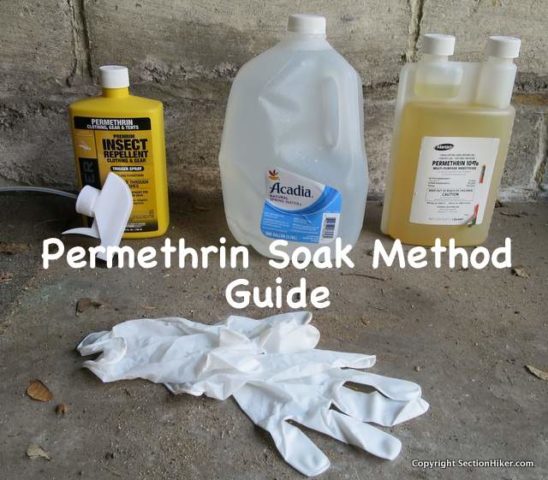 Soaking a large batch of clothes at once works well or you can send them to Insect Shield for a longer-lasting application.
If you hike in tick territory, this is a good time to treat your outer clothing – shoes, pants, gaiters, socks, and hats with permethrin tick and insect repellent (for clothing) or to send it away to Insect Shield, an industrial Permethrin Process that lasts much longer and up to 70 washings. I just buy a half dozen new pairs of new Darn Tough hiking socks every year and then ship them off to Insect Shield immediately for the treatment because I view my socks as the most critical tick entry point. Hint: use the coupon code SECTIONHIKER for a 15% discount at InsectShield.com or see our Permethrin Soak Guide for do-it-yourself instructions.
7. Inspect and replace water bottles, reservoirs, hoses, and bite valves
 Platypus bottles can break down at the seams with frequent use, over a span of years…
Check your water reservoirs for leaks or signs of deterioration. The constant folding and unfolding of soft bottles can result in cracked or leaking seams. If you use a hydration system, make sure the hose and bite valve are clean, working well, and mold-free. While you can probably remove mold, especially black mold from hydration hoses or bite valves with bleach, you might as well just replace them. Check to make sure you have all the caps for your bottles and reservoirs: these become important when you need to do long water carries. If you use recycled plastic bottles, including SmartWater bottles, for a few months continuously, they can get kind of nasty: you might be better off replacing them and starting the new season fresh.
8. Replenish your supply of Leukotape strips
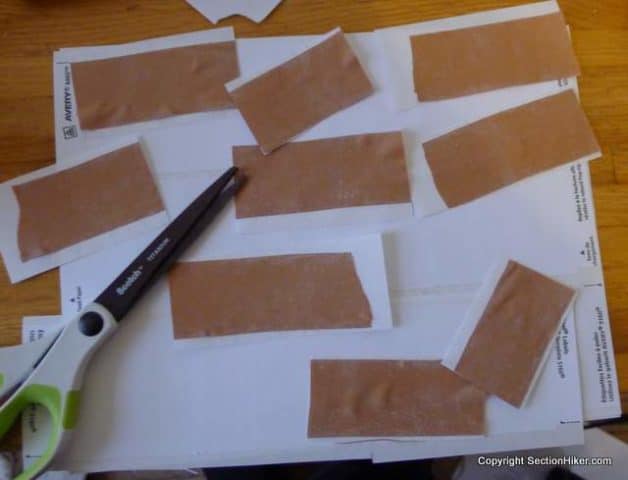 Cut the Leukotape rows into 3-4 inch strips that you can use to cover your heels
The one thing I use the most frequently in my backpacking first aid kit is Leukotape, a sticky tape for blister prevention. I wear it on every hike I take because the cost of getting a heel blister means I have to sit on the bench for 2 weeks while the skin heals. The best way to carry a supply of Leukotape is to precut it into strips instead of carrying a roll of the stuff. I use release paper, which is the waxy backing stuff that mailing stickers come on. My UPS office gives me a bunch whenever I ask for some. I tape a bunch of leukotape strips to it and cut them to the length I like for my heels. I store the strips in a plastic bag in my first aid kit.
9. Inspect and replenish your fire-starting kit
 For example, I use cotton balls and vaseline to light Esbit cubes or wood.
If all you do to start a fire or light a stove is to carry a mini-Bic lighter, check it, and make sure it still has gas. But if your fire-making ritual is more elaborate, think about making a new batch of firestarters such as vaseline-dipped cotton balls, collecting cotton dryer lint, or making more wax-covered egg carton cubes. I’m out every week in warmer weather and go through many homemade firestarters when lighting my Esbit or backpacking wood stove.
10. Top off your first aid kit
 Ultralight Backpacking DIY First Aid Kit
Inspect your first aid kit and top off any pills, potions, or ointments that have expired or need replenishment.
See Also:
- 10 Gear Maintenance Tasks for November
- Leukotape Blister Prevention Tape for Running and Hiking
- Rain Jackets: How to Make your DWR Last Longer
- How to Clean, Sanitize, and Store a Water Filter in the Off-Season
- How to Fix Trekking Poles that Won’t Stay Locked
SectionHiker never accepts payment for gear reviews or editorial coverage. When you buy through affiliate links on our site, we may earn a small commission at no extra cost to you. Help us continue to test and write unsponsored and independent gear reviews, hiking and backpacking FAQs, and free hiking guides.








 English (US) ·