
.jpg)
PROTECT YOUR DNA WITH QUANTUM TECHNOLOGY
Orgo-Life the new way to the future Advertising by Adpathway If you are a gamer of any sort, chances are you’ve heard of The Elder Scrolls. At the very least, the latest video game in the series, Skyrim, is on so many platforms now, that you can probably play it on your smart fridge. But for those few who aren’t familiar, The Elder Scrolls is a fantasy video game series where you control a hero who goes about the land doing what heroes do in fantasy RPGs.
This is all relevant because publisher Chip Theory Games has taken The Elder Scrolls universe, including but not limited to Skyrim, and built an adventure game around it. If you’ve played a Chip Theory Game before, you should have an idea of what you are in for: Lots of rules, amazing components, tons of variety, and many, many poker chips.
Gameplay Overview:
It’s not really possible for me to explain how to play the game, as that could be a feature -length article itself. But basically, it is a campaign is played over 3 sessions, culminating in a final, climatic battle.
Of course, you start out as a newbie hero by mashing up a race, class, and some skills. In true Elder Scrolls fashion, there are a ton of options to choose from. There are something like 10 races, 15 classes, and a dozen skills to choose from. I’m not a math person, but that’s probably a lot of possible combinations. You can create a character by choosing what you want, or, in the classic Elder Scrolls way, play a jailbreak scenario and build it that way.
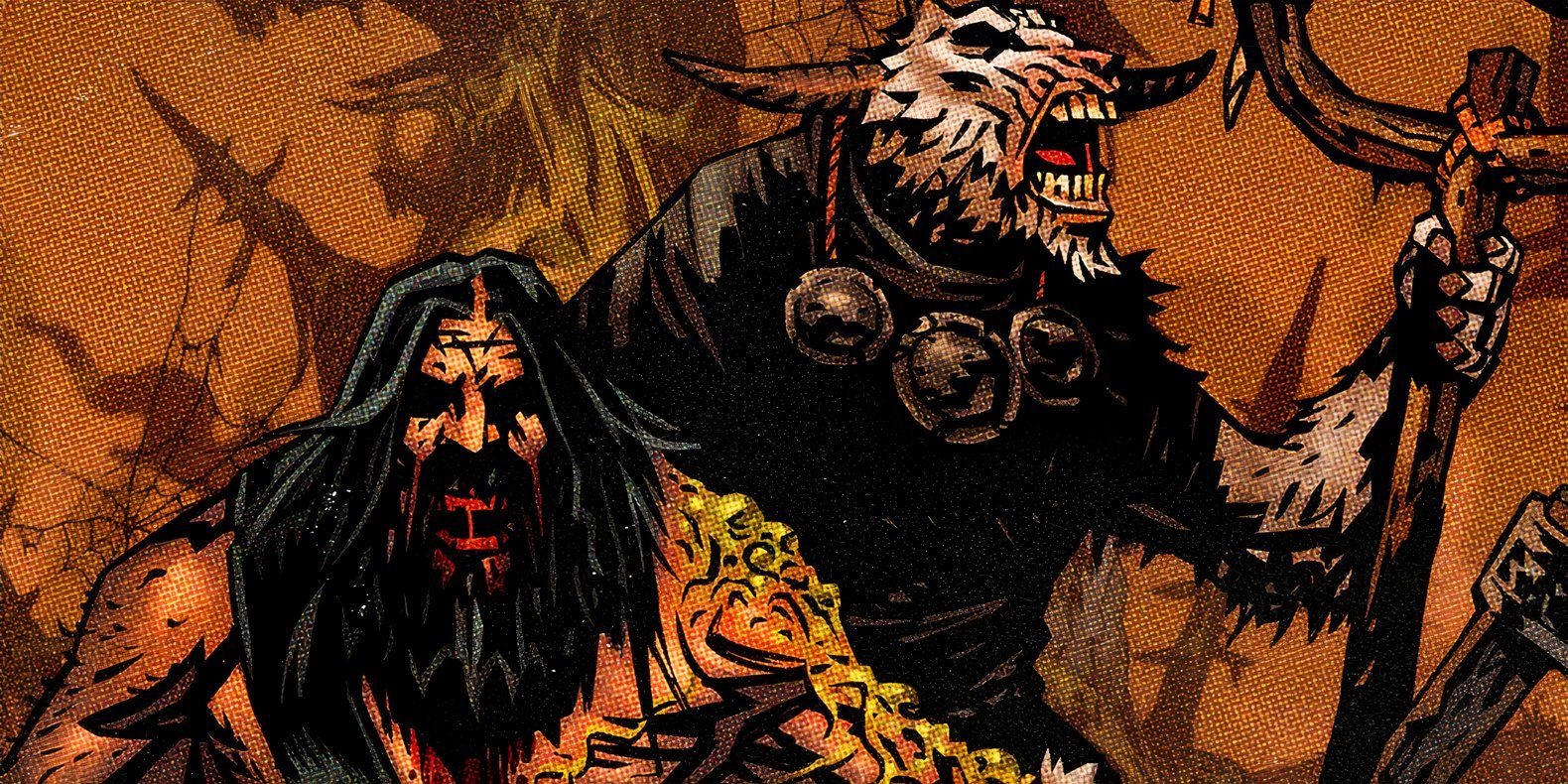
 There are ton of unique classes to choose from.
Once your character is created, you pick one of the game’s 5 regions and a guild to align with. That guild will give you a starting quest, which you’ll have about 12 days to complete.
Each day is basically a round of the game. You’ll pick a location to travel to on the overland map, which will usually result in a battle or a town to visit. Some encounters are actually peaceful encounters where you will have a bit of narrative text to read, and then a choice to make. Town encounters are places to upgrade your heroes with new skills, equipment, quests, or healing.
The combat encounters are the meat of the game. These will usually either be a clash or a delve. Clashes are battles where you’ll fight a group of enemies on one map tile. Delves are like Clashes, but you’ll be exploring a dungeon comprised of smaller locations as you go.
Battles are handled with your characters taking actions, followed by enemies’ actions. You’ll have a bunch of dice based on the skills you’ve chosen, and you’ll roll them to power those skills. Any dice you use will head to a cool-down track to hang out until they are refreshed. After the heroes finish their turn, the enemies will head towards your character with murderous intent. After the battle has concluded, you rest at the end of the day and spend some of your XP upgrading your character’s stats and skills.
There is a whole lot more to the game, but that’s the high level of it. If you really want the full ins and outs, you can download a PDF of the rulebook here.
 Combat will be handled either on an overland tile, or a delve through a multi-room dungeon.
Game Experience:
If you’ve played a Chip Theory Game before, you should have an idea of what you are in for: fantastic production values and a heavy, dense rulebook. Their original title, Too Many Bones, is a great game, but was often criticized for its pretty rough rulebook. The Elder Scrolls rulebook, while not perfect, is definitely better. However, if you are learning the game, I’d recommend you skip that altogether and use the well-made Learn to Play Booklet. Actually, skip that one too and use the Diced tutorial. It holds your hand throughout the entire process of learning the game and is truly the best way to learn.
 At the start of the day, you’ll choose where to move your party.
But once you are in the game proper, there is just so much flexibility here on what you can do. It all starts with character creation, which gives you a plethora of options. Want to make a sneaky archer? A sword and board fighter? A mage that zaps things dead? The ultimate glass canon? Go for it. There is very little limitation on how you create your characters. You can even change your mind as you level up and give your two-handed sword fighter some acrobatics or diplomacy skills instead of just making him a muscle head.
As you adventure for the day, you are also blessed with a lot of freedom. Each day, you will decide where you want to go on the overland map. Your options are usually either a peaceful encounter, a dangerous one, or a town. They each have their benefits, but as the clock is ticking on your main quest, usually you’ll at least travel in the right direction. The region you are in will also have some impact here. If you are in the Black Marshes, it might be rainy, slowing you down. While in High Rock, you might have to deal with towns closed due to unrest.
 Attacks are handled via die rolls, with your skill dice giving you special powers.
When it comes time to fight, though, rhe game’s combat system works exceptionally well. Outside of the tons of keywords to learn, it flows smoothly. When its your turn, you refresh some dice on your cooldown track, grab a few skill dice to attack with, and roll them. Depending on the dice used, you’ll usually inflict some damage and a few special abilities. You start off kind of weak, but still able to hold your own. By the time you’ve finished the first or second act, you will be a finely tuned engine of destruction. The game has a great power curve to it, where you’ll feel like a high-level RPG character by the end of the campaign.
While I love the combats, my biggest gripe is probably with the Delves. These are like combat encounters, but you’ll be exploring a dungeon one room at a time. The goal here is to find “sky shards” and then beat a hasty retreat. Yet not every room has sky shards, so you could get lucky and have your first 3 rooms provide enough to get what you need, or you might not even find your first one until your 4th room. The problem is that every room spawns monsters, so you need to either try to run past them until you find what you need or fight a long, battle of attrition. In general, we avoided delves, especially near the end of a session, as they can turn into a long grind.
 There are stacks of cards for you to discover.
But outside of that one critique, the game is fantastic. The mechanics are engaging and the narratives are just the right amount of content. I’m not a very big fan of overly heavy narrative text in board games (I’m there to play, not read 3 pages of world building), so kudos to the designers for keeping the narrative interesting, yet brief. It helps set the tone, but keeps things moving.
But with narrative in mind, it’s good to realize that at its heart, The Elder Scrolls is a combat game. Your time in towns will be brief, and most of the game is centered around either gearing your character up for battle or actually fighting. Thankfully, the battles are interesting and fun. But if you are looking for a game that’s driven by its narrative, this isn’t it. However, if you love a battle and want a game that’s boosted by its story, you’ll have a lot of fun here.
 Your character mat houses all your dice and your stats.
Final Thoughts:
I feel like I could spend a ton more time talking about interesting things on the game, but I’m already way over my word count. Needless to say, there is a ton to unpack here, and this review is only scratching the surface. If you are an Elder Scrolls fan, this is a great game to get, as long as you won’t be intimidated by the learning curve.
Yet you don’t have to be a fan of the source material to enjoy this one either. The game is solid enough to stand on its own. While the game has a bit of a steep price tag, what you get with it is a great game with LOTS of content that will keep you entertained for tons of hours, if not more. For fans of both The Elder Scrolls and the RPG genere in general, it doesnt get much better than The Elder Scrolls: Betrayal of the Second Era.
Final Score: 4.5 Stars – A fantastic journey through the world of the Elder Scrolls with excellent production values and tons of replay value.
 Hits:
Hits:
• Tons of replay value
• Lots of options for character building
• Combat is fun and exciting
• Great production values
Misses:
• Delves can easily turn into a grind






 English (US) ·