
.jpg)
 20 hours ago
17
20 hours ago
17
PROTECT YOUR DNA WITH QUANTUM TECHNOLOGY
Orgo-Life the new way to the future Advertising by AdpathwayEpic poems like The Odyssey weren’t written down, at least not at first. They were told and retold, over and over as part of an oral tradition. As such, their impact had as much to do with the storyteller as the story itself.
The same can be said for the new film of The Odyssey. This ancient tale, familiar to everyone who passes high school English, is rendered new again by writer/director Christopher Nolan’s craftsmanship and thoughtfulness, which turns this dusty legend into a meditation on what holds civilizations together, and what tears them apart, including our own.
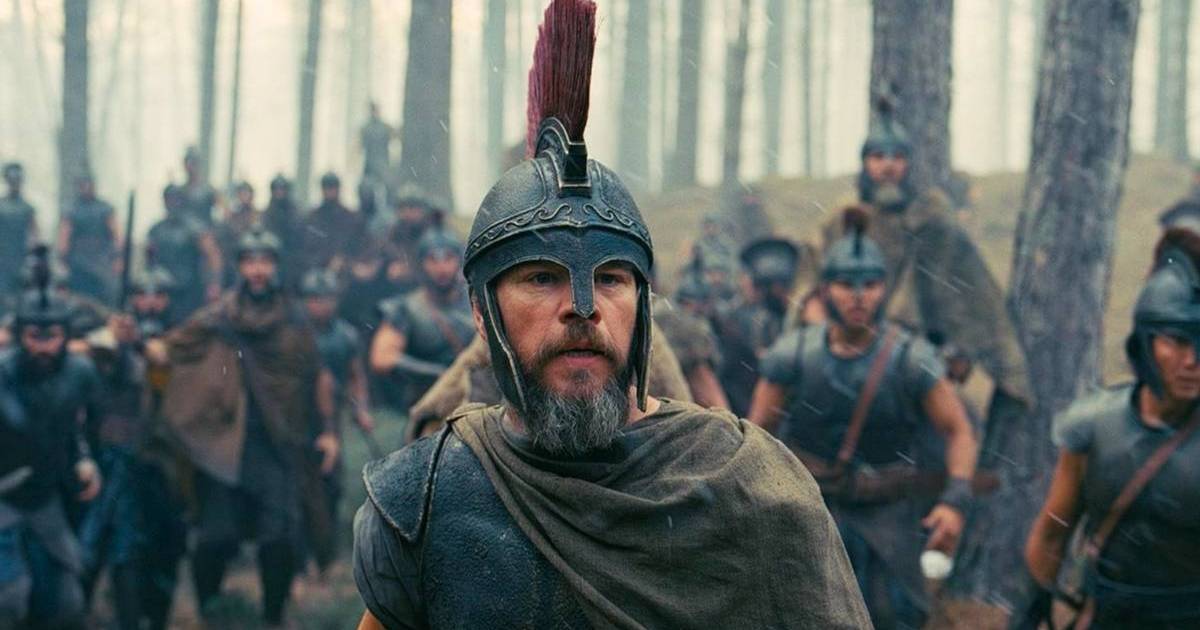
In typical Nolan style, it’s also a cinematic epic — epic in scale and length and cast, which is one A-lister after another. Because it is a Nolan film, it’s also far from a straightforward recounting of the Homeric saga of Odysseus (Matt Damon) and his years-long voyage home from from the Trojan War. In Nolan’s hands, Odysseus’ wanderings become a series of flashes back and forward in time, as he loses his way in the Mediterranean while, back in Ithaca, his queen Penelope (Anne Hathaway) fends off the advances of dozens of suitors, including the ultra-slimy Antinous (Robert Pattinson). You know he’s a bad dude from the second he tosses Odysseus’ faithful dog Argos onto a dung heap. (Jerk.)
READ MORE: The 10 Best Action Movies of the Last 10 Years
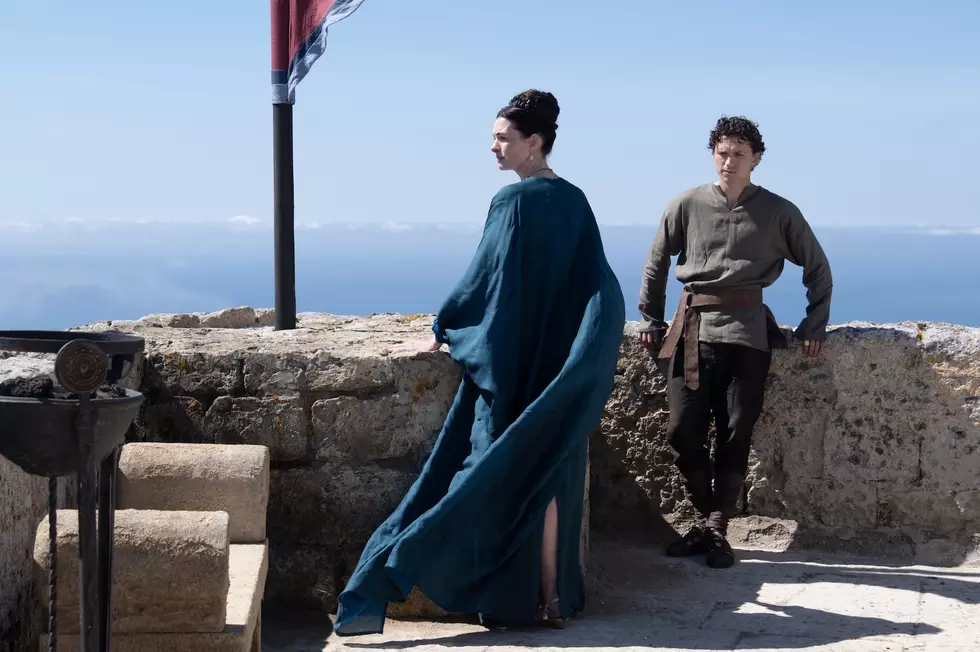
The man standing in the suitors’ way is Odysseus’ son Telemachus (Tom Holland), who still believes his father is alive and sets out across the sea to find him. Nolan bounces between Holland’s travels, Hathaway and Pattinson’s palace intrigue, and Odysseus’ long strange trip, and through the various songs and eyewitness accounts of his bravery in war and his trials afterwards.
Keeping track of where you are in the chronology is surprisingly easy; no one working in film today makes temporal uncertainty clearer than Nolan. But truth be told, The Odyssey is not Nolan’s fleetest or most exciting movie. Stretches in its long second act linger on and on, as Odysseus and his crew suffer at the mercy of the gods and assorted mythological monsters. Some of these sections come perilously close to outright boredom, something I’ve never said before about any Nolan movie. For a few lethargic minutes, I started to wonder whether he had miscalculated and gotten his ship lost somewhere near Charybdis.
But then how else is a filmmaker supposed to capture the exhaustion and despair of an endless journey? How else could Nolan suggest Penelope and Telemachus’ desperation for Odysseus’ return? Plus, the accumulation of all that time and pain adds to the weight of Odysseus’ eventual return to Ithaca, and to the revelation of the secret behind his years lost at sea.

Part of the reason Odysseus’ odyssey is easy to follow is an old trick of casting: Just about every person of any importance in this story is played by a very recognizable face. Even if you don’t remember all of the characters’ names, you’ll instantly remember Himesh Patel as Odysseus’ right-hand man, Charlize Theron as the mysterious and alluring Calypso, and Elliot Page as a soldier with a small but crucial role in Odysseus’ plan to infiltrate Troy.
Ultimately, though, the weight of this massive film falls on the shoulders on just a few key performers, all of whom deliver work as unvarnished as Odysseus’ giant wooden horse. Holland, cast somewhat against type, manages to make the viewer forget he’s most often seen onscreen as an actual superhero as he dives into the role of Odysseus’ naive and slightly useless son. Speaking of actual superheroes undercutting their onscreen tough-guy persona, it’s hard to think of another character in recent film history who snivels more than Robert Pattinson in The Odyssey. (So much sniveling! And did you read what he did to the dog?)
Hathaway brings tremendous intensity to her scenes, holding down the proverbial fort in Ithaca from behind the series of ornate screens that line production designer Ruth De Jong’s earthy sets. And Damon is an interesting choice for Odysseus. He doesn’t really carry himself with the regal air of an ancient general. Even with his yoked physique, Damon strikes a more unassuming figure in The Odyssey. His work isn’t flashy, and sometimes it’s almost too subdued; it’s difficult to pierce through his stoic exterior. But late in the film Nolan gives Damon a monologue that unleashes the floodgates holding back all of the emotions he’s bottled up over the last two hours, and it really justifies his casting in a tricky role.

It’s those final scenes — which in their own quiet way carry a twist as impactful as the one in Memento — that not only power Nolan’s The Odyssey, they also illuminate why a filmmaker famous for movies about contemporary life and technology wanted to tell a story set 3,000 years ago. Odysseus’s actions in the Trojan War carry more meaning than they might first appear, as do his actions in the years afterwards battling cyclopses and witches. Nolan’s Odyssey is not about the end of Odysseus’ story, but the possible end of ours.
RATING: 8/10
Every Christopher Nolan Movie, Ranked From Worst to Best
From Following to The Odyssey, we ranked every film from the Oscar-winning director of Memento, The Dark Knight, and Oppenheimer.








 English (US) ·