
.jpg)
PROTECT YOUR DNA WITH QUANTUM TECHNOLOGY
Orgo-Life the new way to the future Advertising by AdpathwayNew Year’s Eve is tomorrow, and as we get ready to say goodbye to 2025, it’s time for our annual top 10 list. As is tradition here at BGQ, I’ll be teaming up with fellow reviewer Brandon to list off our Top 10 Board Games of 2025. We always pair up for these lists to help provide a bit more variety in our standout games of the year. While I tend to be more of a thematic, dice-chucking, minis-loving gamer, Brandon leans more toward the crunchy Euros.
 Honorable Mention: The Lord of the Rings: Fate of the Fellowship
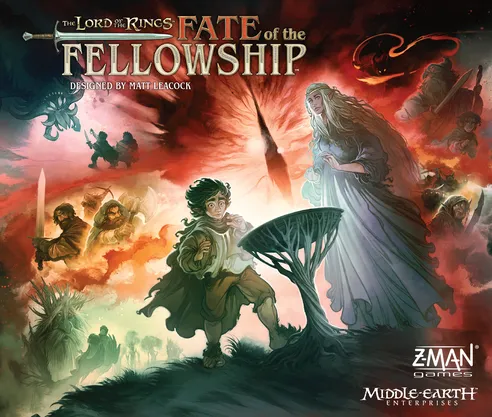
Tony: We have a standing rule here at BGQ, that if someone is involved in the production of a game, they tend to stay away from talking about it in their articles. That being said, I want to give a shout-out to Lord of the Rings: Fate of the Fellowship. While I was only minimally involved with the production of the game (I did work on the rulebook), when I finally got to play it, I fell in love, and it would easily be my top game of the year. I’ve played it over a dozen times now and never get tired of it. It’s a fantastic game that uses the bones of the Pandemic system and builds it into a great, cooperative experience that is both rich in theme and deep in replay value.
1-5 Players • Ages 12+ • 60-120 minutes
 10. Molly House

Brandon: The latest entry to publishing house Wehrlegig Games takes on a refreshing design from Jo Kelly and adds a touch of Cole Wehrle finesse. Molly House’s unique thematic exploration of queer joy in eighteenth century London takes a moment to wrap your head around. Though a competitive game, it’s centered around cooperative card play via hosted parties to boost community joy. But watch out for the local constables and rogues who are seeded into the deck to pose a constant threat. Ultimately, a great conversation piece. One that reflects on the human struggle to be free and society’s fear of such gin-soaked bliss.
1-5 Players • Ages 14+ • 60-120 minutes • $75
 10. Moon Colony Bloodbath

Tony: I originally wrote this one off because the cover art just didn’t click with me. However, this engine-building and destruction game from Donald X. Vaccarino (of Dominion fame) has players building out their own moon colony. Yet, where things get interesting is that partway through the game, things start to go off the rails. As in many a sci-fi movie, the robots begin to rebel/malfunction, and things just start to fall apart. Instead of trying to build the best engine, the game shifts to triage mode as you try and be the last player with surviving colonists.
1-5 Players • Ages 12+ • 45-90 minutes • $65
 9. Magical Athlete

Brandon: After a twenty-two-year hiatus, cult classic Magical Athlete receives a glow-up from publisher CMYK Games. And if any game needed refreshing, it was this one. Outdated art has been replaced by artist Angela Kirkwood’s vibrant “Schoolhouse Rocks”-esque revitalization. This is a simple roll and move design, one that mixes drafting and player powers to hilarious effect. There are a lot of fun combos to explore as players pit their racers against each other in a set of four rounds between two different tracks. And there’s more to come.
2-6 Players • Ages 6+ • 30 minutes • $29
 9. Fliptoons
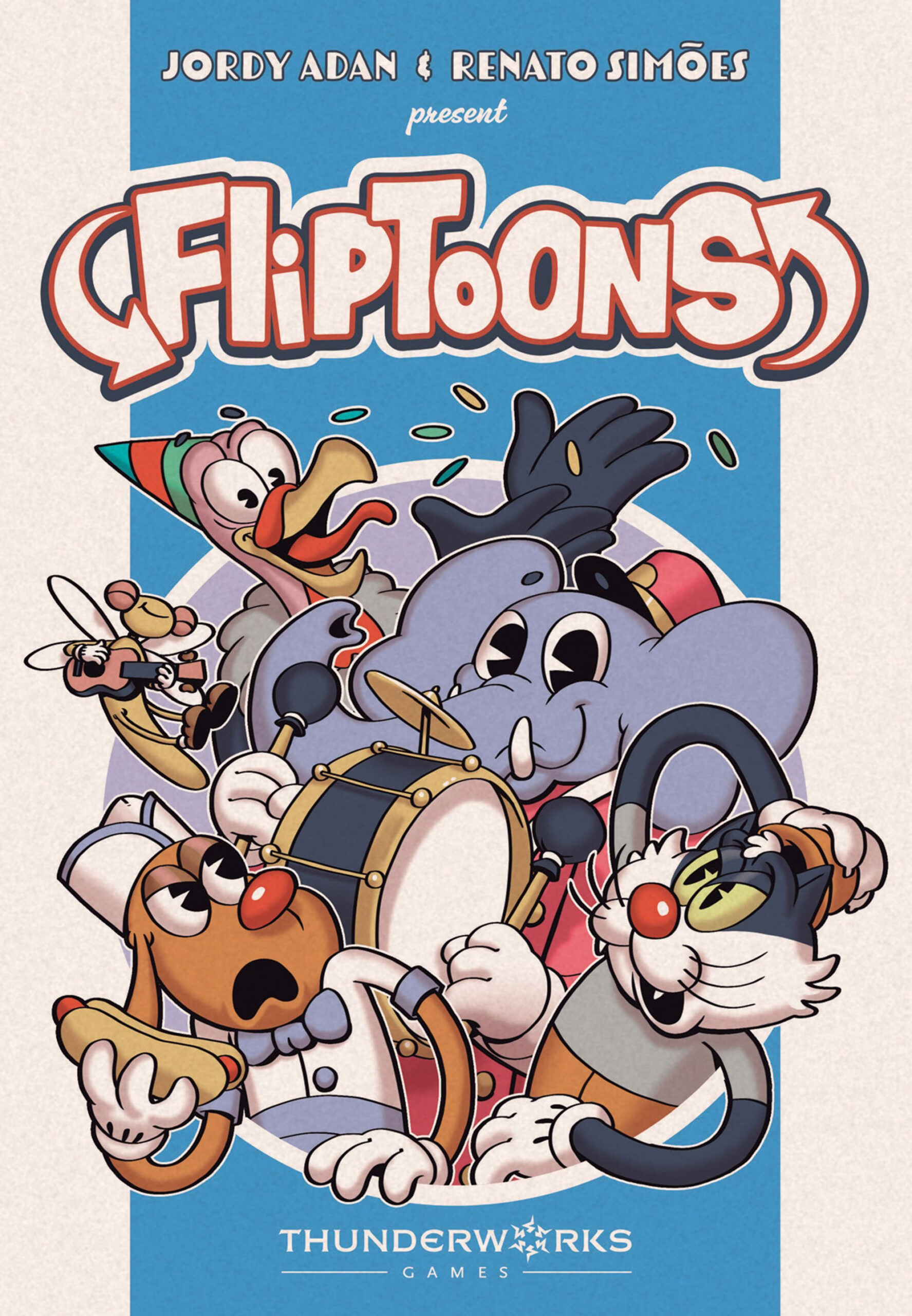
Tony: My favorite game from Gen Con cracks the list of my favorite games of the year. Fliptoons is a quick-playing game where you are flipping out a deck of cards into a 3×2 grid each round. Your goal is to try to earn fame and build synergies. Each round, you can spend your fame points to improve your deck or cull it. The goal is to have the best flip once someone reaches 30 points. The game is really simple to teach, but the varied card interaction, and also how your deck is dealt each round, really gives this one a lot of staying power.
1-4 Players • Ages 8+ • 15 minutes • $20
 8. Origin Story

Brandon: Out of all the games on my list, this is the one that surprised me the most. Not only for its sudden appearance on the release schedule, but also due to its conceit to add something new to the trick taking genre. And for what Origin Story has set out to achieve, it mostly succeeds. Thematically grounded in building your tableau of unique powers into a game manipulating spectacle of a superhero is a treat. Yes, it has plenty of luck. Yes, it has some elements that didn’t work for me (looking at you, event deck). Ultimately, it’s a fun system to explore and a refreshing take on trick-taking—that’s a feat in and of itself.
1-5 Players • Ages 14+ • 45 minutes • $27
 8. Toy Battle
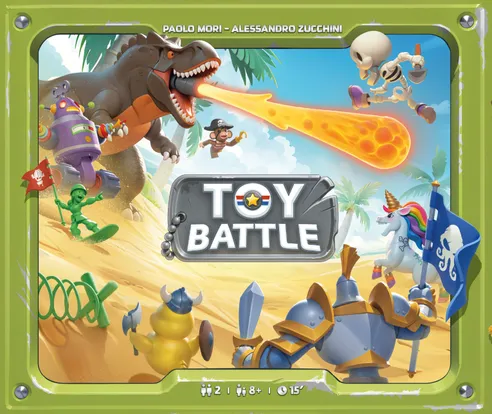
Tony: I saw Toy Battle first on Board Game Arena and was intrigued by the art. I gave it a play and really enjoyed it. It’s a tactical game that will give you “Clash of Clans” vibes (no microtransactions needed). Each turn, you place a unit onto the board, trying to work your way across paths to your opponent’s base. As pathing is limited, eventually you’ll clash your your opponent. Playing a higher-number tile over your opponent’s tile can not only claim the space for you, but also break their supply lines. With a bunch of different boards to change up the play, Toy Battle has that simple yet fun feel to it.
2 Players • Ages 8+ • 15 minutes • $31
 7. Unmatched Adventures: Teenage Mutant Ninja Turtles

Brandon: Nostalgia can drive a lot of our uptake in this industry. I had been waiting for this release all year. So much so that I felt it was going to be a lock for my top game. There is much to enjoy here, from the turtle’s deck designs and powers feeling appropriately developed, to the matching sidekicks and, of course, the villain choices. Shredder and Krang have their own boards, and each side is catered to their devious goals. There’s even an ally/henchmen option to ramp up difficulty for those who play this system often. In the end, the design did not do enough to distinguish it as something groundbreaking. It’s just more Unmatched. This time with a different topping on the pizza.
1-4 Players • Ages 9+ • 20-40 minutes • $80
 6. Light Speed Arena

Tony: This was one of my surprise hits from Gen Con this year, and ended up being one of my kids’ favorite games. It’s also a textbook example of a game perfected by an app integration. In Light Speed Arnea, players are placing ship tiles on the table in real time (one each 10-second round) and, after all ships have been placed, you snap a picture with the app. The app then scans the photo and animates the results of the battle, showing which ship hit which, and even making snarky comments when a player misses. What could have been a tedious slog of figuring out line of sight with a string and moving energy tokens here and there, ended up being an amazing experience where tabletop meets digital.
1-4 Players • Ages 6+ • 5-15 minutes • $29
 6. Corps of Discovery: A Game Set in the World of Manifest Destiny

Brandon: A cooperative deduction game is certainly not my cup of tea. But Off the Page Games designs certainly produce some lovely tea. This is the level of elegance to intertwined systems that I wanted with Robinson Crusoe. A survival-focused journey with environmental pressure and a touch of bloody tension. Players use logic rules to navigate the land, uncovering resources and threats, as they puzzle out their endgame. A near-perfect solo or two-player experience that is only hampered by some rule ambiguities and card balance issues. Can’t wait for the next release from this team as all have been bangers.
1-4 Players • Ages 14+ • 60-90 minutes • $41
 6. Eternal Decks

Tony: A late acquisition for me, as I’ve only had a chance to play Eternal Decks a handful of times, but I’ve really enjoyed each play. Eternal Decks is an incredibly clever game with some excellent artwork. In this cooperative card game, you are trying to accomplish your scenario goals by playing cards into one of 3 different field areas. The card play has rules (no matching numbers or colors can be played next to each other, for example), but the interesting part comes in trying to keep your fellow players alive. Your decks are limited and never shuffled, so you need to fill up the fields with cards to gain new cards for your decks, but that also releases “eternals” into the game, which creates restrictions. This game has an excellent ebb and flow to it and is just begging for me to explore it more.
1-4 Players • Ages 10+ • 30-40 minutes • $50
 5. Kinfire Council
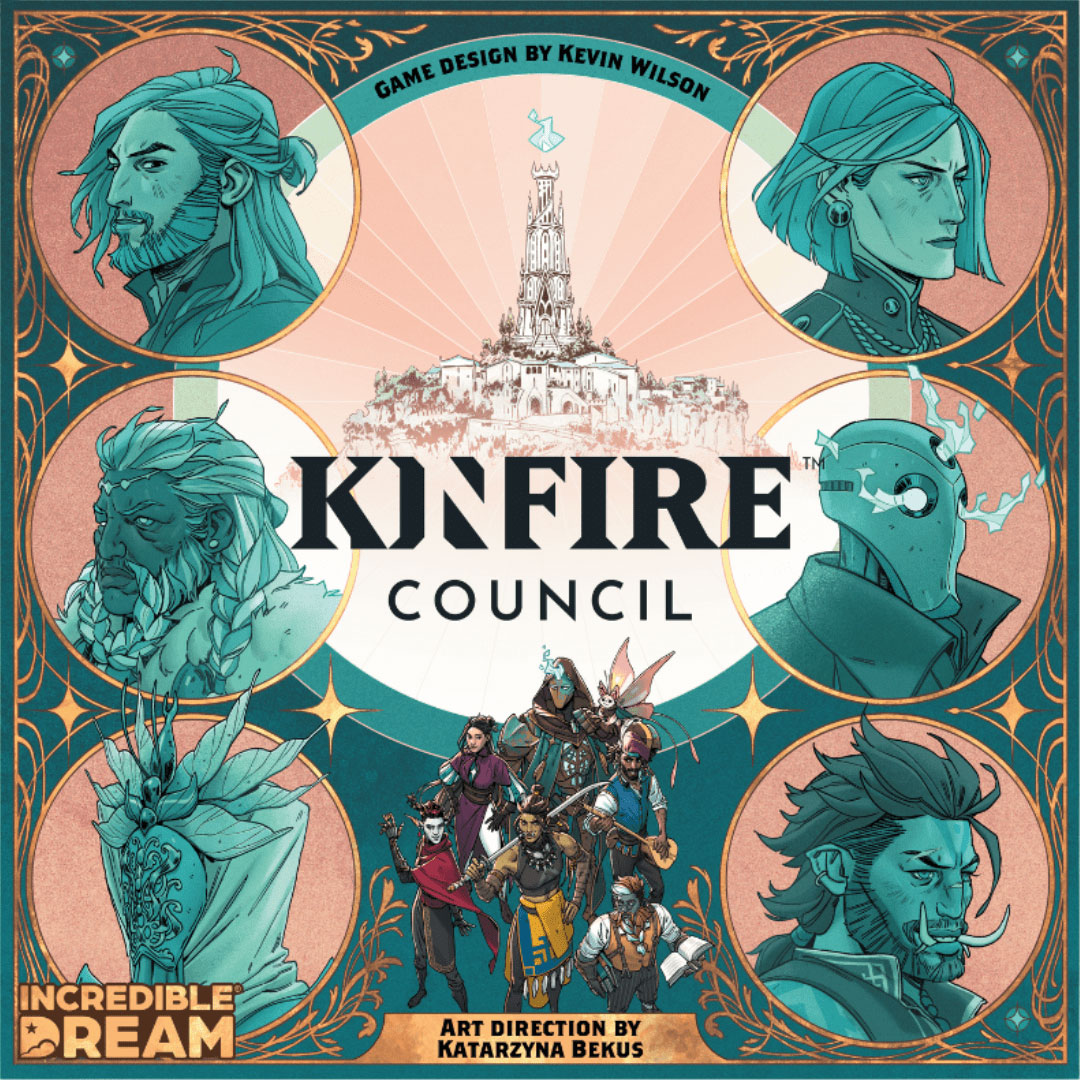
Brandon: The Kinfire universe grew again this year with the release of this worker placement design from Kevin Wilson. It features the same wonderful illustration and component quality as previous releases, and it’s firmly rooted in the lore of the Kinfire world. Here, players are tasked with a top-down view of protecting a city that is under siege by the darkness and an ever-growing cultist insurrection. Worker placement is elevated via worker powers, legislative bolstering, and a threat system that reminds me a lot of one of my favorite games: Troyes. I enjoy it best as a cooperative experience, which can only be found via the expansion. It’s a must-include.
2-6 Players • Ages 14+ • 90-120 minutes • $75
 5. Star Wars: Battle of Hoth

Tony: If there is a Star Wars game published, chances are I’m going to try it. Star Wars: Battle of Hoth is built on the Memoir ’44 gameplay system, so it’s very easy to get to the table and quite accessible. The game focuses on the opening battle of Star Wars: The Empire Strikes Back, so the game has a lot of rich content to pull from. The Empire will get to control AT-AT Walkers, probe droids, and snow troopers, while the rebel forces get snowspeeders, turret cannons, and troopers. Each scenario feels on theme to the battle from the movies as a whole, and there is even a small campaign that players can play through, unlocking bonus cards as they go.
2-4 Players • Ages 8+ • 30 minutes • $59
 4. 7 Empires
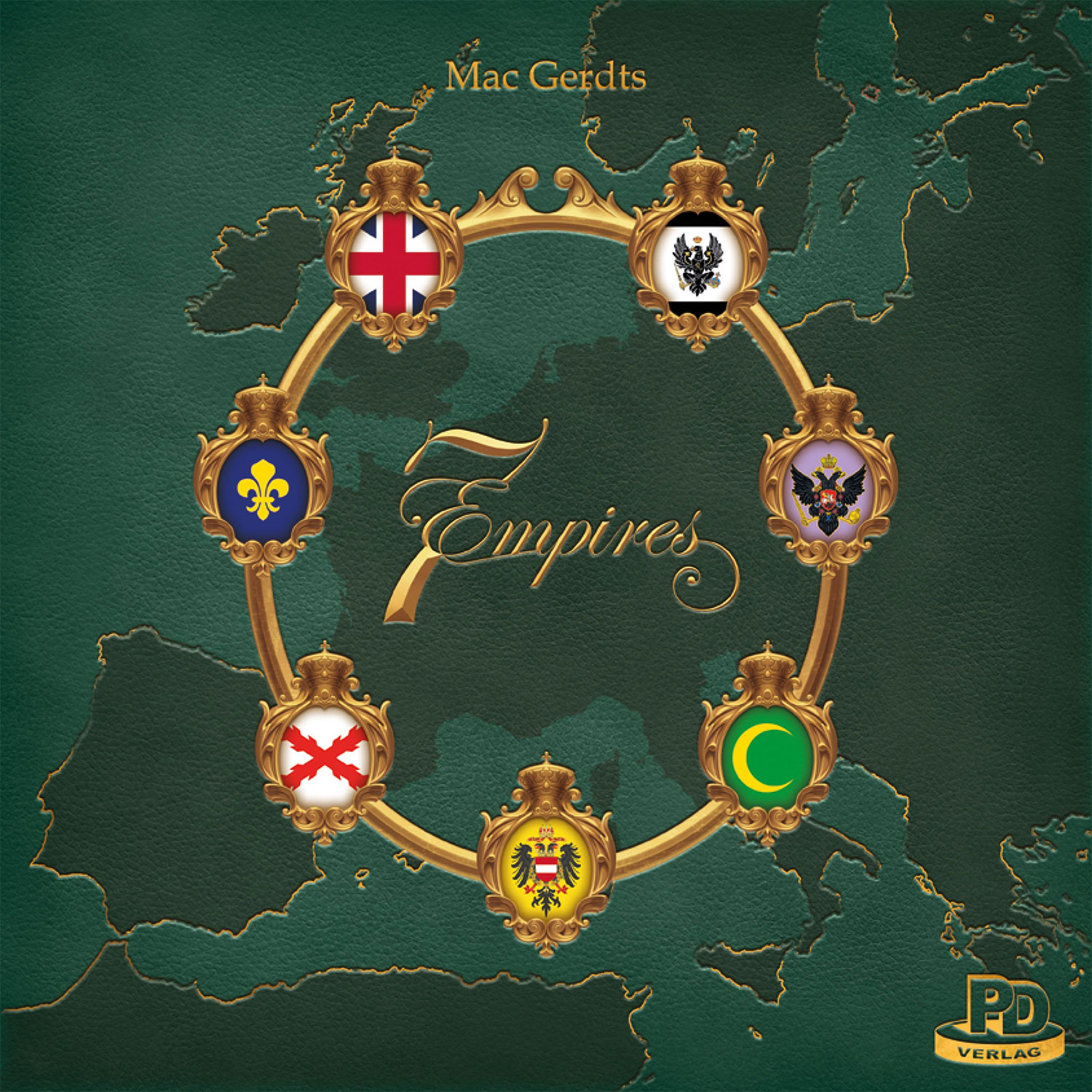
Brandon: Designer Mac Gerdts, of Concordia fame, returns to an earlier design (Imperial). 7 Empires looks like a stuffy-Euro from afar, but as with many Gerdts games, it is propelled by an elegant system of choice. Players invest in different empires, shaping the choices of those they hold majority control over, as the nations expand upon the map. There is deterministic combat, but based on how the action selection system works, each moment of movement against another empire opens vulnerabilities as you wait for those actions to come back online. This plays much quicker than it looks. And while I didn’t play a lot of Euro designs this year, 7 Empires stood above those that I did.
2-6 Players • Ages 13+ • 90-150 minutes • $52
 4. Marvel Dice Throne Missions

Tony: I love the Dice Throne system, having owned it for many years. And while I was excited about the cooperative Dice Throne Adventures version of the game, the gameplay didn’t really work for me. But Marvel Dice Throne Missions took the coop gameplay in a different direction, and it works so much better. You and your fellow players each pick a character and then a boss to battle against. Part 1 of the mission will have you fighting your way to the boss by taking out some flunkies (and earning some rewards), with the boss battle being the climax of the game. But despite it being a cooperative game, the core of the game remains the same, so each player can roll their dice, activate their powers, and attack the enemies. The game also has a campaign progression system, where you earn extra bonuses after each game, unlocking small perks to make it easier to take on the more challenging bosses
1-4 Players • Ages 8+ • 60 minutes • $80
3. Eternal Decks
Brandon: A cooperative deck building game set over multiple scenarios from designer Hiroken. Stunning stark illustration from artist MUJUNSHA. And an incredibly tight puzzle with plenty of variety from session to session. Eternal Decks is a stand-out card game from the year 2025. The way its puzzle unfolds as players gain new decks of cards by completing specific row requirements is superb. Each deck gained brings a curse to all players, one that must either be contended with or removed, as options narrow with each card played. My only gripe with this game is the way it handles limited communication. It’s a looker. It plays fast. And it is unlike anything we’ve seen before.
1-4 Players • Ages 10+ • 30-40 minutes • $50
 3. Metal Gear Solid: The Board Game

Tony: Board game adaptations of video games always intrigue me and have created some of my favorite games. In the late ’90s, Metal Gear Solid was a genre-defining video game and one I still have fond memories of playing. So I was definitely intrigued with the board game adaptation and how much justice it could do the video game. Well, designer Emerson Matsuuchi knocked this one out of the park with a game that not only feels like a love letter to Metal Gear Solid, but is also one of the best stealth action board games I’ve played. Like any good stealth game, there is a lot of sneaking around; however, unlike many in the genre, once the bullets start flying, that isn’t the end of your chances at stealth. Instead of just spawning endless guards at you, you actually have the ability to hide and reenter stealth again. It’s a little touch that just made the game so much better. I’ve finished the campaigns, played a few “VR missions”, and am eagerly awaiting more content.
1-4 Players • Ages 14+ • 60-90 minutes • $109
 2. Hot Streak

Brandon: Four sports mascots step onto the field. They’re off-brand from teams you’ve never heard of before. The workers inside—we can only see their wild eyes. Their lust for the finish line. Or perhaps their need to get out of the mascot uniform as they sweat and sweat. Hot Streak is wacky fun from designer Jon Perry and publisher CMYK Games. Players place bets on which mascot they think will win based on almost-perfect deck information. The catch: before each race, players secretly add a card from their hand to the race deck. I like. Then the deck is shuffled. Okay, yes, yes. And then three cards are removed before the race begins by revealing mascot movement cards one by one from the deck. Mascots will fall, be trampled, run off the course, and even finish the race by going in the wrong direction. Perfection. Simple. Silly. And infinitely replayable.
2-9 Players • Ages 6+ • 20 minutes • $49
 2. Vantage

Tony: Designer Jamey Stegmaier decided he wanted to create an open-world board game and set off to make it unique. And boy did he succeed. Vantage is a game that drops you on an alien planet and says, ok, do whatever you want. The gameplay is simple: look at the card you see from your “vantage” and decide what you want to do. Each card not only has at least 6 ways to interact with it, but you can also travel from the card in one of the four cardinal directions. What makes Vantage unique is that you always succeed on any test you take. But the kicker is that you don’t know how much of your precious resources the test will cost you. So if you want to rob this person you just came across, you can do it, but the dice will determine how much of your health, morale, or time it will cost you. Add to that the fact that your goal and mission can change through the game (if you want them to) and Vataage offers a flexible, thematic board game that feels incredibly fresh. While Jamey has said that there isn’t any new content coming for Vantage, I’d love to see the system ported over to different genres (Give me a Cyberpunk City to explore!)
1-6 Players • Ages 8+ • 60-180 minutes • $90
 1. Elder Scrolls: Betrayal of the Second Era

Brandon: Chip Theory Games, I feel seen. Give me a sandbox of a character creator. Give me a simple narrative that drives choice but doesn’t derail exploration. Give me your excellent production and make it useful, easy to table, tactile, and fun. This is the campaign game I’ve been seeking. It didn’t take me long to play through campaigns in all included locations. Each questline is different based on a chosen guild, and they deviate based on choices made along the way. Side quests, check. Equipment system without currency, check. Lockpicking that’s fun, check. Magic and delves and class powers, check check check. Elder Scrolls is a beast of a game. One that I can’t wait to return to any time I think about what’s next to discover within the pages of its world.
1-4 Players • Ages 14+ • 120+ minutes • $225
1. Elder Scrolls: Betrayal of the Second Era
Tony: No, that’s not a typo, for the first time in BGQ history, we ended up choosing the same game for #1. Based on the popular video game series (in theme only), The Elder Scrolls takes players on a campaign adventure. Where Elder Scrolls truly shines is with just the sheer amount of variety and customization in the game. Even from character creation, there are 10 races, 15 classes, and a dozen skills to choose from, which means you have a LOT of ways to customize your character. And then once you head out into the world, there are 5 different regions and 9 quest lines for each region to peruse. Turns will have you traveling the region, encountering locals and making choices, and sometimes getting into a brawl. Battles are handled with dice and give players a lot of opportunities to shine. This means you don’t even have to be a fan of the Elder Scrolls series to enjoy this game. This is a deep, expansive adventure game with piles and piles of replay value that I’ll be playing for a long time to come.








 English (US) ·