
.jpg)
PROTECT YOUR DNA WITH QUANTUM TECHNOLOGY
Orgo-Life the new way to the future Advertising by AdpathwaySo who is Paul? No, I’m not referring to Paul Dennen (Dune Imperium/Uprising), Paul Salomon (Honey Buzz), or Paul Peterson (Smash Up), though I’m sure I could find gaming disagreements with each of these fine designers.
Rather, I am referring to my wonderful husband Paul, the man who introduced me to the strategy board gaming hobby, and who, if I’m being honest, got rather lucky in finding a life-partner who not only shares his gaming interests, but who mostly enjoys the same types of games. Seriously, our respective Top-20 game lists have substantial overlap, including such choices as Wingspan, Castles of Burgundy, Ark Nova, Pax Renaissance, Tiletum, and more, except in slightly different orders.
Every once in a while, though, we do have gaming disagreements—as well as marital ones, but that’s a whole different article. What follows is a list of board game subgenre “Hot Takes” and individual game titles that will likely elicit divisive opinions among other gamers as well. If there’s a gaming partner in your life who shares any of our gaming opinions below, I’ve also provided several alternative suggestions to help you find common gaming ground.
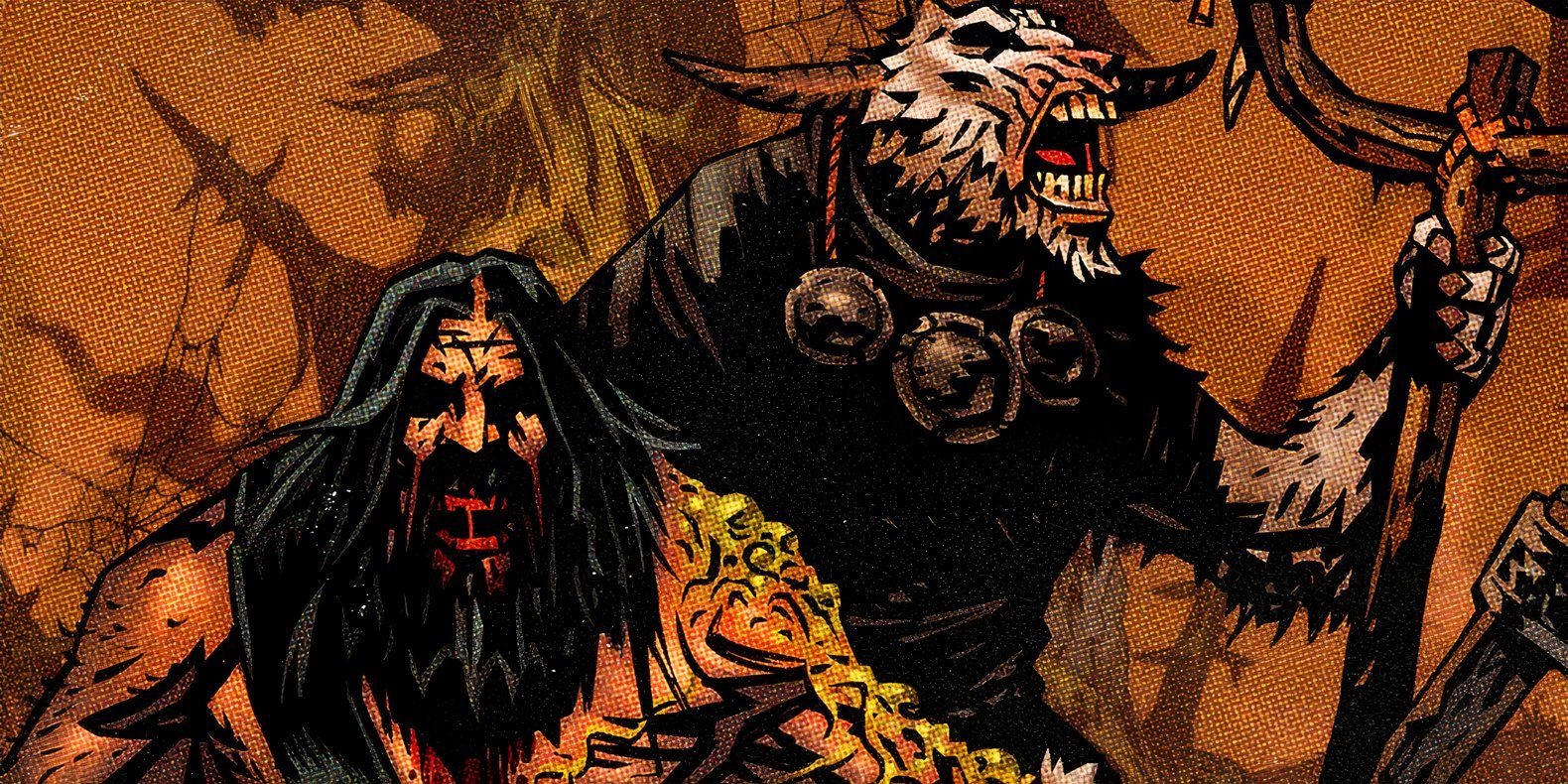
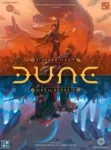 1. Dune: War for Arrakis
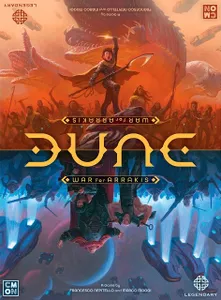
I do not care for war games or “dudes-on-a-map” type games. I’ve read The Things They Carried and All Quiet on the Western Front. When indulging in the escapist hobby of board gaming, I would rather immerse myself in a more joyful theme than one that’s essentially kill or be killed. I especially dislike it when, in any reasonably long strategy game, a dice roll (or the equivalent) randomly dictates your outcome. So for these reasons, I’ve also bounced hard off Undaunted, Star Wars Rebellion, and Gloomhaven, even though I don’t think they’re bad games. War/area-control games I do enjoy include The Wolves, Wonderland’s War, and Altay, because there are enough Eurogame mechanics in there to keep things interesting for me.
1-4 Players • Ages 12+ • 120 minutes • $139
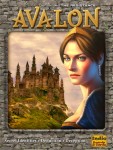 2. The Resistance: Avalon

I dislike social deduction games only slightly less than war games. Lying gives me social anxiety. Furthermore, in my opinion, debating the identity of the saboteur is a futile endeavor unless someone is an awful actor or somebody made a legitimately stupid strategic decision. Partaking of these oftentimes heated discussions, to me, is like arguing about how to best solve a mathematical proof when there’s not enough viable information available for a definitive solution—i.e. frustrating and pointless. The conversation would only be meaningful if one played repeatedly with the same group, thus forcing participants to defend why they deviated from the obvious meta. Of course, I would prefer not to be playing this genre of game that frequently anyway. Paul, on the other hand, well, he’s a lawyer, so he’s always down for lively debate. One social deduction game I do enjoy is Spyfall, since clever questioning provides more useful information on which to act.
5-10 Players • Ages 12+ • 30 minutes • $24
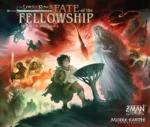 3. The Lord of the Rings: The Fate of the Fellowship
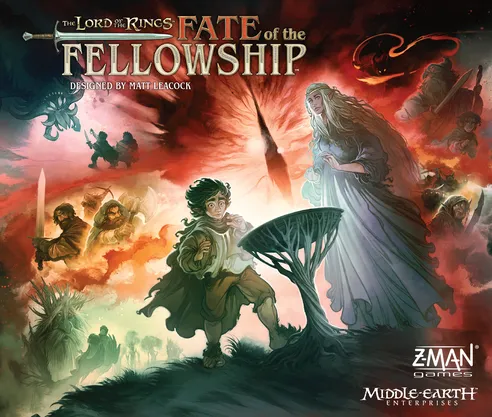
I do not generally care for cooperative games, and yes, I have tried Spirit Island, Pandemic, Endangered, and Slay the Spire; Paul has enjoyed all of these more than me, but none more so than this LOTR-themed title. Part of the joy of tabletop gaming for me is attempting to predict what my human opponents will do next and the tension created therein from wondering if they’ll nab that desirable worker placement spot or hate-draft the tile I want. I simply cannot get emotionally invested in the same way when the result of a random card flip or dice roll determines whether my team’s well-laid strategic plans are successful or a total failure. The only cooperative games I’ve found myself enjoying are Codenames Duet, Bomb Busters, and Decktective, but these present players with a pre-set puzzle which they must cooperatively solve; new information does not randomly influence your progress along the way.
1-5 Players • Ages 12+ • 60-120 minutes • $79
 4. Dominion

I don’t actually dislike Dominion; I just dislike playing it with Paul. That’s because Paul played so much Dominion prior to meeting me that he essentially memorized the optimal strategy for any given set of starting cards. So whereas we are otherwise fairly decently matched in most other strategy games (and yes, we keep stats on this), when we’ve played Dominion, I’ve never come close to his score, and it’s just not fun getting repeatedly clobbered. Thus, when it comes to BGA or board gaming social events where we might play different games with different groups, we have a mutual embargo on either of us repeatedly playing and becoming especially skilled at any new-to-us games that we would potentially want to own and play together. Oh, but if Paul wants to play something like Avalon or Inis on repeat, he can have at it. One of our favorite pure deck-building games that we do still play together is Star Wars: The Deckbuilding Game.
2-4 Players • Ages 10+ • 30 minutes • $37
 5. Brass Birmingham
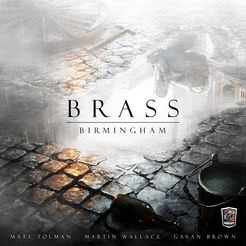
Before you burn me in effigy, hear me out on this one. I actually really like Brass Birmingham; it’s in my Top 20 games even though the theme of “industrial tycoon” doesn’t make me swoon. Paul, however, LOVES this game. It’s definitely in his Top 5, and he would happily play it every single day if I were up for it. But we own over 100 different board game titles, and my preference is to rotate through a bunch of games before returning to my favorite titles. As with other aspects of life, sometimes distance makes the heart grow fonder.
2-4 Players • Ages 13+ • 60-120 minutes • $76
 6. Sagani
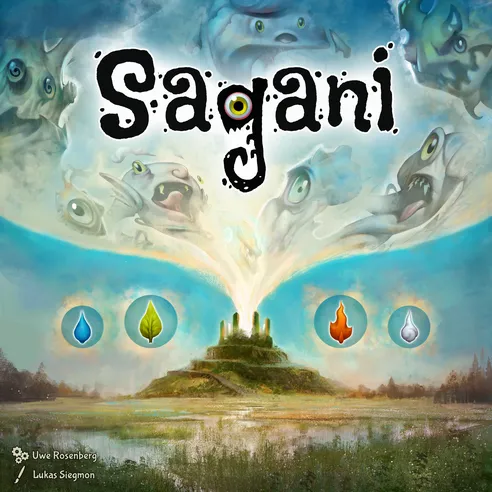
I generally like abstract strategy games a bit more than Paul, and Sagani has to be one of my favorites. Sagani is an Uwe Rosenberg design that’s part of a trilogy, which also includes Nova Luna and Framework; all of these are tile-drafting and placement games where each tile has the ability to both satisfy requirements of other tiles while also setting new requirements. The twist with Sagani is that players must assign piece-limited discs to each tile upon placement, and these only get released once the tile’s condition has been satisfied. If you run out of discs, well, your score starts going negative, and your future choices become limited quickly. While I thoroughly enjoy the forward-planning required of this game and think it’s a fun challenge to simultaneously plan for short-term and long-term goals so I never run out of discs, others, like Paul, may find it overly punishing. Tiny Towns is another such abstract game he finds overly punishing. Examples of abstract games Paul will happily play with me include Azul Queen’s Garden, LUNA Capital, Spectacular, and Cascadia.
1-4 Players • Ages 8+ • 30-60 minutes • $18.99
 7. Word Domination
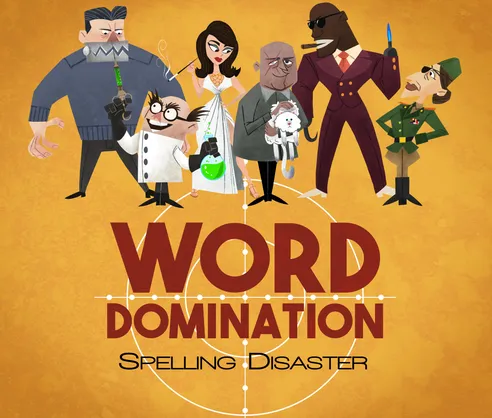
Paul and I both enjoy word games, even though I tend to be a tad better at them. That’s not a problem in games like Paperback, Boggle, and Scrabble, where our scores aren’t usually too far apart. Word Domination, however, is a more player-interactive experience—think dynamic Boggle mixed with area control. It’s an in-your-face word game where it’s not enough to just spell a long word. You need to spell the right word that steals letters from your opponents, blocks off their contiguous areas, and/or allows you to hoard useful letters for yourself. It’s the type of word game where a small difference in vocabulary recall can lead to runaway leaders. Word Domination is probably my favorite word game, and if you can find similarly skilled wordsmiths with whom to play it, you’ll probably also find it to be a wonderfully interactive and creative experience. Some of Paul’s favorite word games are Bananagrams and Typewriter, which he finds to be much less demoralizing experiences.
2-4 Players • Ages 10+ • 20-45 minutes
 8. Beyond the Horizon
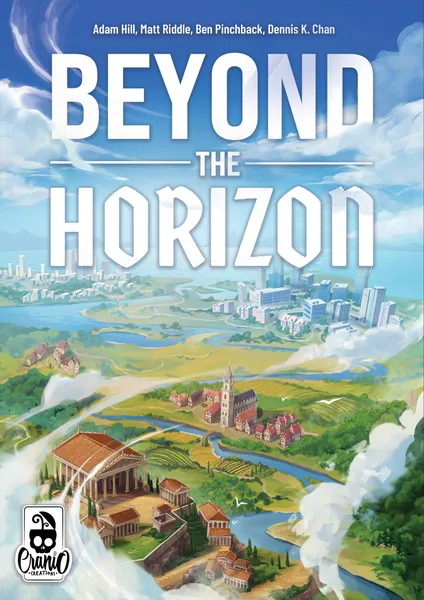
I love engine builders and tech trees, and those are the central features of Beyond the Horizon, so I really enjoy this game. Paul actually agrees with me that this game is better than Beyond the Sun; we both prefer how expansion across settlements is handled in a less “take-that” fashion than the previous space board, that the game feels more “Euro-ey” overall than its predecessor, and that use of icons vs text makes the tech tree legible from any seat. Nonetheless, Paul dislikes the somewhat random nature of exploring new technologies and how you cannot predict the instant rewards or which techs will be available. When it’s not a war game, it seems his tolerance for luck gets decimated. Opinions on this game are generally divisive in the community owing to claims of unbalanced asymmetric factions, questionable design choices with the population pawns (and having to balance tiny cardboard chits on top), and the fact that it’s a table hog. I won’t try to argue with those points—and Paul hasn’t agreed to play it enough for me to have an opinion on balance. All I know is every play of this game has felt unique and thoroughly entertaining, with the perfect amount of tension and player-interaction. Some of Paul’s favorite strategy games that have close to perfect information following the initial set-up include Age of Innovation, Agricola, The King is Dead, Teotihuacan, and Endeavor: Age of Sail.
2-4 Players • Ages 13+ • 90-120 minutes • $50
 9. Vindication
Vindication is a medium-weight engine-building Eurogame where players race to explore the map and find synergies among 6 different types of color-coded attributes. It plays in about 30-150 minutes, so at 2-players it can sometimes feel more like a filler game, which is weird when it comes in a Lacerda-sized box. Other than the game’s unnecessarily ostentatious production and mini-expansions that take up a lot of box space, Paul can’t actually cite any specific thing he dislikes about the game. For whatever reason, it just doesn’t click with him; almost every 2-player game we’ve had has been a blowout, and he would very much prefer to clear that large box from our shelves. Sometimes games just don’t click for certain people. For me, it’s Orleans; after 9 plays, I still can’t quite grok the game, though I still enjoy my time with it.
2-5 Players • Ages 12+ • 45-120 minutes • $99
 10. Arborea
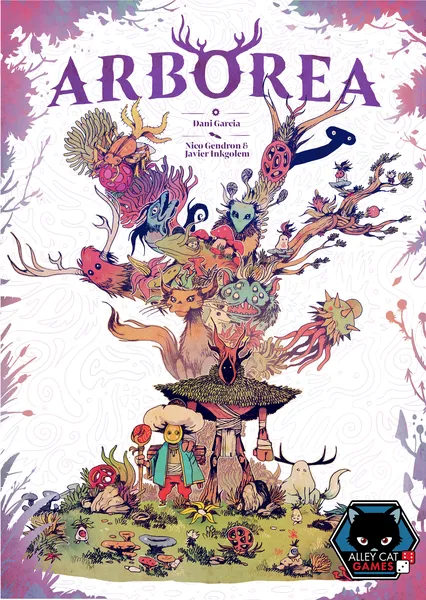
I’m a major Dani Garcia enthusiast, and this heavy worker placement game is his masterpiece, in my opinion. I adore how your workers get stronger the longer you leave them in place (like in Tzolkin), and furthermore, how other players can help advance your workers. I love that players share a central pool of resources and the tension created from timing your use of them. I enjoy the synergistic merging of a grid-like abstract puzzle with Eurogame-style strategy. I also love the vibrant art and how mind-bogglingly combo-tastic the game can be. This is a Top 5 game for me, whereas Paul merely likes it. His chief complaint is that the combo-tastic turns take a long time and generate too much AP for others; he prefers not to play it at higher playercounts, whereas I enjoy the interactions from more players. He also finds the merging of the abstract puzzle with the rest of the Euro-style gameplay to just feel “weird.” Life of the Amazonia and Castell are alternative games we both enjoy that manage to combine classic Euro-style gameplay with abstract elements.
/pic9148407.jpg)







 English (US) ·