
.jpg)
PROTECT YOUR DNA WITH QUANTUM TECHNOLOGY
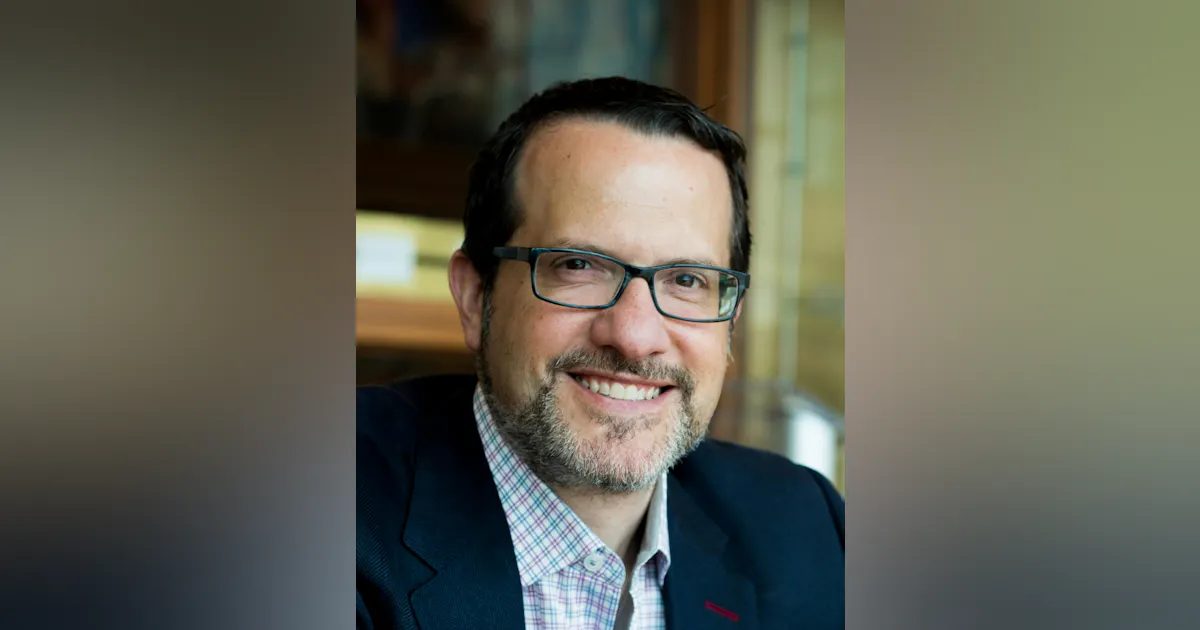
Orgo-Life the new way to the future Advertising by AdpathwayEarlier this month, the National Committee for Quality Assurance (NCQA) chose four organizations — Aledade, Bluegrass Community Health Center, Jefferson Health and NYC Health + Hospitals — to participate in the launch of an Advanced Primary Care pilot program. The goal of the pilot is to create a clearer path to integrated, data-driven team-based care that enables primary care to thrive in advanced payment models. Following the announcement, Healthcare Innovation spoke to Anna Flattau, M.D., M.S., system chief for primary care and chair of Family and Community Medicine at Jefferson Health, about why Jefferson wanted to participate in the pilot.
Healthcare Innovation: Before we talk about the advanced primary care pilot, could you describe how large Jefferson's primary care footprint is now after the merger with the Lehigh Valley Health Network?
Flattau: Jefferson primary care is a very large regional primary care system in eastern Pennsylvania and southern New Jersey. We have approximately 150 primary care sites, about 1,000 clinicians, and care for approximately 1 million primary care patients. Because of our size and scale, we're driving individual, family, community, but also public and population health through our interventions, and we're able to move as a system. It's a very powerful position for us to be in. This is why it's so important for us to be thoughtful, along with partners like NCQA, about how we're defining what success is and how we're measuring what we're trying to accomplish.
HCI: Does a merger like that require a lot of effort to unify the primary care groups and standardize best practices across the organization? Flattau:
When we all come and sit around the table, which we do every two weeks, there's just a lot of brain power and a lot of experience in the room.
HCI: In announcing this pilot, Vivek Garg, M.D., the president of NCQA, said that primary care practices face mounting pressure from workforce shortages, uneven reimbursement and increasingly complex patient needs. Are those challenges you face at Jefferson?
Flattau: Primary care is a very complex entity, and I think we do it with excellence. We're fortunate in that we've been able to recruit quite easily into our system. We have, for example, eight residency programs in family medicine, all of which produce family doctors. We are proud of that contribution to the workforce needs of this country in terms of primary care physicians.
Primary care has known solutions that need to be implemented, and this has been the case for many years. Some of those solutions are at a policy level. We need a greater percentage of healthcare dollars to go to primary care. We also need to be paid for the right things in the right way, through mechanisms that sustain our work.
So I would say yes, we have all of those challenges here. I think we have found a lot of very creative ways of advancing our primary care system, with the many levers of control that we have within an organization like ours, recognizing that there are also some policy and payer levers that are important as well.
HCI: The NCQA said that the pilot participants will evaluate draft standards that emphasize proactive population health, behavioral health integration, strong care team coordination and data-enabled decision making. Are those all things that Jefferson has made progress on in the past few years? For instance, could you talk about addressing behavioral health integration with primary care?
Flattau: We have a very robust integrated behavioral health program that we're very proud of, that serves our primary care footprint and is increasingly serving some of our other medical subspecialties as well. That is a program that we run in two different models. We have a primary care behavioral health program that provides therapy to medical patients of ours who would benefit from that. Sometimes that's a diagnosis like depression or anxiety. Sometimes it's a part of human experience like grief or stress.
We've also recently launched a collaborative care model that is in addition to the primary care behavioral health model. Depending on the person's needs, they may fit better in one model or the other. The collaborative care model is a very structured, evidence-based model that includes support for primary care medication management of behavioral health conditions through a registry and with a psychiatric consultant.
We've also made some great progress in integrating substance use treatment into our our systemwide integrated behavioral health program. Now patients who are primary care patients, if their own physician is not comfortable prescribing Suboxone, for example, they can create a telehealth visit with a primary care doctor who is addicted medicine-boarded and that person, along with a peer navigator and supports, will help that person receive treatment within our primary care team. That allows us to offer universal access to those services for all of our patients.
HCI: Does that sometimes involve physical co-location of the behavioral health clinicians in the primary care setting?
Flattau: I think it's great when we have embedded behavioral health consultants at the sites, and that's true for some. They're not of all our sites, and part of that is just the scale, because we have so many sites. The truth is also that while it is nice for many patients and for the team to have the behavioral consultant in the clinic, many patients prefer virtual visits because it's much more convenient for them. Many patients will actually choose virtual visits anyway, so we do balance the two.
About a year and a half ago we launched an entirely virtual primary care model, and we've been able to design virtual-to-virtual warm handoffs that imitate the experience of an in-person warm handoff.
HCI: The NCQA said that another goal is to enable primary care to thrive in advanced payment models, and that one of the things it's going to do is work on reporting electronic clinical quality measures. We've heard from accountable care organizations that reporting eCQMs, is quite challenging. Is that aspect going to be kind of a heavy lift?
Flattau: Well, one thing I appreciate about this pilot is that the focus is not only on the content of the metrics and what the numerator and denominator should be. The NCQA is also asking us to reflect on the data reporting aspect, because, to your point, that is very important. Is this something that's feasible for us to report or is this known to be very difficult to report?
I appreciate this collaborative and their focus on that piece as well. A critically important part of the cost of healthcare is our administrative burden. Just like the physician doesn't want extra administrative burden through documentation and prior authorization, as a system we don't want extra burden through challenges in reporting metrics or metrics that appear inaccurate because of data problems. So the NCQA is really focusing on that, in collaboration with our four very different organizations, with the intent of making this a feasible, reasonable ask for organizations to follow through on.
HCI: Yes, even if there's a challenging initial ramp-up to get there, it could be that the electronic clinical quality measures will end up being more efficient for people to report once they're in place.
Flattau: Just because something's hard doesn't mean it's not the right thing to do, but it's also true that sometimes relatively small changes can dramatically change how much work the data analytics pull is.
For that part of this project, the team from Jefferson that's working with NCQA includes myself and three other physicians who have leadership roles. It also includes our quality leader, a staff member who actually implements a lot of our quality improvement projects. Her feedback to NCQA is incredibly valuable. We're also pulling in some of our data analytics team to talk with them. I appreciate this pilot, because those are the people who know best what works, what doesn't work, what's feasible for them, and what is going to be a challenge, because they do this for a living. Getting those on-the-ground perspectives, not just from the doctors, but from the quality managers and the data analysts is going to be a public service in getting to a better metrics approach.
HCI: NCQA says another goal is to enable primary care to thrive in advanced payment models and strengthen the relationship between payers and primary care. Could you talk about Jefferson's experience in advanced or alternative payment models so far?
Flattau: First, I always preface my answer to these types of questions by saying, again, that we need more primary care payment, and how we're paid may be less important than how much we're paid, right? And the models do matter as well. We are a value-based system. The majority of our patients are in value-based care across all of our contracts. We've had clear direction from our executive leadership that we are a value-based system, and that's what we should be focusing on, and in general primary care clinicians are sold on it.
Value-based care is something that's important to us. However, value-based care requires payment on measurement, which is why this work is so important. If you're being paid for something that's not exactly what you're doing, and you have a sort of diplopia of what you're actually doing to care for people and then this thing you have to manage on the side, which is related to but not really central to how you think about your comprehensive global impact on human health, it just adds work. It's not measuring the work you're doing. It may be measuring a very small part of the work you're doing, and it distorts how resources and attention are allocated within the organization.
So it's critically important that we get measurements that matter to us and that matter to our patients, that impact human health and that control cost in primary care. The nature of what we do, which is a very powerful engine, both for outcomes and for cost control, is not only disease-specific, and it can't be a reductionist approach that does not capture what we do.
What we do is valuable because people are complex, and we care for all of them in a comprehensive way. We care for them over time, and we care for them in a relationship-based model. It is actually evidence-based that this is what matters for human health. So if measures cannot reflect that, we get into that place of diplopia, where what we're measuring and what we're doing are two different things. They're complex constructs to measure. It’s much easier to measure how many mammograms we’re ordering than it is to measure comprehensiveness or continuity. But there are ways of measuring this, so discussing with NCQA what the balance is between those holistic measures that really address what matters to all stakeholders — the physician, the patient, the payer, society — and what's measurable is really where that sweet spot is in the conversation.
HCI: Is one challenge that you work with a bunch of different payers and each one has its own set of measures?
Flattau: There is a grid of measures for each payer, but we don't find that they differ dramatically. They are HEDIS metrics. They tend to be defined in the same way. They tend to focus on bread and butter important things like cancer screenings, hypertension, diabetes control, the Medicare Star measures, so we do get alignment on those measures. And it's not to say that those measures aren't important, right? We do want to order mammograms, and we definitely want to control hypertension, but it's a partial piece of what we're accomplishing in primary care, so we want to be able to see those metrics and feel like we're looking in the mirror and seeing the value of what we do, probably in conjunction with some of the more specific measures like diabetes or hypertension control.
HCI: Is there anything else you want to stress about this pilot?
Flattau: It seems very technical, but it is extraordinarily powerful as a steering wheel and as a motor of how attention and resources are provided to people who are seeking healthcare. The metric is the summative language of how we talk about value, and if that metric is defining success in a way that doesn't align with what we're really trying to achieve, it's problematic. If it aligns with what we're trying to achieve, it’s an extremely powerful force for good, because it gets many stakeholders who have different pieces of a complex system working together to get to that outcome. So this is an incredibly important project, in my view, and something I'm happy to be part of.









 English (US) ·